
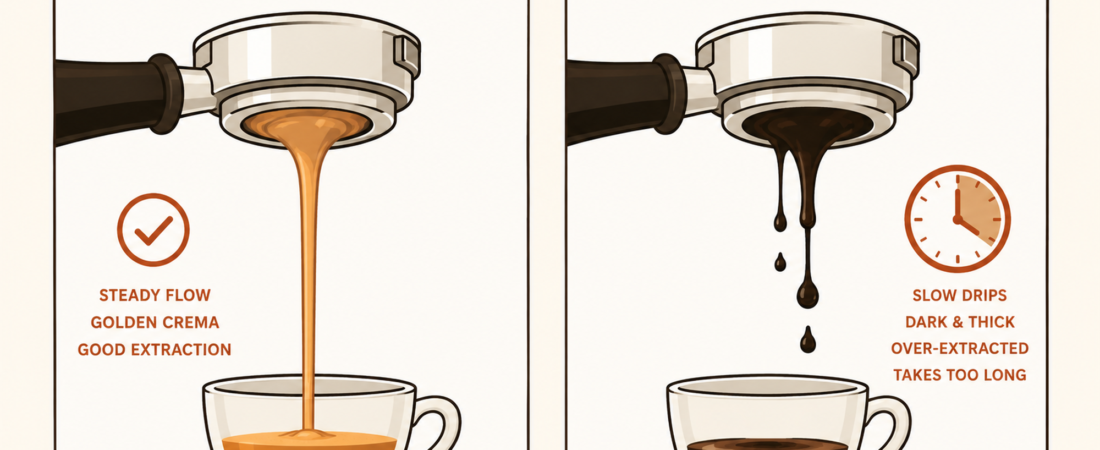
Bitter espresso shots get blamed on the beans more often than they deserve. A harsh, dry, sometimes ashy-tasting shot that lingers unpleasantly is almost always a symptom of over-extraction, not a bad roast, and a sluggish shot that drags on well past the usual window often shows the same root cause as a slow pour, or at least one of the same root causes. Both point to the same fix, and neither means you need different coffee.
This guide covers what makes a shot taste bitter versus just dark-roast intensity, why sluggish pours and bitterness usually travel together, the most common causes, and the fixes in the order to try them.
What Bitter Actually Means
Bitterness in espresso comes from over-extraction: water spent too long in contact with the coffee, pulling out compounds that only release late in the extraction process. After the sweetness and acidity have already come through. A shot can be genuinely over-extracted and bitter, or it can just be a naturally intense dark roast that some people mistake for “bitter” out of habit. The distinction matters: an over-extracted shot tastes harsh, dry, and often has an ashy or burnt quality that lingers unpleasantly on the palate. A dark roast that’s dialed in correctly is intense and bold, but it’s still balanced. It doesn’t have that harsh, drying aftertaste.
Taste the same coffee at two different grind settings if you’re not sure which you’re dealing with. If going coarser noticeably softens the harshness, it was over-extraction, not just the roast.
Why Sluggish and Bitter Usually Travel Together
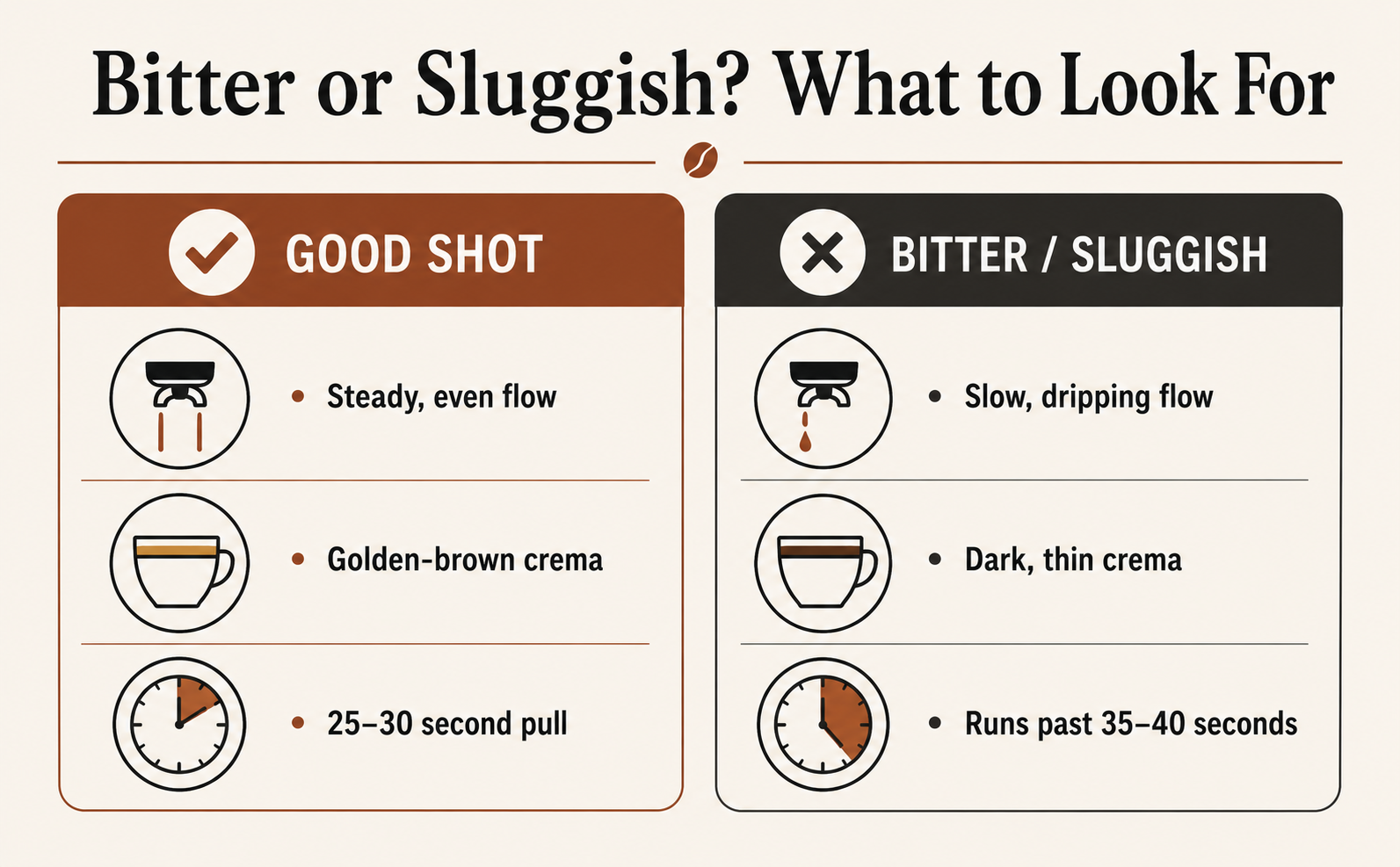
A sluggish shot, one that drips slowly, struggles to reach full yield, or drags well past 35 to 40 seconds for extraction time, is almost always high-resistance: something is making it hard for water to move through the puck. High resistance means more contact time between water and coffee, which produces over-extraction and bitterness. That’s why the two symptoms so often show up in the same cup: the sluggishness is the mechanical cause, the bitterness is the taste result.
You can have one without the other. A shot can run slow without tasting bitter if you stop it before over-extraction sets in, and a shot can taste bitter without being especially slow if the beans are just very dark and slightly over-roasted. But when both show up together, resistance is almost always the story.
The Most Common Causes
Grind too fine. This is the single most common cause. A grind that’s finer than the coffee and dose call for packs the puck too densely, and water struggles to push through. Both slow the shot down and give it too much contact time. This is usually the first thing to check, and the fix is simply grinding coarser.
Dose too high for the basket. Overfilling a basket packs more coffee into the same space, increasing resistance even at a grind size that would otherwise be fine. Check that your dose matches the basket’s rating. Most baskets have a recommended range printed or stamped on them.
Old or stale beans. Coffee that’s past its useful window, either too old or roasted so long ago it’s lost most of its CO2, extracts unevenly and often tastes flat and bitter regardless of grind size, because the bean structure itself has broken down. If nothing else fixes a persistently bitter shot, try a fresh bag before assuming it’s a technique problem.
Water too hot. Espresso machines generally brew in a fairly narrow, machine-specific temperature range, but a machine running at the high end of its range, or one with a miscalibrated thermostat, extracts faster and can push a shot toward bitterness even at a reasonable grind size. This is a less common cause than grind or dose, but worth checking if the others don’t fix it.
Fixes, in the Order to Try Them
Start with grind size. Go coarser, in small increments, and taste after each adjustment. This solves the large majority of bitter or sluggish shots on its own. If grinding coarser doesn’t fully fix it, check your dose against the basket’s rated range next. If the shot is still bitter after both, try a fresh bag of beans, especially if the current bag is more than a few weeks past its roast date. Machine temperature is worth investigating last, since it usually requires checking your specific machine’s documentation or settings rather than something you can adjust shot to shot.
Common Mistakes
The most common mistake is assuming a bitter shot means “bad beans” and buying a different bag before trying a coarser grind first. Grind size fixes most bitter shots, and swapping beans without adjusting the grind often just produces a different bitter shot. A close second is chasing extraction time instead of taste. A shot that finishes in the “normal” 25 to 30 second window can still be over-extracted and bitter if the grind, dose, and puck prep together created too much resistance for that particular coffee. Trust the cup over the clock.
Bitter Espresso Shots: Putting It Together
Bitter and sluggish shots are almost always the same problem wearing two faces: too much resistance, too much contact time between water and coffee. Grind coarser first, check your dose against the basket second, and rule out stale beans or machine temperature if the harshness persists. Fixing this quickly usually takes one or two grind adjustments and a taste test in between.
What to Check Out Next
For the sour, under-extracted end of the spectrum and how to read a shot’s flavor back to its cause, see The Espresso Taste Map. For reading the clock alongside the cup, see Espresso Extraction Time. And for the full diagnostic walkthrough covering more shot defects, Espresso Troubleshooting is the place to start.
For the extraction chemistry behind why over-contact with water pulls harsh, bitter compounds out of the grounds, Wikipedia’s overview of espresso covers how pressure and contact time interact during a shot.