
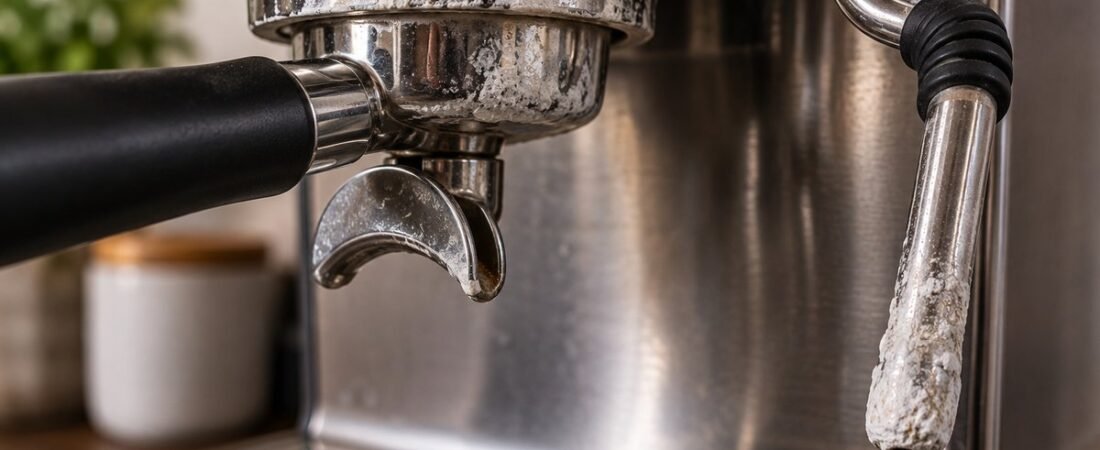
How often to descale espresso machine equipment really comes down to two things: your water and how much you brew. Most advice defaults to "every three months," which is a fine guess if you don't know what's in your water. A machine running on soft water and pulling two shots a day can go twice as long between descales as one running on hard water and pulling six. This calculator uses your actual water hardness and how much you brew to give you a real interval, not a generic one.
How often to descale espresso machine: the calculator
Pick your water hardness, how many shots you pull a day, and whether you run a water filter. If you don't know your hardness offhand, the reference chart and the section below the calculator will help you find it.
Calculator by DialInEspresso.com. This gives a real estimate based on published water hardness and descaling guidance, not a guarantee. If your machine has a built in descale alert that tracks actual water volume, trust that over the calendar.
Why water hardness matters more than a fixed schedule
Calcium and magnesium dissolved in tap water stay invisible until the water gets hot. Heat drives those minerals out of solution, and they precipitate as scale on whatever surface is hottest. In an espresso machine, that means the boiler element, the group head (the part of the machine the portafilter locks into), and the internal lines. The harder the water, the faster this happens, completely independent of how many shots you pull.
That's why two identical machines, run by two people who both pull three shots a day, can need descaling at wildly different rates. One is on municipal water at 40 ppm and barely scales. The other is on well water at 300 ppm and builds up scale within weeks. A generic "every three months" schedule splits the difference and is wrong for both owners.
How to find your actual water hardness
This is the first thing worth checking if you want to know how often to descale your espresso machine without guessing. Most US water utilities publish an annual water quality report, sometimes called a Consumer Confidence Report, that lists hardness in ppm or grains per gallon. A quick search for your utility's name plus "water quality report" usually finds it.
On a private well, a home test strip gives a rough reading for a few dollars, and an inexpensive titration kit gets you closer if you want a real number. If you already run a countertop or pitcher filter rated for hardness reduction, it lowers your effective hardness, which the calculator accounts for.
Water hardness reference chart
This is the standard U.S. Geological Survey (USGS) hardness classification. One grain per gallon equals about 17.1 ppm, so the two columns are just different units for the same thing.
| Classification | ppm (mg/L) | Grains per gallon |
|---|---|---|
| Soft | 0 to 60 | 0 to 3.5 |
| Moderately hard | 61 to 120 | 3.6 to 7.0 |
| Hard | 121 to 180 | 7.1 to 10.5 |
| Very hard | 180 and up | 10.5 and up |
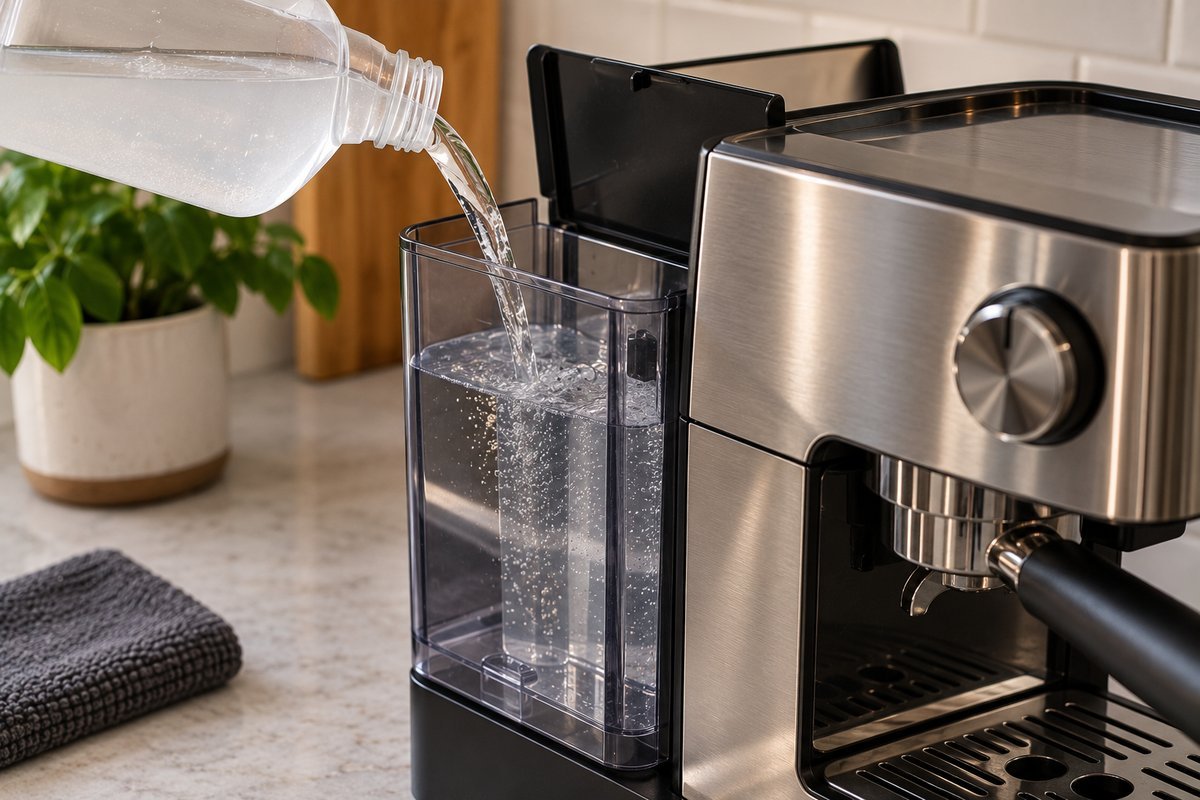
Signs your machine needs descaling now, regardless of the calendar
The calculator gives you a planning number, not a hard rule. Descale immediately if you notice any of these, whatever the schedule says:
- Slower shot times than usual, even with a fresh, correctly dosed puck (the pressed cake of coffee grounds in the basket)
- Popping or sputtering sounds from the boiler while heating
- Reduced steam pressure or a steam wand that takes longer to reach temperature
- Visible white or gray flaking in the water tank or drip tray
- A metallic or off taste that a fresh bag of beans doesn't fix
What to read next
If you want the deeper mechanics of why scale forms even when you think your water is fine, Descaling Protocol: Why Mineral Buildup Happens Even With Filtered Water covers it in detail. And if descaling is just one piece of a bigger maintenance routine you're trying to sort out, Espresso Machine Maintenance: Daily, Weekly, and Monthly Care That Matters lays out the full schedule.
Frequently asked questions
Does filtered water mean I never need to descale?
No. Filters reduce scale-forming minerals but rarely remove all of them, and a pitcher filter loses effectiveness the more it's used, so you'll still need to descale eventually, just less often than with unfiltered tap water.
Can I use tap water in my espresso machine at all?
Most machines run fine on tap water as long as the hardness falls in a reasonable range, since some dissolved minerals help extraction. Very hard tap water is the real problem, not tap water as a category.
How often should I descale my espresso machine if I have no idea about my water?
Start with the moderately hard setting in the calculator above, a reasonable default for most US municipal water, then adjust once you check your hardness.
What happens if I skip descaling for too long?
Scale buildup restricts water flow, insulates the heating element so it works harder and uses more power, and can eventually cause leaks or a full component failure that costs far more than a bottle of descaling solution.
Is vinegar a safe substitute for descaling solution?
It works if you have nothing else, but food-grade citric acid is gentler on rubber seals and rinses out without the lingering smell and taste, and most manufacturers specifically recommend against vinegar.
Summary
There is no single right answer to how often to descale espresso machine equipment, since it depends entirely on your setup. A fixed descaling schedule is only a guess. Your actual water hardness and how much you brew are the two things that really decide how fast scale builds up, and once you know both, the interval stops being a guess. Run the numbers above, keep an eye out for the warning signs in between, and you'll spend less time worrying about scale and more time pulling shots.
The Equipment Care & Maintenance hub has the rest of our guides on cleaning and descaling.