
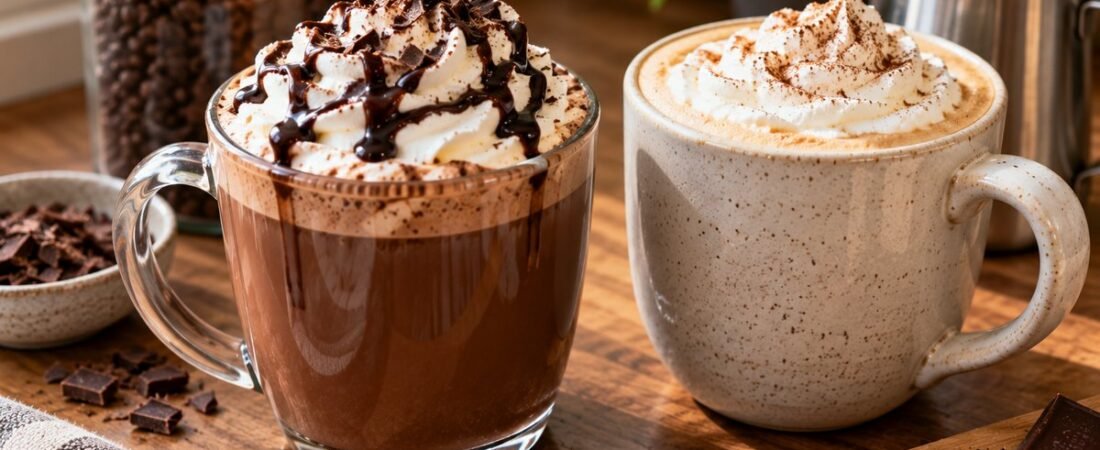
Mocha vs latte comes down to one ingredient: chocolate. Both drinks start from the exact same base, espresso and steamed milk, and the difference is what gets added on top, and how much that one addition changes everything else about the drink, from the caffeine count to how sweet it tastes by the last sip.
The Core Difference: Chocolate, Not Milk
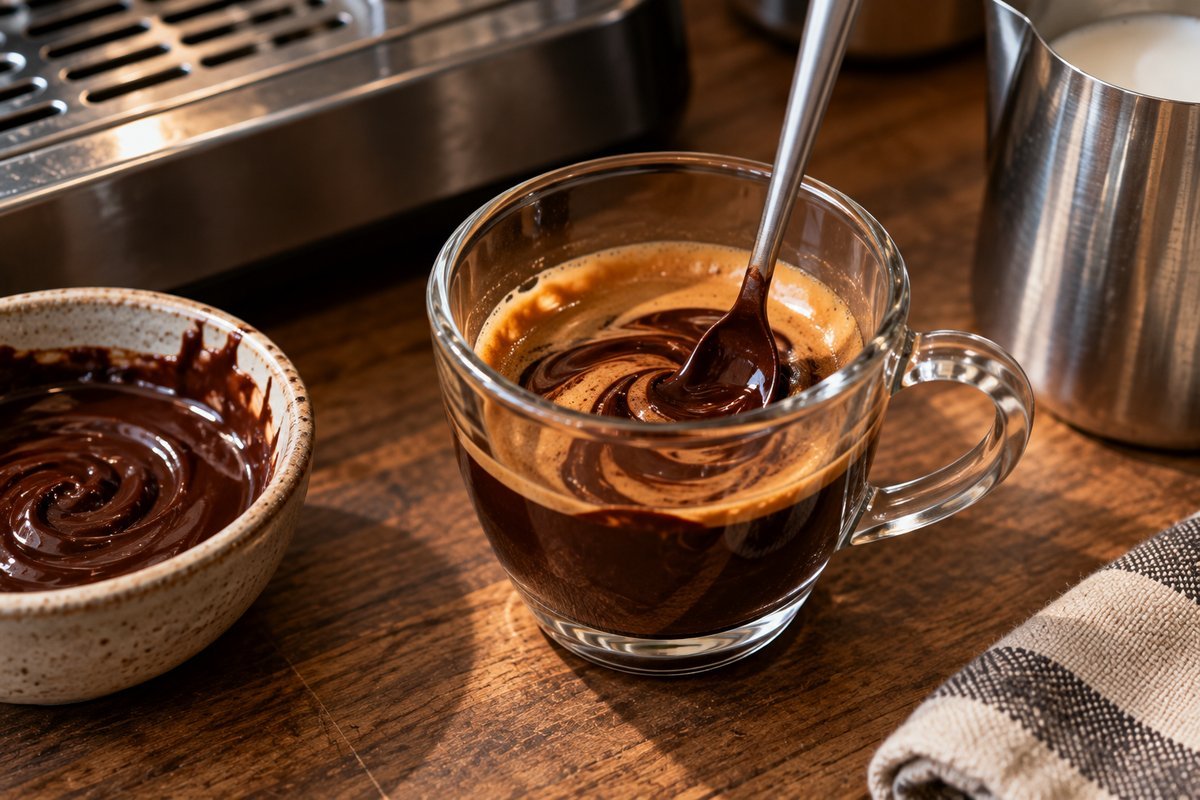
A latte is espresso and steamed milk, finished with a thin layer of foam. A mocha is that same espresso and steamed milk with chocolate syrup or cocoa mixed in, usually stirred into the shot before the milk goes in. Everything else people notice, the taste, the caffeine, the calories, traces back to that one ingredient.
The chocolate isn’t a garnish. It’s mixed through the whole drink, not drizzled on top, so a mocha tastes like coffee and chocolate together in every sip, not coffee with a chocolate accent.
Shot and Milk: How They Actually Compare
Both drinks typically use one or two shots of espresso, with a double shot now the more common default at most cafes. The milk-to-espresso ratio runs similar too, roughly 1:2, steamed milk poured over the shot with a thin foam cap rather than the thick, dry foam a cappuccino gets.
Where they split is the chocolate. A classic mocha recipe calls for around two tablespoons of chocolate syrup, ganache, or cocoa powder mixed into the espresso before the milk goes in. Some cafes add whipped cream on top as well, which a latte almost never gets.
Caffeine: Closer Than You’d Expect, With a Small Edge to Mocha
Since both drinks are built on the same espresso base, most of the caffeine comes from the shot itself, roughly 63 to 126 mg for a single to double shot. The chocolate adds a small amount on top of that, dark chocolate contributes somewhere around 10 mg of caffeine per two tablespoons, which is a real but minor bump rather than a second jolt of coffee.
In practice, the mocha vs latte caffeine gap is small: a mocha and a latte made with the same shot count land close together, with the mocha coming out slightly ahead. If you’re choosing between the two purely to manage caffeine, the shot count matters far more than which drink you pick.
Calories: This Is Where the Two Drinks Actually Diverge
This is the category where a mocha and a latte stop being close cousins. A plain latte is mostly steamed milk and espresso, so its calorie count tracks the size and type of milk used. Chocolate syrup adds sugar and fat on top of that same milk base, and whipped cream, when it’s included, adds more of both.
The mocha vs latte calorie gap is real: as one point of reference, a standard-size mocha from a major chain runs around 370 calories against roughly 190 for the same size latte, made with the same milk. That’s not a universal number since recipes and portions vary by cafe, but it shows the shape of the gap: the chocolate alone can close to double the calorie count of the same base drink.
Where the Names Actually Come From
“Latte” is simply the Italian word for milk, short for caffe latte, or milk coffee. Straightforward, and it describes exactly what’s in the cup.
“Mocha” traces back further, to Mokha, a port city in Yemen that was once a major hub for exporting Arabica coffee beans. The chocolate-and-espresso drink itself is generally traced to 18th-century Italy, where a chocolate-coffee combination was served at Caffè al Bicerin in Turin under the name bicerin, one of the drinks that eventually led to what’s now called a mocha or caffe mocha.
Which One Should You Actually Order
There’s no wrong answer in the mocha vs latte decision, just a different mood each one is built for.
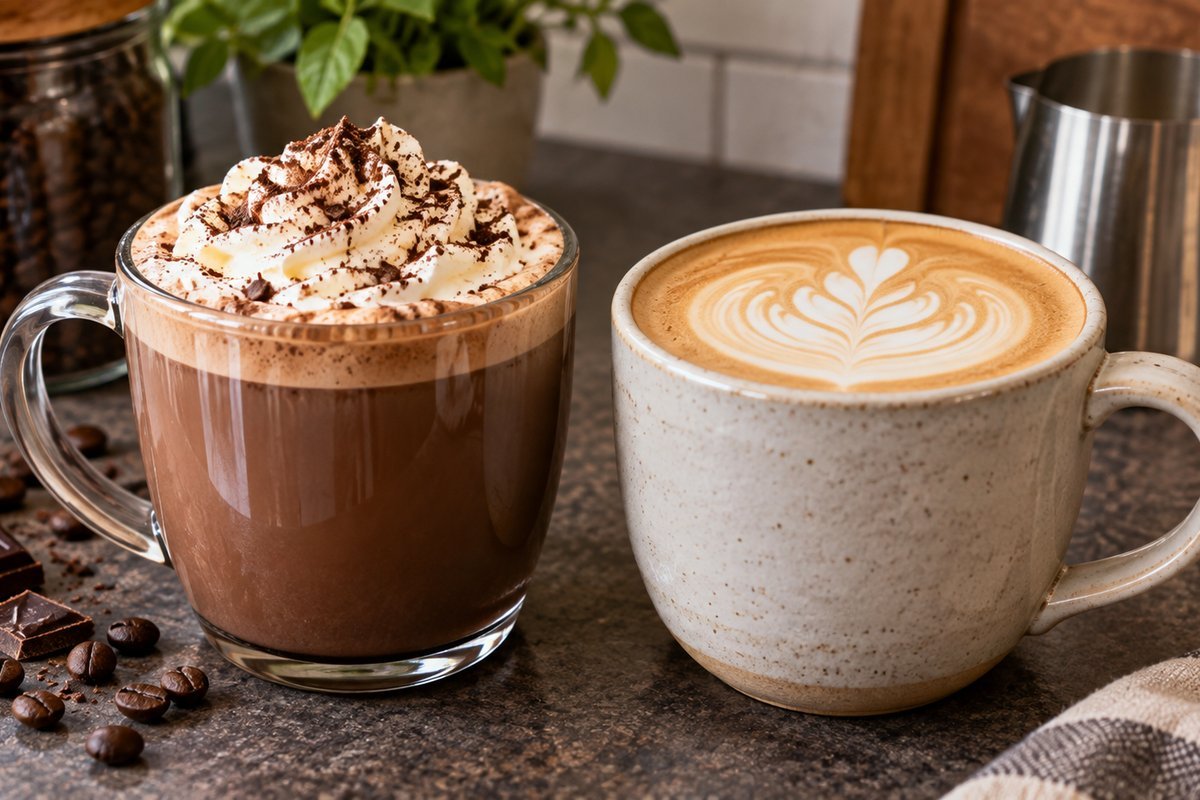
Order a latte if you want the espresso and milk to be the whole point, and you’d rather add your own sweetness (or none at all) than have chocolate baked into the drink. It’s also the better base if you’re watching sugar or calories, or if you want a canvas for latte art.
Order a mocha if you want dessert-adjacent coffee, something that tastes like a treat rather than a coffee with milk in it. It’s a good pick on a cold day, or any time you’d otherwise order a hot chocolate but still want the caffeine.
Mocha vs Latte at a Glance
| Trait | Latte | Mocha |
|---|---|---|
| Base | Espresso + steamed milk | Espresso + steamed milk + chocolate |
| Shots | 1-2 (double common) | 1-2 (double common) |
| Milk ratio | Roughly 1:2, espresso to milk | Roughly 1:2, plus chocolate mixed in |
| Caffeine | Roughly 63-160 mg, shot-dependent | Slightly higher, shot caffeine plus ~10 mg from chocolate |
| Calories (typical size) | Around 190 | Around 370 |
| Topping | Thin foam, sometimes latte art | Thin foam, often whipped cream |
| Best for | Coffee-forward, customizable sweetness | Dessert-style, chocolate and coffee together |
Common Mistakes People Make With Each
The biggest mocha vs latte mistake is assuming a mocha is basically a latte with a little flavor added. The chocolate isn’t a light drizzle, it’s a real ingredient in roughly the same proportion as the milk, which is why the calorie and sugar gap is as large as it is.
Ordering a mocha to cut back on coffee’s bitterness without realizing it adds meaningfully more sugar and calories than just asking for a sweeter latte or an extra pump of vanilla.
Assuming all mochas use real chocolate. Many cafes use a chocolate syrup built more for sweetness than cocoa flavor, so the chocolate taste can vary a lot more between mochas than the milk taste varies between lattes.
Frequently Asked Questions
Mocha vs latte: is a mocha stronger?
Not in caffeine terms if the shot count is the same. Chocolate adds only a small amount of caffeine, around 10 mg per two tablespoons, so the difference is closer to “sweeter and richer” than “stronger.”
Does a mocha have more sugar than a latte?
Yes, significantly. A plain latte has no added sugar unless you ask for it. A mocha’s chocolate syrup or cocoa brings real sugar along with it, which is the main reason mochas run higher in calories.
Can I get a sugar-free mocha?
Most cafes carry a sugar-free chocolate syrup as a swap. It cuts the sugar but not always the calories to zero, and the chocolate flavor can taste noticeably different from the regular syrup.
Which has more caffeine, a mocha or a cappuccino?
About the same, since both typically use one to two shots of espresso and the milk style (foam versus chocolate) doesn’t add meaningful caffeine either way.
Is a mocha basically hot chocolate with coffee in it?
Close, but not quite the same drink. A mocha is built on a full espresso shot with milk, then chocolate added, so the espresso and milk are the base and chocolate is the addition, the reverse of a hot chocolate with a coffee shot dropped in.
The Bottom Line
Mocha vs latte really comes down to one ingredient. A latte and a mocha share the same espresso-and-milk foundation, so neither one is the “real” coffee drink and the other a dressed-up version of it. The chocolate in a mocha is a genuine second ingredient, not a flavor shot, and it’s the reason the two drinks land in different categories: one built to showcase espresso and milk, the other built to taste like dessert that happens to have caffeine in it.
Related comparisons: see how a cappuccino compares to a latte or how a cortado differs from a latte.