
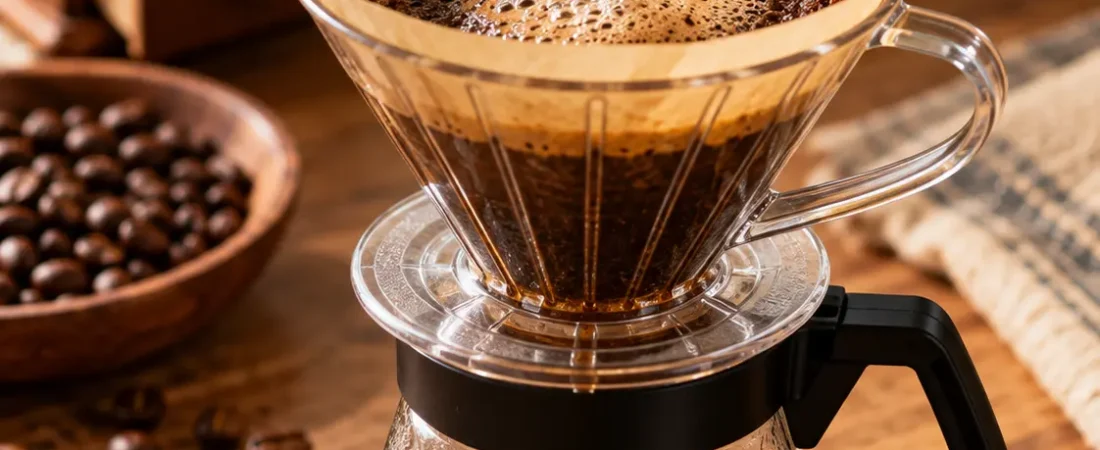
Espresso vs. coffee is a strange comparison, because espresso is coffee. What people really mean is closer to "what's different between espresso and regular drip coffee," and the answer isn't the beans, the roast, or how strong it tastes. It's pressure. Espresso is coffee brewed by forcing hot water through finely ground coffee at around 9 bars of pressure in under 30 seconds. Drip coffee is brewed by letting hot water pass through medium-ground coffee by gravity over several minutes. Everything else people associate with the difference (the taste, the caffeine, the crema, the tiny cup) comes from that one mechanical decision.
Espresso vs Coffee at a Glance
Here is the espresso vs coffee comparison broken into the numbers that matter.
| Espresso | Drip Coffee | |
|---|---|---|
| Brew method | Pressure (about 9 bar) | Gravity |
| Grind size | Fine (table salt) | Medium (sand) |
| Brew ratio | About 1:2 (18g coffee to ~36 g water for a double) | About 1:15 to 1:18 (roughly 55- 60 g coffee per liter) |
| Brew time | 25-30 seconds | 4-6 minutes |
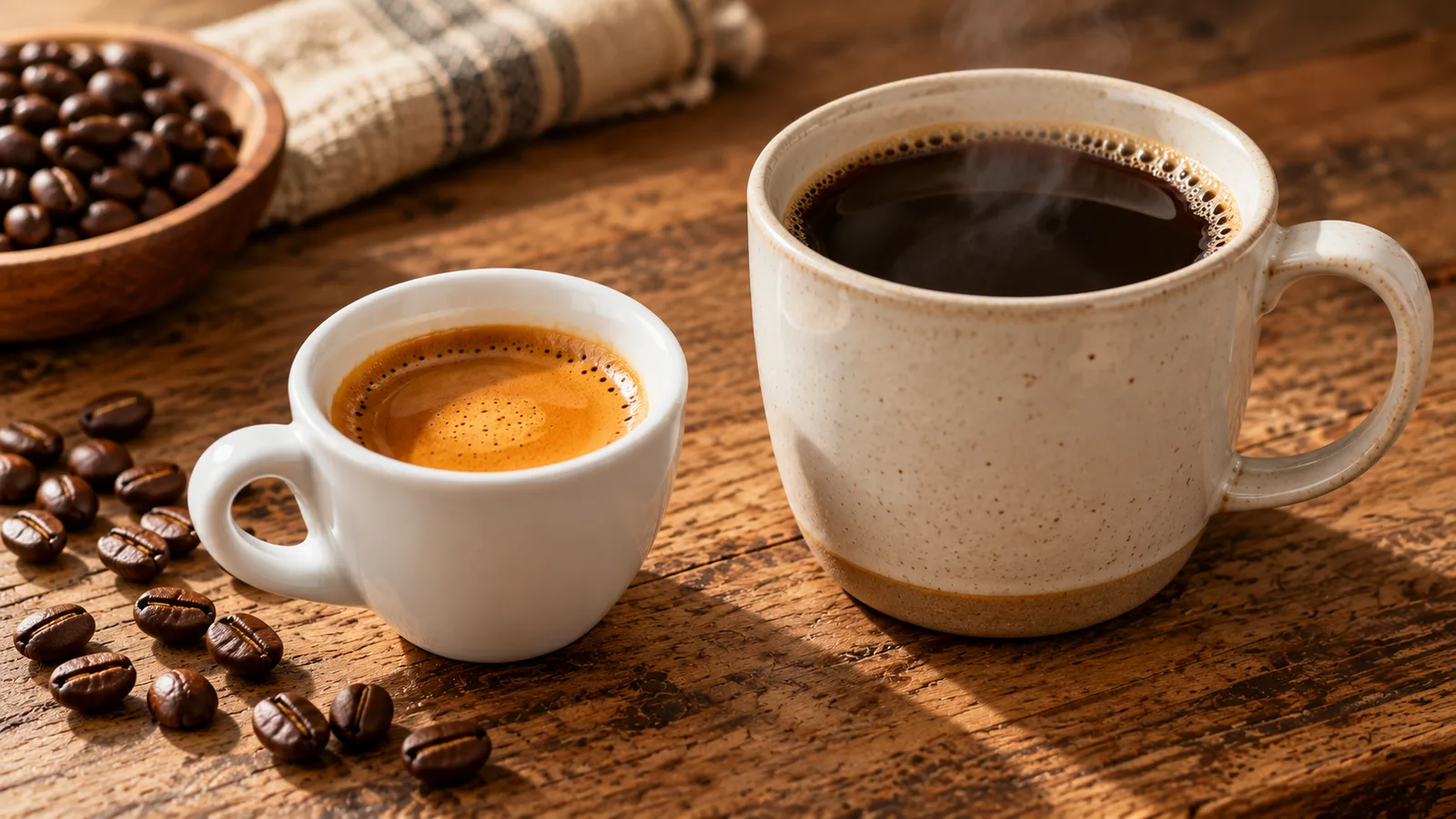
| Serving size | 1-2 oz (single to double shot) | 8-12 oz |
| Caffeine per serving | ~63 mg (single shot) | ~96 mg (8 oz cup) |
| Caffeine per ounce | ~63 mg/oz | ~12 mg/oz |
| Water temperature | About 195-205°F | About 196-201°F |
That caffeine row is where most of the confusion starts. Ounce for ounce, espresso has roughly five times the caffeine of drip coffee. But nobody drinks espresso by the cup. A standard single shot is about an ounce, so even though it's more concentrated, the total caffeine in that small serving ends up lower than what's in a full mug of drip coffee. Espresso feels stronger because you drink it all at once instead of over ten or fifteen minutes, not because the shot contains more caffeine overall. Our guide to how much caffeine is in a shot of espresso covers a full breakdown, including how the numbers change for doubles and cafe-made shots.
Pressure Is the Real Difference
Drip coffee has been made the same basic way for over a century: hot water sits in contact with coffee grounds long enough to pull flavor out, then drains through a filter by gravity. A pour-over, an automatic drip machine, even a French press all rely on time and contact rather than force.
Espresso skips almost all of that time and makes up for it with pressure. A properly calibrated espresso machine pushes water through a tightly packed puck of finely ground coffee at roughly 9 bars, about nine times normal atmospheric pressure. That's high enough to force a concentrated shot through in 25 to 30 seconds, a fraction of the time drip coffee needs. Nothing else made at home comes close to that kind of force, which is also why espresso can't be replicated in a drip machine no matter how finely the beans are ground.
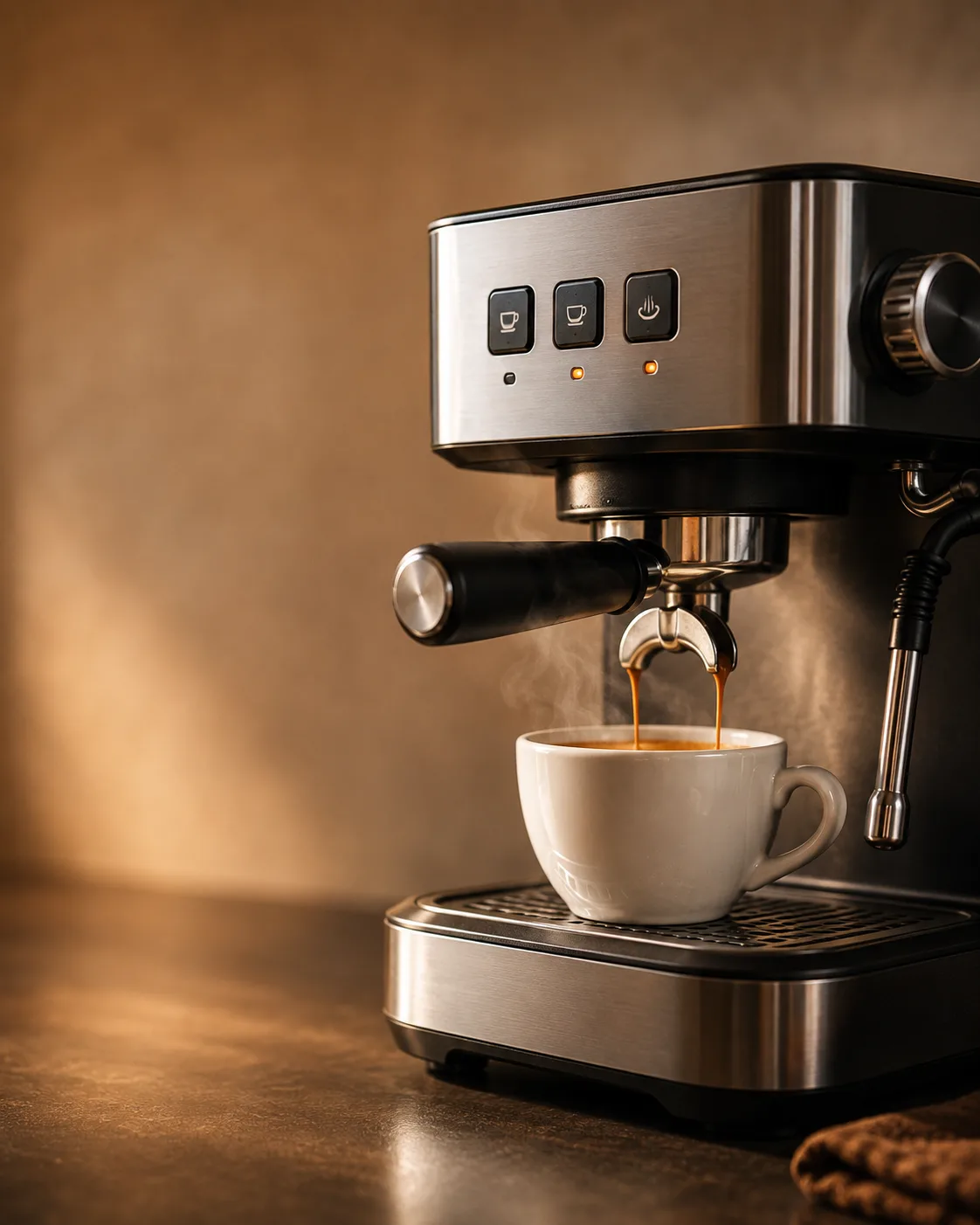
The grind size reflects the difference. Espresso is ground fine, close to the texture of table salt or finer, so water doesn't rush through the puck the instant it hits the pressure. Drip coffee uses a coarser, sand-like grind, since gravity alone needs more surface area and a longer contact time to pull out a comparable amount of flavor.
Common Misconceptions About Espresso vs Coffee
"Espresso is just stronger coffee." Not quite. Espresso is more concentrated, which isn't the same as stronger in every sense. It has more caffeine per ounce, but less caffeine per serving than a full cup of drip. What people usually mean by "strong" is the intensity of flavor in a small volume, and that comes from pressure extraction packing more dissolved solids into less water, not from using more coffee or a more potent bean.
"You need special espresso beans." Any coffee bean can pull a shot. "Espresso roast," where it appears on a bag, refers to a roast level, usually a darker one, not a distinct species or bean type. Plenty of specialty roasters now sell lighter roasts labeled for espresso, because the grind and brew method matter far more than the roast level in determining whether something works as espresso.
Every Espresso Drink Is Coffee, But Most Coffee Drinks Aren't Espresso
Part of what makes "espresso vs coffee" a confusing question is that espresso isn't a competing category. It's an ingredient. A latte, cappuccino, macchiato, americano, flat white, and cortado are all built on one or two espresso shots. What changes between them is what gets added: steamed milk, foam, hot water, or nothing at all.
An americano is the clearest example of how thin the line is. It's espresso with hot water added, built specifically to approximate the strength and volume of drip coffee using the same shots that go into every other espresso drink on the menu. Order one, and you're drinking espresso stretched to drip-coffee proportions rather than something separately brewed.
Drip coffee doesn't have an equivalent family of variations built on top of it. Add milk to drip coffee, and you get coffee with milk. Add milk to espresso and, depending on how much and how it's steamed, you get a completely different named drink with its own preparation standards. That's a direct result of espresso's concentration: there's enough flavor packed into an ounce or two to still come through after milk, foam, or water gets added, which isn't as true of an already-diluted cup of drip coffee.
Espresso vs Coffee: Which One Should You Make or Order
The espresso vs coffee decision usually comes down to routine, not which one is objectively better. If you want a cup you can sip slowly over half an hour while you work, drip coffee is the better fit. It's brewed for volume and a longer drinking window, and the equipment (a drip machine, a pour-over cone, even a French press) is usually cheaper and simpler to maintain than an espresso setup.
If you want something you can drink in a few minutes, want the base for milk drinks, or enjoy dialing in grind size, dose, and timing, espresso is the better fit. The tradeoff is that decent equipment costs more upfront and takes longer to learn. There's no wrong choice between them. They're suited to different routines, not different quality tiers.
Espresso and coffee aren't rival categories. Espresso is a brewing method that uses extreme pressure and a fine grind to produce a small, concentrated shot in under 30 seconds, while drip coffee relies on gravity and a longer brew time to fill a full cup. That mechanical difference is what drives everything else: the caffeine math, the crema, the serving size, and the entire family of milk-based drinks built on top of espresso that don't have a drip-coffee equivalent. Neither method makes better coffee than the other. They're just built for different cups.
Where Espresso and Coffee Came From
Drip coffee's modern form traces back to a specific person and year. In 1908, a German homemaker named Melitta Bentz got tired of the bitter, sediment-heavy coffee produced by the percolators and cloth filters of the time. She tore a sheet of blotting paper from her son's school notebook, set it inside a perforated brass pot, and poured hot water over ground coffee on top of it. The paper caught the grounds and let clean coffee through. She patented the design later that year, and the company she and her husband founded, Melitta, is still making filter coffee equipment today. Every automatic drip machine and pour-over cone on the market descends from that brass pot.
Espresso's history runs on a separate, more mechanical track. Angelo Moriondo patented the first steam-driven espresso machine in Turin in 1884, but it was built for brewing coffee in bulk, not individual shots, and it never caught on commercially. Luigi Bezzera picked up the idea in the early 1900s and adapted it to pull one serving at a time, adding the portafilter design that's still recognizable in machines today. Desiderio Pavoni bought Bezzera's patents in 1903, added a pressure-release valve and steam wand, and launched the "Ideale" machine at the 1906 Milan Fair. That's the point espresso became a commercial product rather than an engineering curiosity.
The espresso most people recognize today, with the crema on top, didn't show up until decades later. Early machines only generated 1.5 to 2 bars of steam pressure, which wasn't enough to produce real crema and often scorched the coffee. Milanese cafe owner Achille Gaggia solved that after World War II with a spring-piston lever mechanism that pushed pressure up to 8 to 10 bars. That was high enough to emulsify the oils in the coffee and produce the foam layer that defines espresso visually. The pump-driven machines most cafes use now trace back to the Faema E61, released in 1961, which replaced manual levers with an electric pump and made consistent 9-bar extraction possible without a barista's arm strength.
Frequently Asked Questions About Espresso vs Coffee
Is espresso stronger than coffee?
Per ounce, yes, espresso has roughly five times the caffeine and a much higher concentration of dissolved solids. Per serving, a single shot has less total caffeine than a standard cup of drip coffee, since the serving size is so much smaller.
Can you make espresso in a regular coffee maker?
No. Drip machines can't generate the roughly 9 bars of pressure espresso extraction requires. Running finely ground coffee through a drip machine just produces weak, muddy coffee, not espresso.
Is espresso made from different beans than regular coffee?
No. You can use any bean for either method. What determines whether coffee becomes espresso is the grind size and the brewing pressure, not the bean itself.
Does espresso have less caffeine than drip coffee?
Per serving, generally yes. A single shot (about 63 mg) has less caffeine than an 8-ounce cup of drip coffee (about 96 mg), because the serving size is so much smaller, even though espresso is more concentrated per ounce.
For more on what espresso is at a mechanical level, see our guide to what espresso is and why it's different from other coffee. If the caffeine numbers here raised more questions, the full breakdown is in how much caffeine is in a shot of espresso. And if you're ready to start pulling shots yourself, how to dial in espresso covers the grind, dose, and timing adjustments that change a shot's taste.
For the numbers behind how people drink coffee at home and in cafes, see our coffee statistics roundup.
If you are wondering whether the beans themselves are different, our guide to espresso beans vs coffee beans explains what the label means.
For a closer look at the caffeine side, see how much caffeine is in a shot of espresso.
The Drink Comparisons hub has the rest of our guides on espresso drinks and how they differ.