
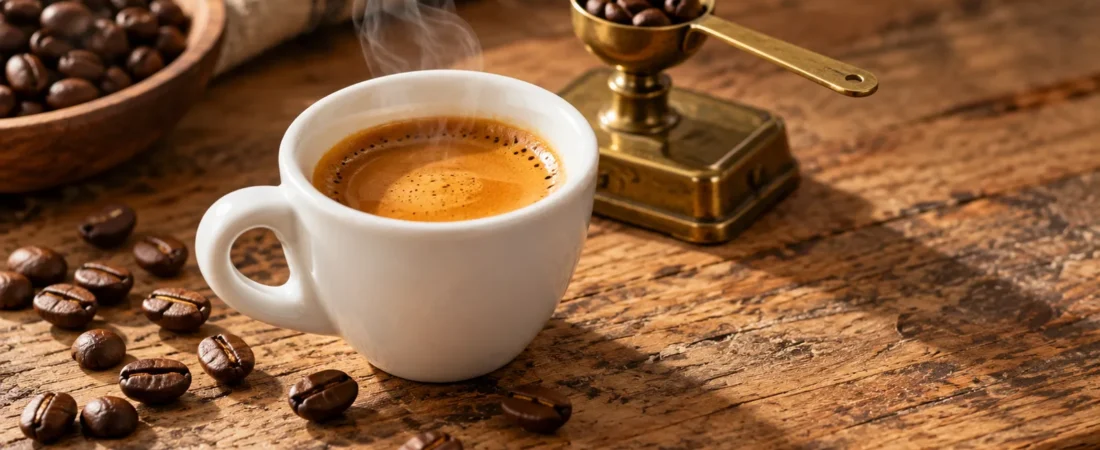
Botanically, there's no such thing as an espresso bean. Espresso beans vs. coffee beans isn't a comparison between two different plants or species. It's coffee, roasted and sometimes blended with a specific brewing method in mind, sold under a label that describes intent rather than a distinct product. Any coffee bean can go into a portafilter (the handle that holds the basket of coffee) and come out as espresso, and any bean labeled "espresso roast" can just as easily be brewed drip.
What varies between a bag labeled "espresso" and a bag labeled "coffee" is the roast level, sometimes the blend, and how fresh the beans are when you use them. None of that is exclusive to espresso. It's just what roasters have traditionally optimized for when they know a bag is headed for a portafilter instead of a drip machine.
Espresso Beans vs Coffee Beans: What the Label Means
When a bag says "espresso roast" or "espresso blend," it's describing two things: a roast level and, often, a blend recipe, not a bean variety. Most espresso-labeled coffee is roasted medium-dark to dark, because that profile produces lower acidity, fuller body, and the caramelized, chocolatey flavors that hold up well against milk in a latte or cappuccino. Darker roasts also tend to be more soluble, which historically made them easier to pull consistent shots from on less precise equipment.
That's a tradition, not a rule. Specialty roasters increasingly sell lighter-roast espresso to highlight acidity and fruit notes, the same qualities prized in specialty drip coffee. It takes more careful dialing in (adjusting the grind and recipe until the shot tastes right), since lighter roasts are denser and extract less predictably, but there's nothing about the bean itself that prevents it.
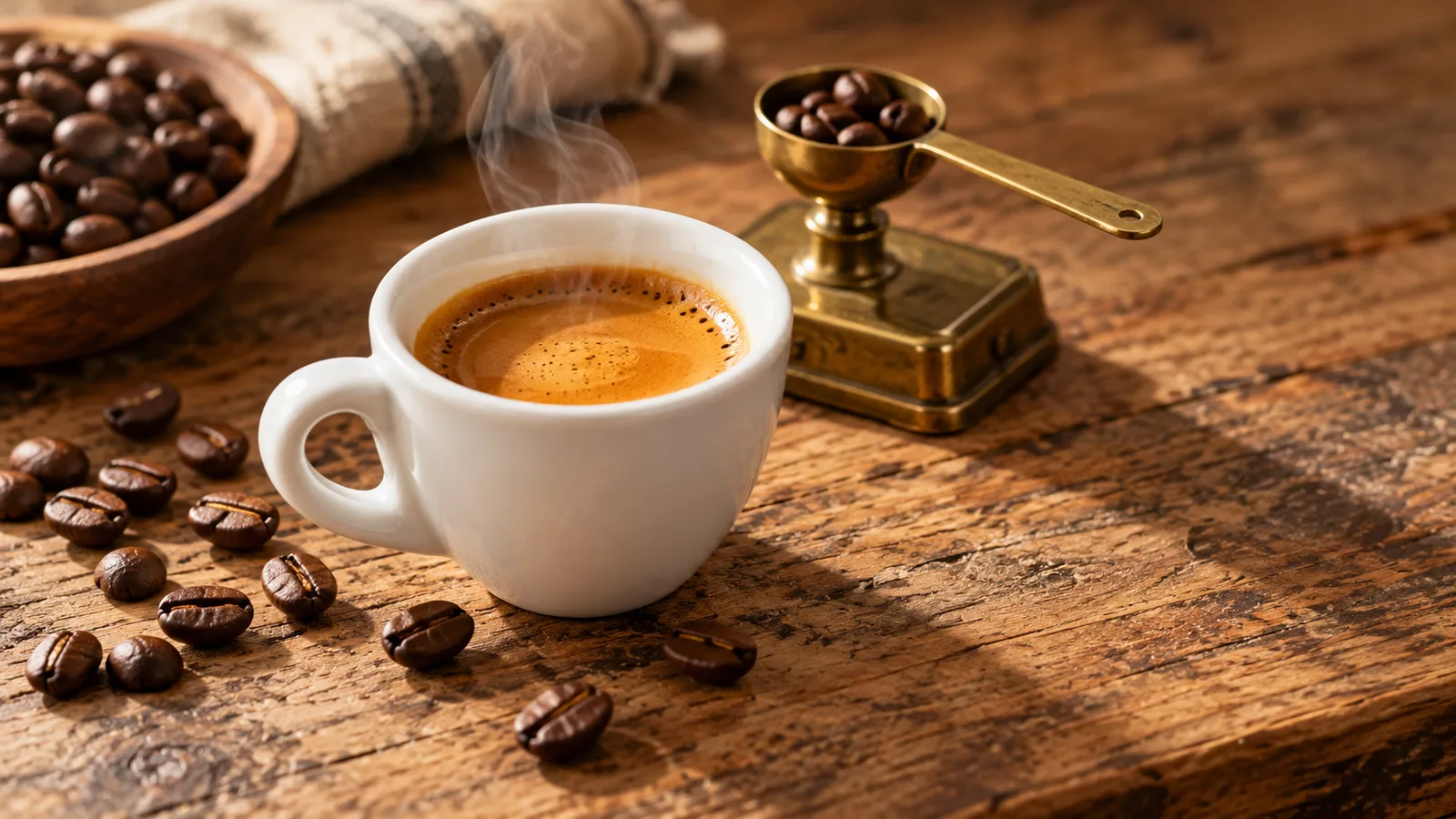
Blending works the same way. Many traditional espressos are blends of beans from different origins, combined to balance body, crema (the golden foam on top of a shot), and consistency shot after shot. Single-origin espresso, using beans from one farm or region the same way you'd see on a bag of pour-over coffee, has become common in specialty cafes too. Neither approach requires different raw material. It's a roasting and blending decision layered on top of ordinary coffee.
Arabica vs Robusta: The One Real Species Difference
The one real botanical difference is between coffee species, not between "espresso beans" and "coffee beans." Arabica and robusta are the two commercially significant coffee species, and they show up in both espresso and drip coffee, not one or the other.
Robusta contains roughly 2.7% caffeine by weight, compared to about 1.5% for arabica, and it produces a thicker, more persistent crema along with a harsher, more bitter flavor. That's why some traditional Italian espresso blends include a percentage of robusta: it adds body and crema without needing extra beans. Most specialty coffee, including most specialty espresso, is close to 100% arabica, since arabica is generally considered to have the more nuanced, higher-quality flavor. But robusta shows up in drip coffee too, particularly in cheaper commercial blends, so the arabica/robusta split doesn't map cleanly onto espresso versus coffee either.
Freshness Matters More for Espresso Than for Drip
This is a practical difference, though it still isn't about the beans being different. Freshly roasted coffee is full of carbon dioxide, and that CO2 needs time to escape before the beans brew predictably. For drip coffee, beans are usually ready about 4 to 7 days after roasting. For espresso, the window runs longer: most roasters recommend waiting at least 5 to 7 days, with many shots tasting best between 7 and 11 days post-roast, per Clive Coffee's guide to coffee freshness.
Pull a shot on beans that are too fresh, and you'll typically see a rush of oversized, unstable crema from all that trapped CO2 escaping during extraction, along with sour, astringent flavor and inconsistent shot times, since the gas interferes with even water flow through the puck (the pressed cake of coffee grounds in the basket). Drip coffee is more forgiving of overly fresh beans because no pressure forces water through a tightly packed bed of grounds. Because espresso is more sensitive to very fresh beans, a bag roasted a week or two before you buy it is not a problem for espresso.
Common Misconceptions About Espresso Beans vs Coffee Beans
"You need special beans labeled 'espresso' to make espresso." No. Any coffee bean, any roast level, any origin can be pulled as a shot if it's ground fine enough and dosed correctly. "Espresso roast" on a bag is a recommendation based on how that coffee was roasted, not a requirement.
"Darker roast always means better espresso." Not necessarily. Dark roast is a tradition tied to consistency and body, not a requirement for good espresso. Plenty of well-regarded shops now pull light and medium roasts as espresso, particularly for single-origin shots meant to highlight the coffee's own flavor rather than a caramelized roast character.
"Coffee beans and espresso beans have different caffeine content." The caffeine difference people notice comes from the brewing method and roast, not the beans being a different type. A given bean roasted the same way has close to the same caffeine content whether it ends up pulled as espresso or brewed drip. What changes the caffeine in your cup is the brew ratio and serving size, not a property baked into "espresso beans" specifically.
Which Beans Should You Buy
The espresso beans vs coffee beans question matters most when you buy. If you're buying beans for a home espresso machine, look for a roast date, not a label. Beans within the last two to four weeks, rested at least 5 to 7 days past roasting, will behave more predictably than something labeled "espresso roast" that's been sitting on a shelf for months. Beyond that, medium-dark blends are still the safer starting point while you're learning to dial in grind and dose, since they're more forgiving and produce reliable crema.
Once you're comfortable adjusting grind size and dose to match what's in the hopper, there's no reason not to try a lighter roast or a single-origin bag labeled for drip coffee. It'll pull just fine as a shot.
For more on espresso drinks and how they differ, see the Drink Comparisons hub.
What to Read Next
For more on how espresso differs from drip coffee as a brewing method, see our guide to espresso vs coffee. If you want the deeper mechanical explanation of what espresso is in the first place, our guide to what espresso is and why it's different from other coffee covers that. Once you have beans, our guide to how to dial in espresso walks through the grind, dose, and timing adjustments that determine how a shot tastes.
Frequently Asked Questions
Can you use regular coffee beans for espresso?
Yes. That's the short version of the whole espresso beans vs coffee beans question: any coffee bean can be used for espresso as long as it's ground fine enough and dosed correctly for the machine. There's no separate bean required.
Is there a difference between espresso beans and coffee beans?
For espresso beans vs. coffee beans specifically: not botanically. The differences are the roast level (espresso-labeled coffee tends to run medium-dark to dark) and how fresh the beans need to be (espresso generally needs a longer rest after roasting than drip coffee). The beans themselves are the same product.
Can you use espresso beans for regular drip coffee?
Yes. A bag labeled "espresso roast" brews fine in a drip machine or pour-over. It'll taste like whatever that roast level and blend usually taste like, just brewed differently.
Does roast level affect caffeine content?
Slightly, and less than people expect. Lighter roasts retain marginally more caffeine by weight than darker roasts of the same bean, since roasting burns off a small amount of caffeine over time. But the difference is minor compared to how brew method and serving size affect total caffeine.
Summary
Espresso beans vs coffee beans isn't a comparison between two products. It's the same coffee, sold with a roast level and sometimes a blend chosen for how it'll behave under pressure, and a recommendation on how long to let it rest before using it. Buy based on roast date and roast level that suits your taste, not the word "espresso" on the bag, and you can put any coffee you like in your portafilter.