
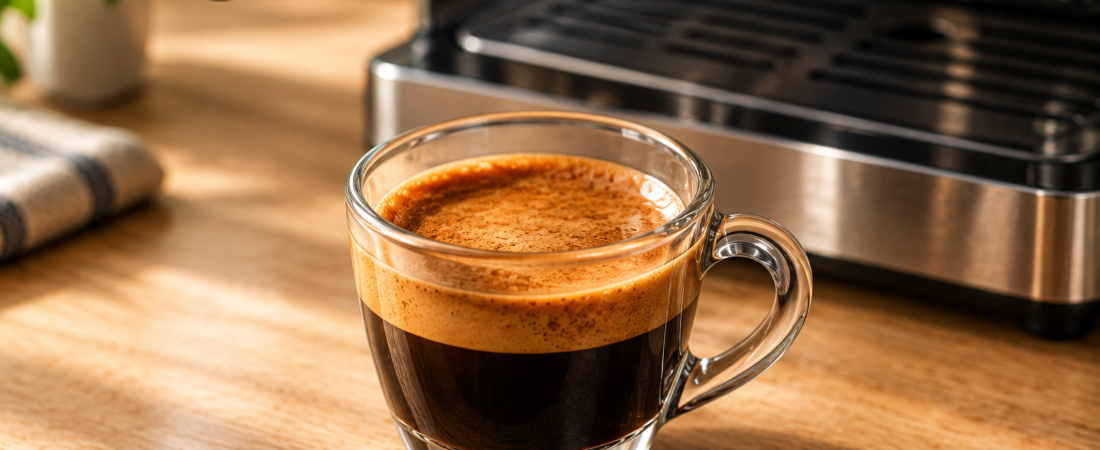
So, what is espresso, exactly? Espresso isn’t a type of bean, a roast level, or a fancy way of saying “strong coffee.” It’s a method. Specifically, it’s coffee made by forcing hot water through finely ground coffee at high pressure for a short time, producing a small, concentrated shot topped with a layer of reddish-brown foam.
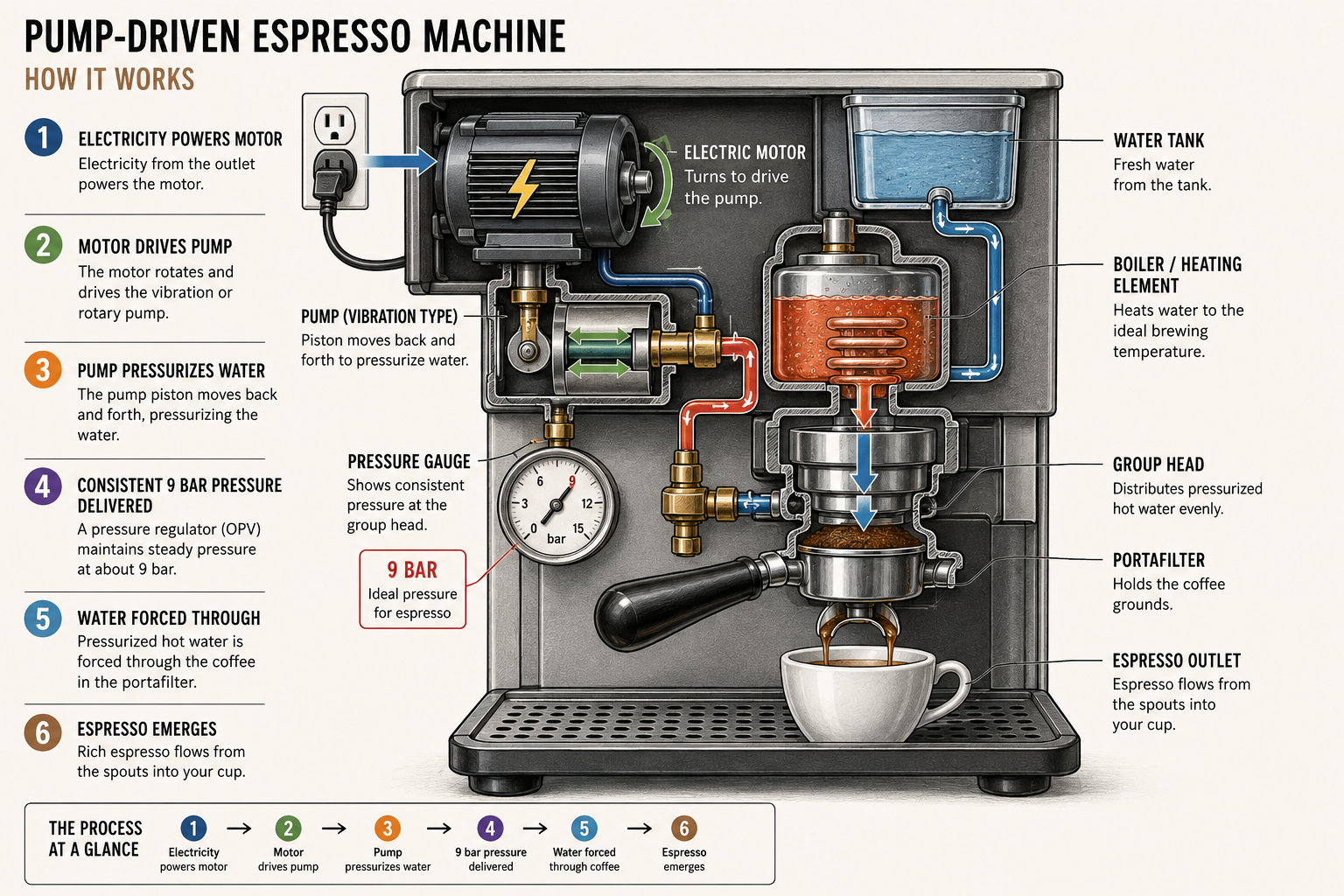
That last part, the pressure, is the whole story. Drip coffee relies on gravity. A French press relies on steeping. Espresso relies on pressure, usually around 9 bar, which is roughly nine times normal atmospheric pressure. Nothing else you brew at home comes close to that.
If you’ve read enough coffee content already, you’ve probably seen espresso described as “just really strong coffee.” That’s close enough for casual conversation, but it misses the part that actually matters if you’re trying to learn how to make it. That’s what espresso is, mechanically, and understanding it is the foundation for everything else on this site: the machines, the grinders, the technique, all of it.
What Is Espresso? The Short Definition
So what is espresso, in one sentence? Espresso is coffee brewed by pushing hot water through a tightly packed puck of finely ground coffee at high pressure, producing a concentrated one- to two-ounce shot in about 25 to 30 seconds.
Every word in that sentence is doing work. Finely ground, because a coarser grind would let water rush through too fast and produce something thin and sour. Tightly packed, because a loose puck lets water find the path of least resistance instead of moving evenly through the grounds. High pressure, because without it, water just seeps through coffee slowly, which is what happens in a drip machine. Concentrated, because a shot is small on purpose. This isn’t a 12-ounce mug. It’s one or two ounces of coffee with a much higher ratio of dissolved solids to water than what you’d get from a standard cup of drip coffee.
Why Pressure Is the Actual Difference
Most home brewing methods extract coffee the same basic way: water sits in contact with grounds long enough to pull flavor out of them. Pour-over does this over several minutes. French press does it by steeping. Cold brew does it over hours.
Espresso skips almost all of that time and makes up for it with force. Nine-bar pressure pushes water through coffee fast enough that the whole brewing process takes well under a minute, but hard enough that it still extracts a comparable, often higher, concentration of flavor compounds than a much slower method would.
This is also why you can’t make real espresso in a drip machine, no matter how finely you grind the beans or how long you brew. Grinding espresso roast beans and running them through a drip coffee maker gets you strong coffee. It doesn’t get you espresso, because the machine was never built to generate pressure. The equipment isn’t optional here. It’s the entire mechanism.
For a longer look at how machines actually create that pressure, and what changes between manual, semi-automatic, and fully automatic designs, see our guide to espresso machine types.
There’s No Such Thing as an “Espresso Bean”
This trips up a lot of beginners, understandably, because bags labeled “espresso roast” are everywhere in grocery stores.
Any coffee bean can make espresso. What’s usually different is the roast level. Beans marketed as “espresso roast” tend to be roasted darker, which produces more oil on the bean’s surface and a bolder, sometimes more bitter flavor profile that many people associate with espresso shots served in cafes. But that’s a stylistic choice, not a requirement. Plenty of specialty roasters make excellent espresso from lighter roasts, and the defining factor of espresso has nothing to do with the bean or the roast. It’s the brewing method.
If you buy a bag labeled “espresso roast” and brew it in a drip machine, you’ll get a strong, possibly bitter cup of drip coffee. Still not espresso.
What Makes Crema Happen
One of the more visible differences between espresso and other coffee is crema, the thin layer of reddish-tan foam that sits on top of a properly pulled shot.
Crema forms because pressurized water dissolves carbon dioxide and oils out of freshly ground coffee, and when that pressure is suddenly released as the espresso exits the portafilter, tiny bubbles form on the surface. Freshly roasted, freshly ground coffee produces more crema, since it has more trapped CO2 to release. Beans that are a few weeks old, or coffee ground too far ahead of brewing, tend to produce thinner or less consistent crema.
Crema isn’t purely cosmetic. It affects mouthfeel and aroma, and it’s often one of the first things baristas look at when judging whether a shot extracted properly. But you don’t get it from drip coffee, a French press, or a pour-over, because none of those methods create the pressure needed to trap gas in the coffee the way espresso brewing does.
Caffeine: Where the Confusion Usually Starts
Here’s something that surprises a lot of new espresso drinkers: a single shot of espresso generally has less caffeine than a standard cup of drip coffee.
An espresso shot typically contains somewhere around 60 to 75 milligrams of caffeine, depending on the beans and dose. An 8 ounce cup of drip coffee is often closer to 90 to 100 milligrams. Espresso feels stronger because it’s more concentrated, not because it has more caffeine per serving. Ounce for ounce, espresso does have significantly more caffeine than drip coffee. But nobody drinks espresso by the cup. They drink it by the shot, which is a fraction of the volume.
This is also why a double espresso, or a drink built on two shots like most lattes and cappuccinos, ends up in a similar caffeine range to a regular cup of coffee, rather than being some kind of caffeine bomb.
Where Espresso Fits Into Everything Else You Drink
If you’ve ever ordered a latte, cappuccino, americano, or macchiato, you’ve had espresso. Every one of those drinks starts with a shot, or two, of espresso as its base. What changes is what gets added: steamed milk, foam, hot water, or nothing at all.
That’s part of why learning espresso specifically, rather than just “coffee” broadly, opens up a lot more than one drink. Once you understand how to pull a decent shot, you’re not just making espresso. You’re making the base for most of the drinks on a cafe menu.
Why This Matters Before You Buy Anything
If you’re new to this and thinking about buying your first machine, understanding what espresso actually is changes how you shop. You’re not looking for a machine that makes “strong coffee.” You’re looking for one that can reliably generate consistent pressure, hold water at a stable temperature, and let you control grind, dose, and timing well enough to produce a real shot.
That’s a different shopping list than most beginners start with, and it’s the reason this site spends as much time on technique and equipment fundamentals as it does on individual product recommendations. Once the mechanics click, the rest of it- dialing in grind size, learning what a good shot tastes like, figuring out which machine actually fits how you want to learn- gets a lot easier to follow.
If this is genuinely your starting point, our guide to how espresso machines actually work is the natural next step. It picks up exactly where this article leaves off.
For a broader look at where the word comes from and how the drink spread beyond Italy, Wikipedia’s overview of espresso covers the history alongside the mechanics.