
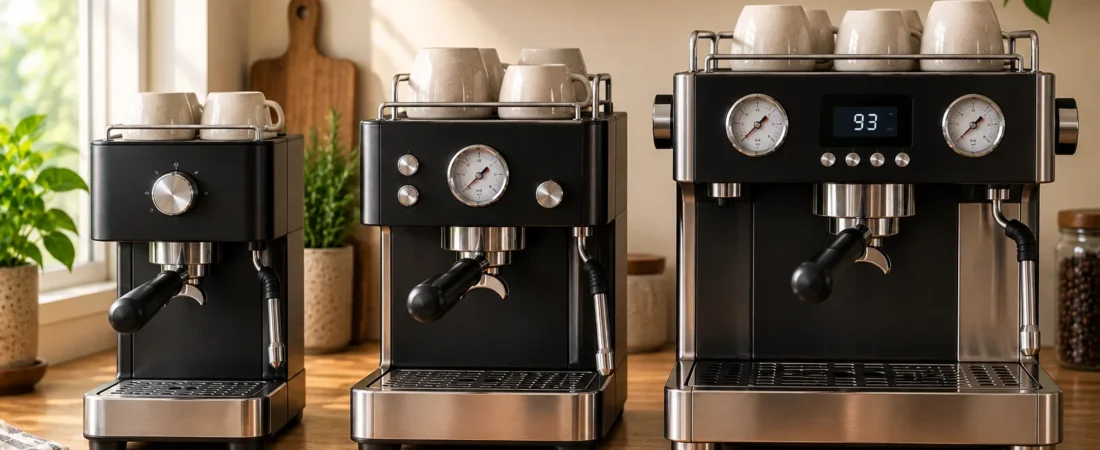
So how much does an espresso machine cost? Anywhere from under $500 to well over $2,500, depending on what you want the machine to do. A $200 machine and a $1,200 machine aren't the same product at different price points. They're built around different assumptions about what you're willing to tolerate and what you're not.
Price tiers in espresso machines aren't just brand markup or shinier steel. They map to real, functional differences in the hardware. These include what kind of portafilter (the handle that holds the basket of coffee) you get and whether the machine can steam milk and pull a shot at the same time. They also include whether the temperature is actively controlled via a PID (a digital temperature control), and how much the machine will forgive you while you're still learning to dial in a shot.
This guide breaks down what changes as you move up in price, so you can figure out which tier matches what you need, instead of guessing from star ratings or photos.
How Much Does an Espresso Machine Cost? (Quick Answer)
Clive Coffee, an espresso equipment retailer, groups home machines into four price bands. Under $500 you get a thermoblock (a heater that warms water as it flows through) or a small single boiler with a basic thermostat. Between $500 and $1,000 come better boilers, sturdier builds and PID control on some models, though most are still single boilers.
From $1,000 to $2,500, heat exchanger and dual boiler designs let you brew and steam at once, usually with 58mm portafilters and pre-infusion (a gentle soak before full pressure). Clive calls this band the sweet spot for most home baristas. Above $2,500 you're paying for dual boilers with a separate PID for each boiler, rotary pumps and the option to plumb into a water line.
These bands are a rough guide, not exact cutoffs, and other sources draw the lines in different places. Complete Home Barista, for example, treats under $300 as the entry point for learning and warns that machines under $200 are often unreliable. The exact dollar figures matter less than understanding what changes as you climb: single boilers give way to heat exchangers, and heat exchangers eventually give way to dual boilers. That progression is the real story. For a deeper mechanical explanation of what a heat exchanger or dual boiler (separate boilers for brewing and steaming) does inside the machine, see our single boiler vs. dual boiler breakdown.
Under $500. Thermoblocks and Small Single Boilers
Machines under $500 are built to get someone making espresso-style drinks at home without much of a learning curve. That's the whole design brief, and it shows in what they include and what they skip.
Some entry machines come with a pressurized portafilter, sometimes called a crema-enhancing or "easy pour" basket. It uses an internal pin or restrictor to build pressure regardless of how fine or coarse your grind is, or even how evenly you tamp. That's useful for someone who hasn't dialed in a grinder yet. It's much more forgiving of mistakes that would produce a sour, under-extracted (too little flavor pulled from the coffee) shot or a bitter, over-extracted one on a real portafilter. The tradeoff is that it flattens flavor. You get a consistent, crema-topped shot, but you lose much of the nuance and range espresso can deliver because the basket does the pressure work instead of your grind and tamp.
Machines in this band are thermoblocks or small single boilers with a basic thermostat rather than a PID. It says brew temperature can swing 10 to 15°F between the start and end of a shot, steam power is low, and the build leans toward plastic.
None of this makes a sub-$500 machine a bad choice. If you're not sure yet whether you'll stick with home espresso, or you want something simple while you learn the basics, this tier does the job. Just know you're trading temperature stability and steam power for a lower price. For a full breakdown of how machine types differ mechanically, see our guide to espresso machine types.
$500 to $1,000. Better Boilers, Mostly Single Boilers
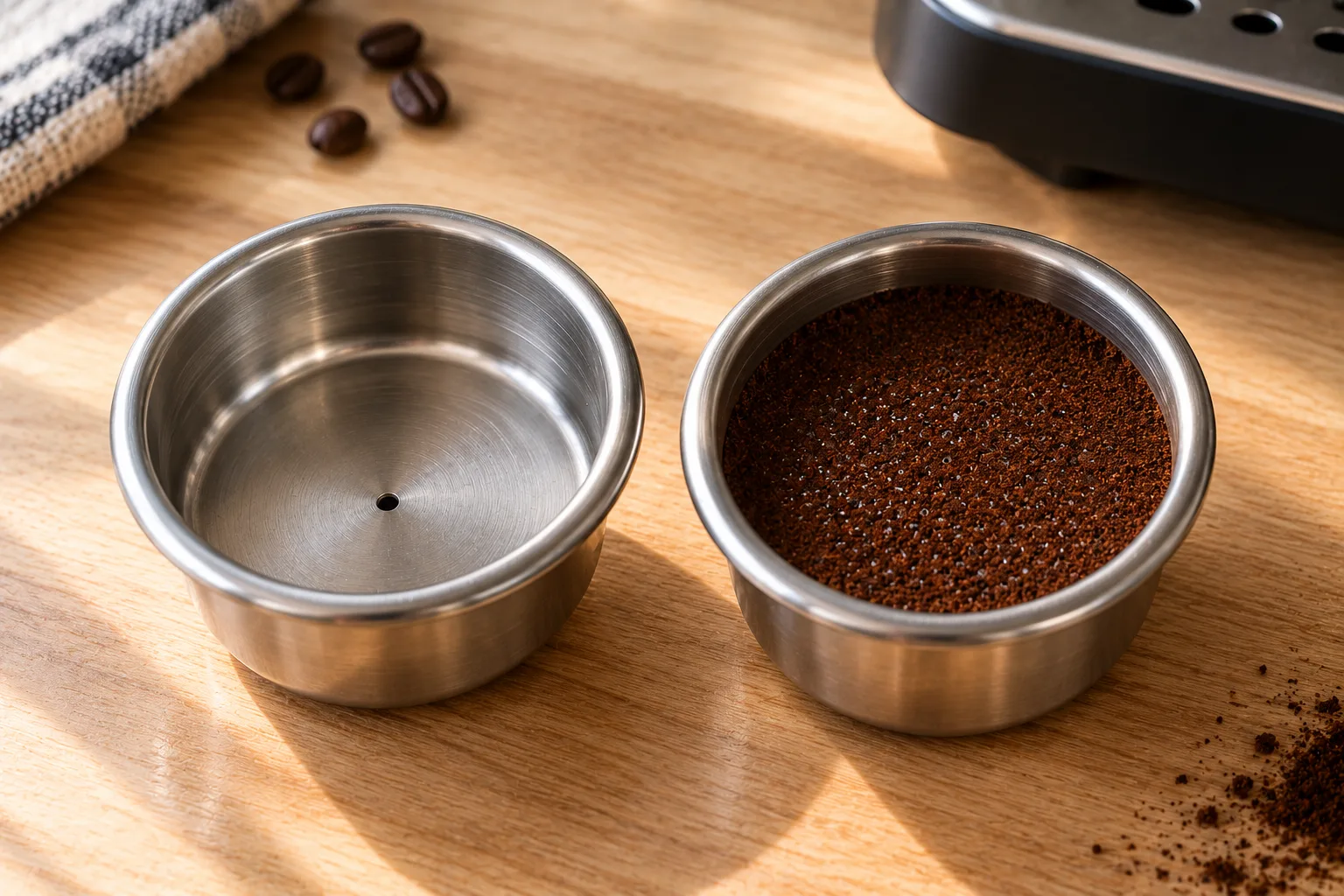
This band brings better boilers, sturdier builds and PID control on some models, and good shots are possible here with a proper grinder. Whatever you spend, moving from a pressurized basket (a basket with a built-in valve that makes shots more forgiving) to a standard (non-pressurized) one is arguably the most important functional jump. It matters more, in terms of what you can learn and taste, than the jump to a heat exchanger or dual boiler.
A real portafilter doesn't hide anything. Pressure builds entirely from your grind size, dose, and tamp, which means the shot reflects your technique, good or bad. That cuts both ways: it takes more effort to get a good shot consistently, but it also means there's a real ceiling to chase. You can taste the difference between a slightly-too-fine grind and a properly dialed one, and you can adjust and improve. That feedback loop is the whole point of espresso as a hobby, and it's largely absent with a pressurized basket.
Most machines in this band are still single boilers, so you wait between brewing and steaming.
This tier is where most people should start if they're serious about learning espresso rather than just wanting a quick espresso-style drink with minimal fuss. We cover picks just under $500 in our best espresso machine under $500 guide. If you're still deciding whether this is the right entry point for you, our how to choose an espresso machine guide walks through the decision in more depth.
$1,000 to $2,500. Heat Exchangers and Dual Boilers
This band adds heat exchanger (HX) and dual boiler designs. A heat exchanger uses a single boiler but routes brew water through a separate tube that runs through the steam boiler. That lets the machine brew and produce steam in much closer succession than a single-boiler machine can, without the full cost of running two independent boilers. It's a middle-ground engineering solution, and it's a meaningful upgrade if you regularly make milk drinks and don't want to wait around between brewing and steaming.
You also get PID temperature control, 58mm commercial-size portafilters and pre-infusion here. A PID actively regulates boiler temperature within a tight range rather than letting it swing with a basic thermostat. That means more shot-to-shot consistency, which helps once you're dialing in a specific recipe and want to isolate grind and dose as the variables that change, not water temperature drifting on its own.
Because these machines brew and steam at once, this band suits a household that drinks a lot of milk drinks and doesn't want to wait between shots. It is often called the sweet spot for most home baristas. For the deeper mechanical comparison between heat exchangers and dual boilers, our single boiler vs. dual boiler article covers it in detail.
$2,500 and Up. Prosumer Machines
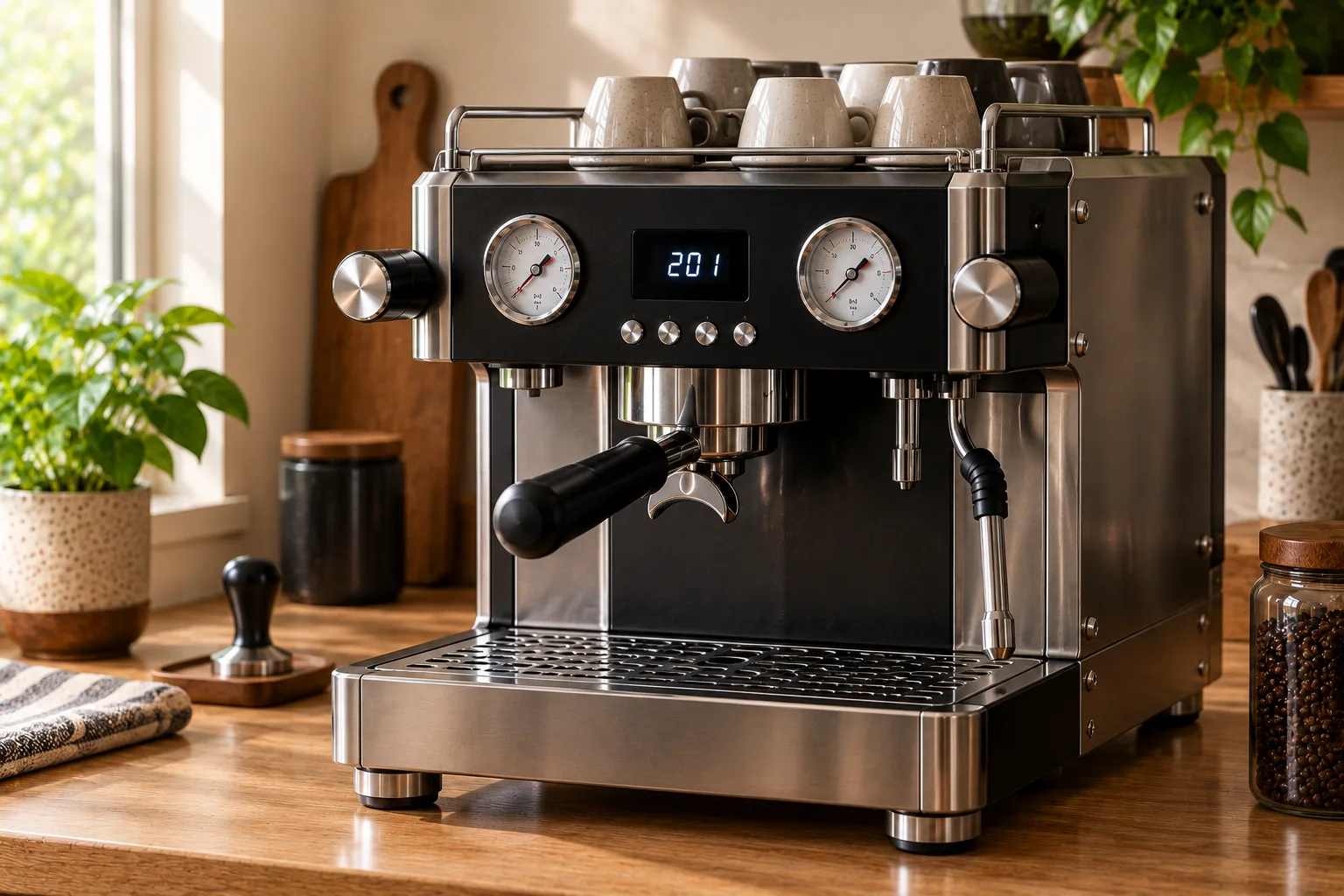
Above $2,500, you get dual boilers with a separate PID for each boiler, rotary pumps, the option to plumb into a water line, and commercial-grade group heads. A dual boiler machine has two fully independent boilers, one dedicated to brewing, one dedicated to steam, so both can hold their own target temperatures and run truly simultaneously, with no compromise between the two. This is the tier where "prosumer" starts to apply: machines built for people who take their routine seriously, sometimes to the point of home-baristas running comparable equipment to what a café might use.
Some machines at the top end also offer flow or pressure profiling: the ability to shape how water pressure or flow rate changes over the course of a shot, rather than just applying a flat 9 bars throughout. This is an advanced feature aimed at people who already understand extraction well and want another variable to experiment with. It's not something a beginner needs, and not something most intermediate users will use to its full potential either, but it's part of what some top-end machines charge for.
You don't need a machine in this band for excellent espresso. What you pay for is convenience, longevity and build quality, which matters if you plan to own the machine for a decade or more. If you're weighing whether it's worth spending this much versus upgrading an existing machine down the line, our guide on how long espresso machines last and when to upgrade is a useful read before you commit.
What You're Paying For as Price Goes Up
Leaving the marketing aside, prices go up with a fairly consistent set of real upgrades:
- Portafilter type. Pressurized baskets that forgive grind mistakes, versus real baskets that reward and require good technique.
- Boiler configuration. Single boiler, to heat exchanger, to dual boiler, each step reducing the compromise between brewing and steaming at the same time.
- Temperature stability. From basic thermostats to PID control, which matters more once you're trying to replicate a specific shot recipe.
- Steam power and control. Better wands and more consistent pressure for milk texturing, especially relevant if lattes and cappuccinos are your daily drink.
- Build quality and materials. Generally more metal, tighter tolerances, and components built to be serviced rather than replaced.
- Advanced controls. Flow and pressure profiling, found on some top-end machines, for people who want to experiment beyond standard extraction.
None of these upgrades matter equally to everyone. Someone who drinks straight shots and rarely steams milk gets far less value from a heat exchanger upgrade than someone making lattes every morning. Someone who's still learning to dial in grind size gets more immediate benefit from moving off a pressurized basket than from flow profiling three tiers up. The question isn't "what's the best machine I can afford". It's "which of these upgrades solves a problem I have."
Summary
So, how much does an espresso machine cost? Anywhere from under $500 to well over $2,500. For most people starting out, the meaningful jump isn't between price bands. It's from a pressurized portafilter to a standard one. That upgrade changes what you can taste and learn, well before boiler configuration or profiling come into play.
If you're just starting out, don't feel pressured to buy at the top of your budget. A well-chosen machine with a standard basket will teach you more about espresso than an unused feature set on a $1,500 machine ever will. Once you know what you want more of: faster steam recovery, tighter temperature control, or full profiling, the next tier up will make a lot more sense, and you'll be buying it for a real need instead of a spec sheet.
Not sure which tier fits your situation? Our how to choose an espresso machine guide walks through the decision step by step, and our espresso machine types guide is a good next read if you want the mechanical details behind everything covered here.
If you are still narrowing down what you need, our espresso machine buying guide walks through it step by step.
The Espresso Machines hub has the rest of our guides on choosing and comparing machines.
Two brands cover most of the budget and mid range. See Breville vs DeLonghi for how their lineups compare.