
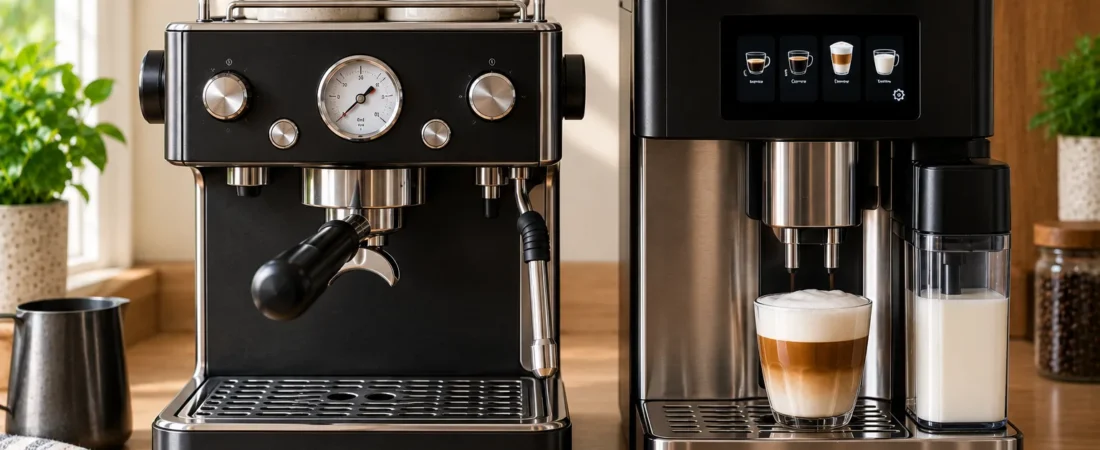
If you're searching "breville vs delonghi espresso machine," you're probably comparing two shopping tabs, trying to decide which one to close. Most comparisons just list specs side by side. That's not what you need. You need to know which brand's approach to making espresso fits how you want to make coffee, because "which is better" is the wrong question. The right one is which company builds machines for the person you are.
Breville and De'Longhi are the two brands almost everyone lands on when they start shopping for a home espresso machine in the $200 to $3,000 range, and for good reason. Both make good equipment. But they got there from different directions, and that difference matters more than any single spec sheet.
Breville vs DeLonghi: The Real Difference in Philosophy
The short answer to the Breville vs. De'Longhi espresso machine question: Breville's core lineup is built around semi-automatic machines that put you in the loop, while De'Longhi's lineup spreads wider across the automation spectrum, with a heavier lean toward machines that do more of the work for you.
Look at Breville's main models: the Bambino, Barista Express, Barista Pro, and Barista Touch. Each one is a semi-automatic machine. You're grinding into the portafilter (or the machine grinds for you, but you still tamp), you're locking it in, and you're starting and stopping the shot yourself, watching the cup, deciding when it's done. Breville builds machines for people who want to develop a feel for espresso, not just push a button and wait. If you want to understand the difference between that approach and full automation before you go further, our manual vs. semi-automatic breakdown covers exactly where the line sits and why it matters for taste and control.
De'Longhi's catalog tells a different story. Yes, they make semi-automatic machines. The Dedica line is a legitimate, well-regarded entry point that competes with Breville's Bambino. But De'Longhi's identity is much more strongly tied to its super-automatic, bean-to-cup lineup: machines with built-in grinders, automated tamping (pressing the grounds down firmly), and one-touch milk systems that take you from whole bean to finished latte without you touching a portafilter. That's a fundamentally different value proposition, and it's no less valuable. It's a different answer to "what do I want from my morning coffee?"
Neither philosophy is objectively correct. If you've never thought about the categories this way, our guide to espresso machine types lays out manual, semi-automatic, automatic, and super-automatic machines in plain terms, making this comparison easier to reason about.
Where Breville Wins
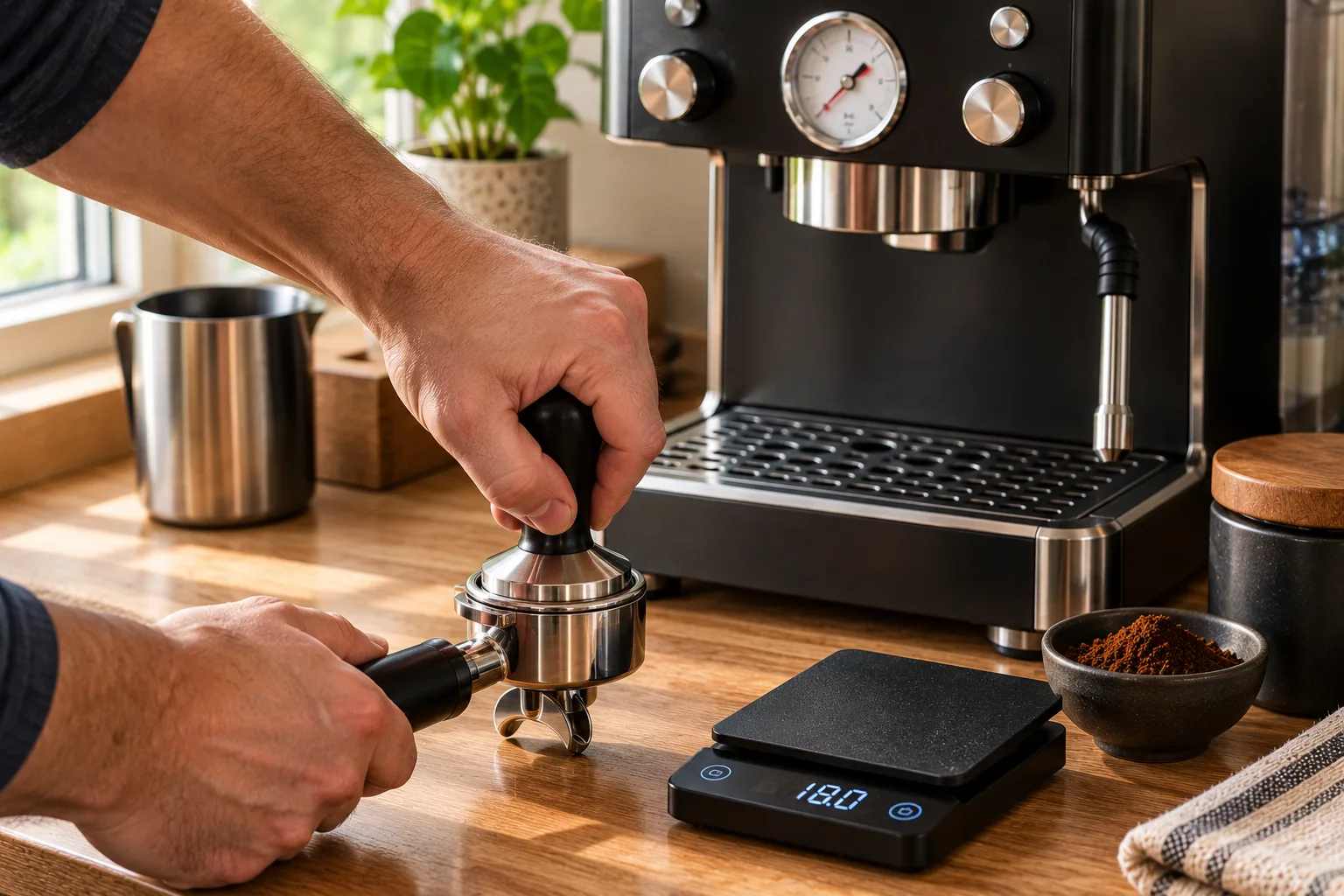
Breville earns its reputation in a few specific areas. They matter most for one kind of buyer: someone who wants a machine to get better with, not an appliance to set and forget.
- Control over the shot. Because Breville's core machines are semi-automatic, you control grind size, dose, tamp pressure, and shot timing. If you want to learn espresso as a skill, dialing in a new bag of beans, chasing a specific flavor profile, this is the brand built for that process.
- A gradual learning curve. Breville's interface design (especially on models with built-in grinders) targets beginners who want to grow into the craft. The controls are approachable without removing the manual steps that teach you what's happening in the portafilter.
- Consistency within a single ecosystem. Because Breville's lineup is more tightly focused around the semi-automatic format, moving up their range (Bambino to Barista Express to Barista Pro to Barista Touch) feels like a coherent progression rather than a jump into a different category of machine.
- A community and body of knowledge built around manual technique. Because so many home baristas start on a Breville, there's a large body of tamping, dosing, and troubleshooting knowledge specifically for their machines.
If any of that sounds like what you want, read our how-to choose an espresso machine guide before you commit. It walks through the exact questions that determine whether a semi-automatic is right for you, not just in theory.
Where De'Longhi Wins
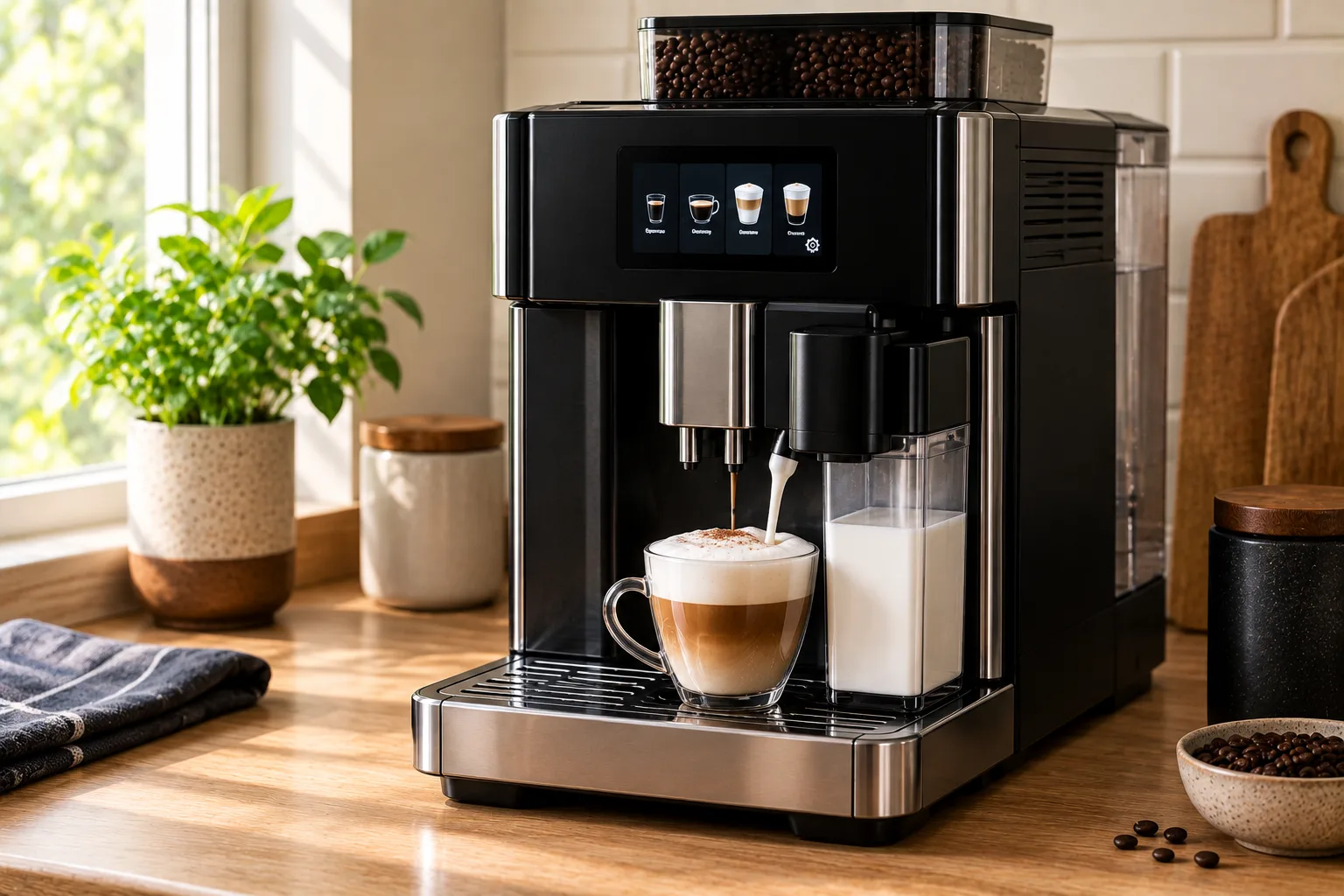
De'Longhi's strengths line up almost exactly opposite Breville's, which is the whole point of this comparison. If Breville is optimized for the person who wants to get hands-on with the process, De'Longhi is optimized for the person who wants the process to disappear entirely and just get a good cup. Both are legitimate goals, and neither one makes the buyer "less serious" about coffee. Plenty of people who care deeply about their morning cup still don't want to spend ten minutes on it.
- Breadth across price and automation levels. De'Longhi's catalog spans from budget-friendly semi-automatic machines to mid-range options and full super-automatic bean-to-cup machines. That range gives shoppers more entry points depending on both budget and how hands-on they want to be.
- Low-effort daily use. The super-automatic lines are built for a household where multiple people want a decent espresso or milk drink without anyone learning to tamp. Load beans, load water, press a button. That's not a compromise. For many households, that's the entire goal.
- Milk automation. De'Longhi has invested heavily in automated milk frothing systems on its higher-end super-automatics, which matters a lot if lattes and cappuccinos are your daily drink and you don't want to hand-steam milk every morning.
- An accessible on-ramp. Because De'Longhi's lineup dips lower into "no-frills, functional" territory, it's often the brand people land on when they want an upgrade from a pod machine without committing to learning a new skill.
If price tier is your main filter right now rather than brand loyalty, our espresso machines by price tier breakdown and our best espresso machine under $500 roundup are both more useful starting points than a brand-vs-brand fight. At the lower end, the specific model matters more than the logo.
The Exception: Breville's Automatic Oracle Line
Everything above sets up a clean narrative: Breville is the manual-control brand, De'Longhi is the automation brand, and that narrative is useful, but it's not the whole picture, and leaving it there would be misleading.
Breville makes a real, multi-model line of automatic machines: the Oracle, Oracle Touch, and Oracle Jet. These aren't a token "we also make one automatic machine" afterthought. They're a serious, sustained product line built around the same core idea as De'Longhi's super-automatics: automated grinding, dosing, tamping, and, in some cases, automated milk texturing, but built with Breville's engineering approach and price positioning. If you want the confidence of Breville's build quality and brand ecosystem but you don't want to hand-tamp every morning, the Oracle line exists specifically to solve that.
This matters for the comparison because it means "Breville equals manual, De'Longhi equals automatic" is a useful rule of thumb, not an ironclad law. A shopper who wants automation doesn't have to leave the Breville ecosystem to get it, and a shopper who wants hands-on control from De'Longhi has the Dedica line to look at, even if it's a smaller slice of their overall catalog. Both brands span a real range. One leans more toward manual control on average, and the other leans more toward automation on average.
A General Framework for Comparing Any Two Brands
The Breville vs. De'Longhi question is really a stand-in for a broader problem: how do you compare any two espresso machine brands without getting lost in spec sheets that don't tell you what matters day to day? Here's the framework we'd apply to any brand matchup, not just this one.
- Start with automation level, not the logo. Figure out where you personally sit on the manual-to-super-automatic spectrum before you look at any brand. A brand's "flagship" model means nothing if it's the wrong machine category for you.
- Look at the brand's default, not its outlier. Every major brand has at least one exception to its general lean (see: the Oracle line above). Judge a brand by where most of its lineup sits, then check whether the exception fits your specific need.
- Compare within the same price band. A $250 semi-automatic and a $1,200 super-automatic aren't a fair fight regardless of brand. Line up machines that cost roughly the same before you compare features.
- Weigh the ecosystem, not just the machine. Parts availability, community troubleshooting knowledge, and how easy it is to find accessories (baskets, tampers, replacement parts) vary by brand and matter more after year one than on unboxing day.
- Match maintenance tolerance to the machine, not the brand. Super-automatics need regular descaling and internal cleaning cycles. Semi-automatics need daily backflushing (running water backward through the group head to clean it) and basket cleaning. Neither is harder, but they're different chores. Pick the one you'll do.
Run any two brands through that list, and you'll get a clearer answer than any "Brand X vs Brand Y: 10 Key Differences" table can give you, because it starts from your use case instead of from the machines.
Which One to Buy
If you want hands-on control and to learn espresso as a skill, Breville's core semi-automatic lineup is the more natural fit. If you want a low-effort daily espresso or latte and don't mind paying for automation, De'Longhi's super-automatic lineup, or Breville's own Oracle line if you want to stay in that ecosystem, is the better fit. Neither brand is universally "better." The Breville vs. De'Longhi espresso machine question only has a right answer once you know which side of the manual-to-automatic spectrum you want to live on, and that's a decision about your morning routine, not about brand reputation.
That's also why forum threads on this question rarely settle it. People with different routines, budgets and tolerance for daily maintenance argue without defining the use case first. Define yours before you compare a single machine, and the brand decision gets a lot easier.
If you're still not sure which category fits you, start with our how-to-choose-an-espresso-machine guide, then narrow by budget using our price-tier breakdown. That order (use case first, brand second) will get you to the right machine faster than any head-to-head comparison, including this one.
A Breville vs DeLonghi espresso machine decision made on use case alone will serve you better than one made on name recognition.
For the research on extraction itself, a 2020 study in Mattermeasured how grind size and flow through the puck (the pressed cake of coffee grounds in the basket) change the strength of a shot.
This guide is part of the Espresso Machines hub, which brings together our guides on choosing and comparing machines.