
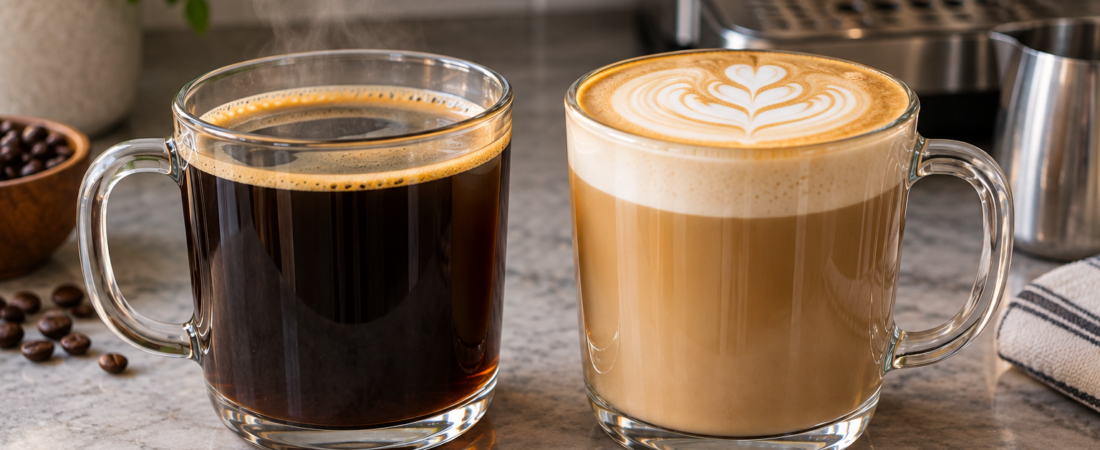
An americano is espresso diluted with hot water. A latte is espresso topped with steamed milk. That’s the whole distinction at the ingredient level, but it shows up in almost everything else about the two drinks: how they taste, how many calories they carry, and even how strong they feel in your hand.
The core difference: water versus milk
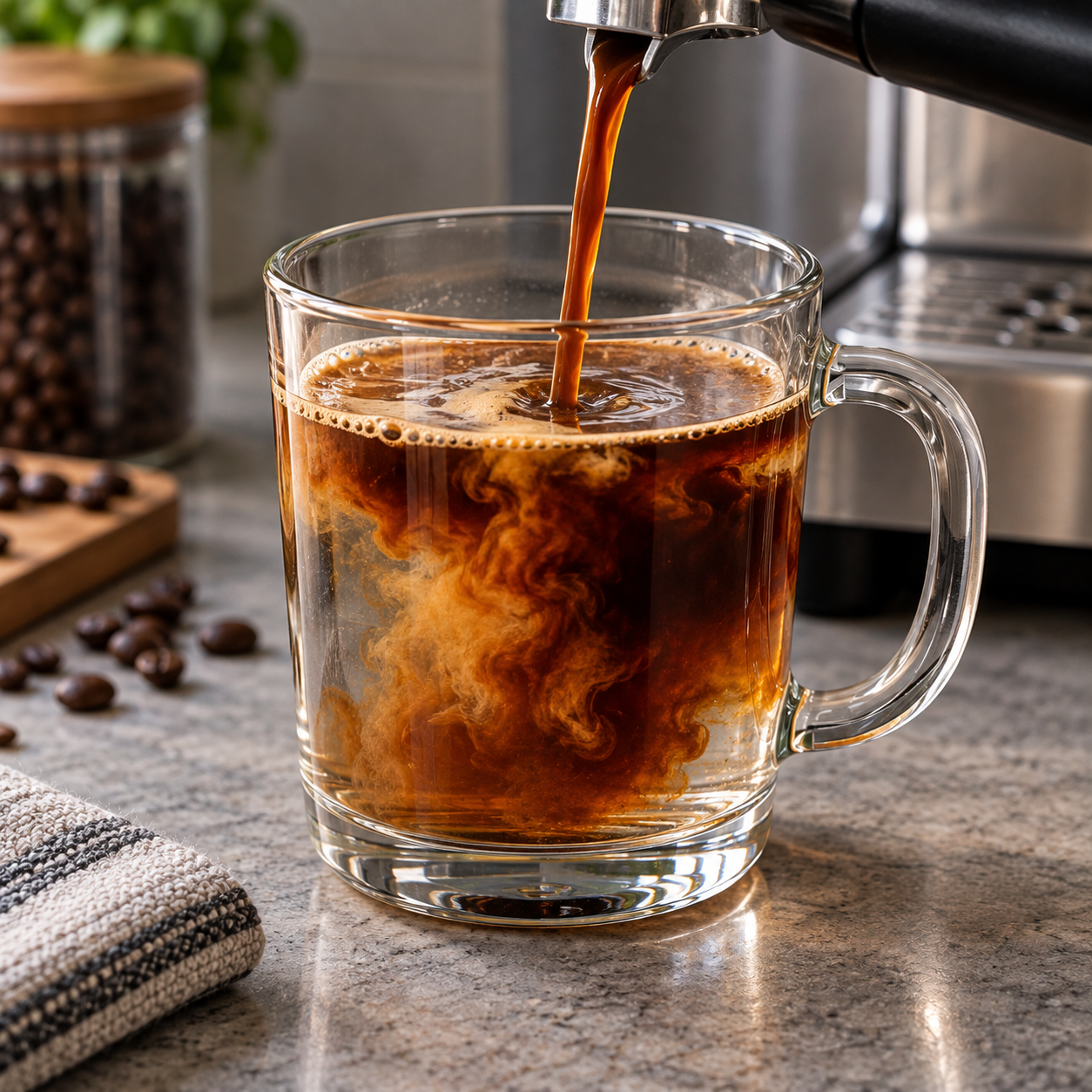
An Americano starts with one or two shots of espresso, then adds hot water, typically in a ratio of about 1 part espresso to 2 or 3 parts water. Nothing else goes in unless you ask for it. The result looks and feels closer to drip coffee, but because it’s made from espresso, the flavor carries more of the concentrated, slightly bitter notes espresso has and drip coffee doesn’t.
A latte starts with the same one or two shots of espresso, then adds steamed milk, usually around 3/4 cup, along with a thin layer of foam on top. The milk doesn’t just dilute the espresso the way water does. It also softens the bitterness and adds natural sweetness, which is why a latte tastes noticeably smoother and creamier than an Americano, even though both drinks start with the same shot.
Caffeine: closer than people expect
Because both drinks use the same espresso as their base, they carry roughly the same caffeine, about 68 milligrams per single shot, more if the shop pulls a double by default (which many do for both drinks). The americano can feel stronger simply because there’s no milk mellowing the flavor, but that’s a taste effect, not an actual caffeine difference. If a cafe uses the same number of shots for both drinks, the caffeine content is essentially identical.
Calories: this is where they really split
An Americano is close to calorie-free on its own, generally under 10 calories for a standard cup, since it’s just espresso and water. A latte made with whole milk runs closer to 110 to 150 calories for a standard 12-ounce serving, depending on the milk and any added syrup. If calories are the deciding factor, the americano is the clear choice, and it stays that way even if you add a small amount of milk on the side.
Where the americano actually comes from
The americano has a documented origin story from World War II. American soldiers stationed in Italy found local espresso far more intense than the coffee they were used to at home, so they diluted it with hot water to bring it closer to that familiar, weaker cup. The name stuck. The drink didn’t become a fixture of coffee shop menus until the specialty coffee boom of the 1990s, when baristas started using it as the closest espresso-based approximation of a regular black coffee for customers who didn’t want anything fancier.
Which one should you actually order?
If you want something that drinks like black coffee but is made from espresso, order an Americano. It’s lighter in body than a straight shot, stronger in flavor than drip coffee, and essentially calorie-free.
If you want something smoother and creamier, and you don’t mind the extra calories, order a latte. It’s the more forgiving drink for anyone who finds straight espresso or an Americano too sharp, and it’s easy to customize with flavored syrups without changing the underlying balance much.
Neither one is “stronger” in the way most people mean the word. They use the same espresso base, split in two directions: one diluted with water, one softened with milk.
Americano vs latte, side by side
| Americano | Latte | |
|---|---|---|
| Base | Espresso + hot water | Espresso + steamed milk |
| Typical ratio | 1 part espresso to 2 to 3 parts water | Espresso plus about 3/4 cup milk |
| Milk | None (unless added on request) | Yes, steamed with a thin foam layer |
| Caffeine (single shot) | About 68 mg | About 68 mg |
| Calories (standard serving) | Under 10 | About 110 to 150 with whole milk |
| Taste | Bitter, robust, closer to black coffee | Smooth, creamy, mellowed by milk |
| Best for | Black coffee drinkers who want espresso’s flavor | Anyone who prefers a softer, milk-forward cup |
Common mistakes people make with each
Ordering an Americano expecting it to taste like drip coffee. It’s closer, but the espresso base still comes through more sharply than a drip brewer’s coffee does.
Assuming a latte has less caffeine because it tastes milder. The milk changes the flavor, not the caffeine, since both drinks share the same espresso shots.
Treating “Americano” and “long black” as identical. A long black is made by pouring espresso over hot water instead of pouring water into the espresso, which changes how much of the crema survives and gives it a slightly different body, even though the ingredients are the same.
Frequently asked questions
Does an americano have more caffeine than a latte?
No, not when both use the same number of espresso shots. The caffeine comes entirely from the espresso, and neither the water in an americano nor the milk in a latte adds or removes caffeine.
Is an americano just black coffee?
Not exactly. It’s made from espresso diluted with hot water, which gives it a different flavor and body than drip-brewed coffee, even though both end up looking similar in the cup.
Which has fewer calories, an Americano or a latte?
The americano, by a wide margin. It’s close to calorie-free on its own, while a latte’s calories come from its milk, typically 110 to 150 for a standard serving with whole milk.
Can you add milk to an americano?
Yes. Adding a splash of milk to an Americano doesn’t turn it into a latte because the milk-to-espresso ratio stays much lower, but it can soften the bitterness if you find the drink too sharp on its own.
What’s the difference between an americano and a long black?
The pour order. An americano is made by adding hot water to espresso, while a long black is made by pouring espresso over hot water, which preserves more of the crema on top and gives it a slightly different texture.
The bottom line
An americano and a latte start from the exact same shot of espresso and end up nowhere near each other. Water strips the espresso down to something closer to black coffee. Milk rounds it out into something smoother and richer. Neither is the “better” drink; they’re built for different preferences, and knowing the real difference between water and milk as the second ingredient is all you need to order the right one.
Related comparisons: see how a macchiato compares to a latte or how a cappuccino differs from a latte, or how a cortado compares to a latte.