
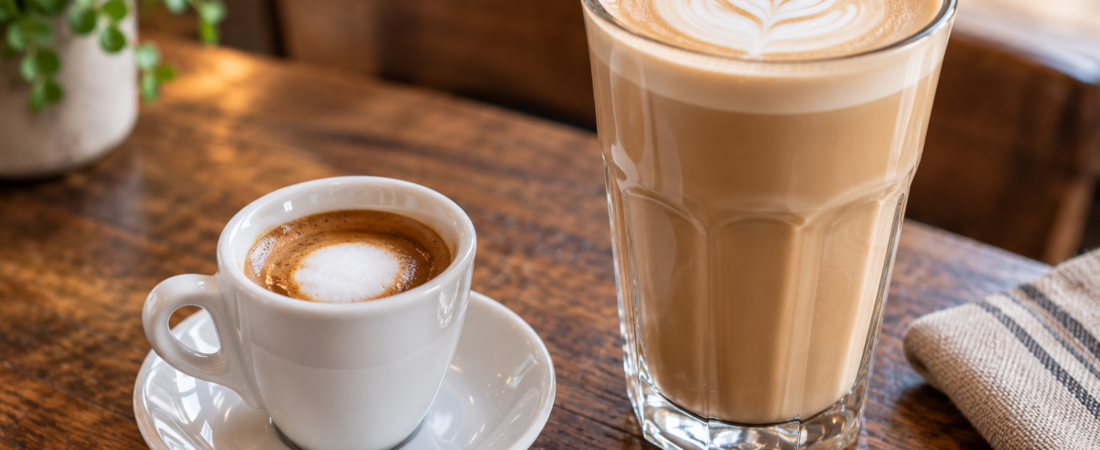
The macchiato vs latte comparison isn’t subtle once you order both: one is a small, strong shot of espresso with a spoonful of foam on top, sitting in a cup barely bigger than a shot glass. The other is a tall glass of milk with espresso mixed through it, big enough to hold with two hands. The confusion mostly comes from Starbucks, where a “caramel macchiato” looks and tastes nothing like the drink that gave macchiato its name.
This covers what an actual macchiato is, why Starbucks’ version is really a different drink wearing the same name, how a macchiato compares to a latte in size and strength, and where latte macchiato fits into all of this without being the same thing as either one.
What Actually Separates a Macchiato From a Latte
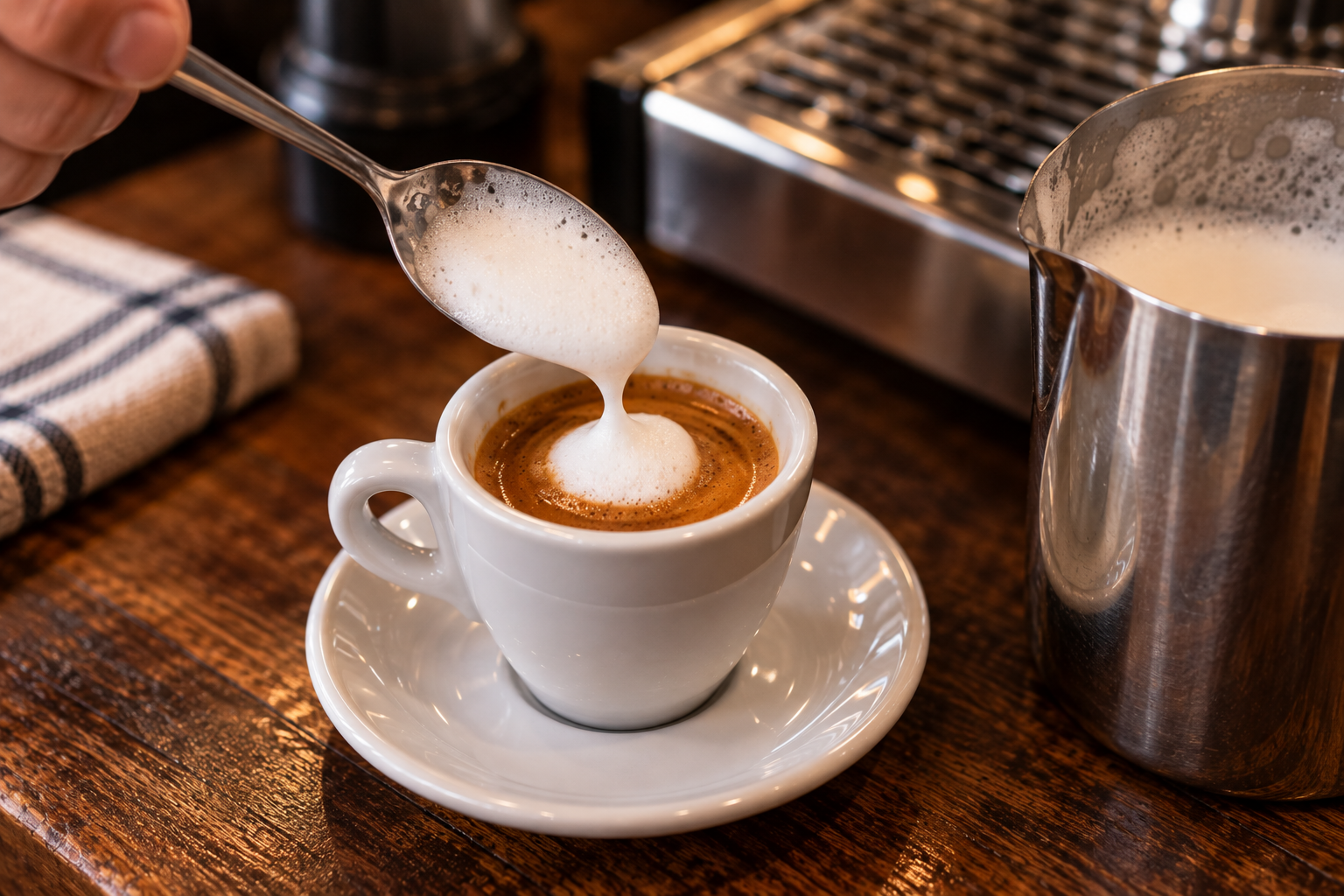
A macchiato starts with one or two shots of espresso and gets “marked” with just a small amount of foamed milk, traditionally 1 to 2 teaspoons. That’s it. The milk doesn’t fill the cup or soften the coffee much. It just adds a light layer of texture on top of the espresso. A traditional macchiato has the highest espresso-to-milk ratio of any milk-based coffee drink, which is the point of ordering one.
A latte flips that ratio almost completely. It uses the same one or two shots of espresso, but adds four to six times as much steamed milk, with only a thin layer of foam on top. Where a macchiato is coffee with a trace of milk, a latte is milk with coffee mixed through it.
Macchiato vs Latte: Size Is the Fastest Way to Tell Them Apart
A traditional macchiato is served in a small cup, usually 2 to 3 ounces total, close to the size of a double shot of espresso with almost nothing added. It’s meant to be drunk in a few sips, the same way you’d drink a straight espresso.
A latte is built to be a full drink, typically 10 to 12 ounces or larger. If you see a macchiato served in a 12- or 16-ounce cup, it isn’t a traditional macchiato anymore. It’s something else wearing the name, which is the source of most of the confusion around this comparison.
Why Starbucks’ macchiato confuses everyone
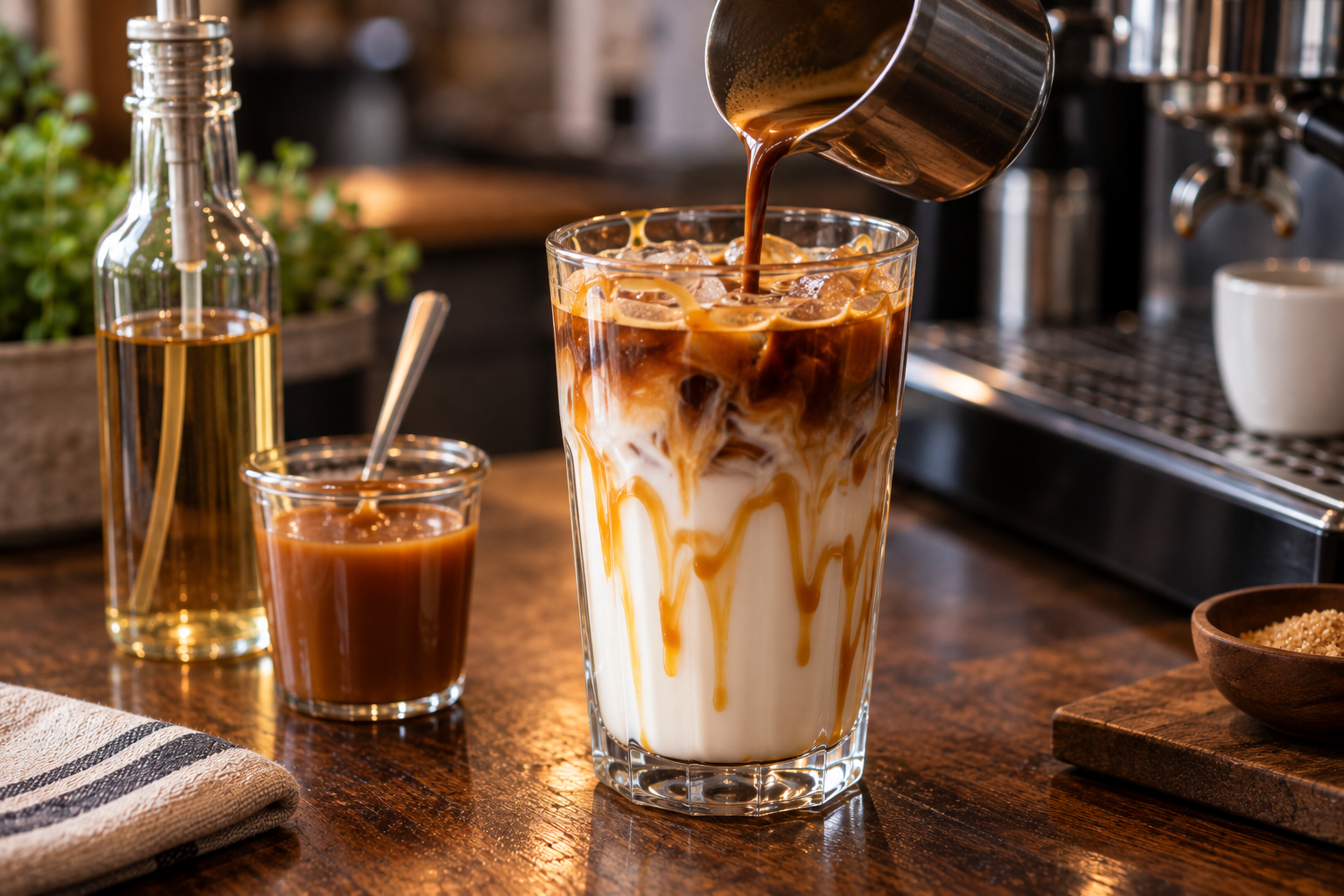
The most commonly ordered “macchiato” in the US isn’t the Italian drink. Starbucks’ Caramel Macchiato is built in reverse: vanilla syrup and steamed milk go into the cup first, then espresso is poured on top, then caramel drizzle finishes it off. It uses a significant amount of steamed milk, similar in proportion to a latte, and the espresso is easy to lose entirely under the vanilla and caramel in a large size.
That’s the opposite construction of a real macchiato: espresso first, with barely any milk added after. Starbucks kept the word “macchiato” because the espresso still visibly “marks” the top of the milk when it’s poured on, but the drink itself is far closer to a flavored latte than to the small, strong shot the name originally described. If you’ve only ever had a Starbucks-style macchiato and then order a traditional one somewhere else, expect a genuinely different drink, not a smaller version of the same thing.
Macchiato vs Latte: Size and Ratio, Side by Side
| Detail | Macchiato (traditional) | Latte |
|---|---|---|
| Espresso | 1 to 2 shots | 1 to 2 shots |
| Steamed milk | 1 to 2 teaspoons, foamed | 4 to 6 times the espresso |
| Foam | A small dollop on top | Thin microfoam layer, about a quarter inch |
| Typical total size | 2 to 3 ounces | 10 to 12 ounces, often larger |
| Texture | Mostly liquid espresso, barely diluted | Velvety, pourable, supports latte art |
The gap in this table is bigger than the gap between a cappuccino and a latte. A macchiato is closer to plain espresso with a garnish than it is to any of the bigger milk drinks, which is why it’s usually the strongest-tasting option on a menu that includes all three.
Where the name actually comes from
Macchiato means “stained” or “marked” in Italian, and caffè macchiato translates literally to “stained coffee.” The name describes exactly what the drink is: a shot of espresso marked with a small spot of milk, rather than coffee mixed into milk. One account of the drink’s origin ties it to a practical need in Italian cafes, where baristas would “mark” a shot of espresso with a dab of milk so waitstaff could tell at a glance which cups had milk in them and which didn’t, before the drink was ever taken to a table.
Latte macchiato, a separate and easily confused drink, works the other way around and has its own version of the name. It’s made by pouring espresso into a glass of steamed milk, leaving a visible brown “stain” on top of the milk instead of the other way around. It has far more milk than an espresso macchiato, often using half a shot of espresso or less, and it’s meant to be a milk-forward drink with just a spot of coffee, not a coffee-forward drink with a spot of milk.
Macchiato, latte macchiato, and latte: three different drinks, one confusing name
It helps to think of these as three separate points on the same espresso-to-milk scale rather than variations on one drink.
An espresso macchiato is almost all espresso, with a token amount of milk added at the very end. A latte macchiato is almost all milk, with a shot of espresso poured in and left to show through as a mark on top rather than mixed in. A latte sits at the milk-heavy end of the scale too, but the espresso and milk are combined together rather than kept as a visible layered mark. If a menu lists all three and you’re not sure which to order, the fastest gut check is this: macchiato for something small and strong, latte macchiato for something milky with a visible coffee layer, latte for something milky and fully mixed.
Caffeine difference? Comes down to shots, not milk
In the macchiato vs latte caffeine question, a macchiato and a latte made with the same number of espresso shots have essentially identical caffeine content, because caffeine comes from the espresso, not the milk. A traditional single-shot macchiato has less caffeine than a double-shot latte simply because it usually contains fewer shots to begin with, not because the drink itself is “stronger” in caffeine terms. Starbucks-style macchiatos scale their espresso shots up with cup size the same way lattes do, so a large caramel macchiato and a large latte with the same shot count land at roughly the same caffeine level despite tasting very different.
Common mistakes people make with each
Expecting a Starbucks-style macchiato to taste like an Italian one. Most macchiato vs latte confusion starts here: the two are built in opposite orders with very different milk ratios. Ordering a traditional macchiato somewhere that specializes in Italian-style espresso, rather than assuming every macchiato is the syrup-and-caramel version, avoids a lot of surprise.
Assuming “macchiato” always means “strong.” A traditional espresso macchiato is genuinely strong because it’s mostly espresso. A large Starbucks-style caramel macchiato isn’t, because it carries several ounces of milk and syrup around one or two shots.
Ordering a macchiato expecting latte-sized volume. A traditional macchiato is a 2 to 3 ounce drink, not a mug. If you want espresso flavor with a little milk texture in a bigger cup, a cortado or a small latte fits better than asking a cafe to make an oversized macchiato.
Which one should you actually order?
Deciding between a macchiato vs. a latte comes down to what you want from the cup. If you want the taste of straight espresso with just enough milk to round off the edge, order a macchiato and drink it like a shot: quickly, while it’s hot. It’s built for a short, concentrated coffee break, not something to sip over an hour.
If you want something you can hold onto for a while, with the espresso mellowed out by a real volume of milk, a latte is the better choice. It’s the more forgiving option if you’re not used to the intensity of straight espresso with almost nothing added.
Neither is a smaller or bigger version of the other. The macchiato vs latte choice really comes down to opposite priorities: one protects the espresso, the other dilutes it into something easier to drink in volume.
What to check out next
If you want a full comparison of the two most-ordered milk drinks on a typical menu, Cappuccino vs Latte breaks down how foam thickness and milk ratio separate them. For the basics of what espresso actually is before worrying about any milk drink built on top of it, What Is Espresso? covers that from the ground up. If you want to understand how shot length changes flavor before milk enters the picture, Espresso Brew Ratio Explained breaks down ristretto, normale, and lungo shots.
Frequently asked questions
Is a macchiato stronger than a latte?
In the macchiato vs latte comparison, a traditional macchiato tastes stronger because it’s almost entirely espresso with a trace of milk. A latte made with the same number of shots has the same caffeine, but the flavor is spread across far more milk, so it tastes milder even though the coffee content is the same.
Why does a Starbucks macchiato taste like a latte?
Because it largely is one. Starbucks’ Caramel Macchiato uses a significant amount of steamed milk plus vanilla syrup and caramel drizzle, built in reverse order from a traditional macchiato. It keeps the name because the espresso visibly marks the top of the milk, but the ratio and flavor are much closer to a flavored latte.
What’s the difference between a macchiato and a latte macchiato?
An espresso macchiato is mostly espresso with a small amount of milk added. A latte macchiato is mostly milk, with espresso poured in afterward, leaving a visible mark rather than being mixed through. They sit at opposite ends of the same scale despite the similar name.
Can you get a macchiato iced?
Yes, though an iced traditional macchiato is unusual outside of specialty shops since the drink is so small to begin with. Most “iced macchiato” orders in the US refer to the Starbucks-style version, which is really an iced flavored latte with an espresso layer poured on top.
The bottom line
The macchiato vs latte comparison starts from the same shot of espresso, but the two represent opposite ends of the milk spectrum. A macchiato is espresso with a trace of milk marking the top, meant to be small and strong. A latte is milk with espresso mixed through it, meant to be a full-sized, mellow drink. The version most people know as a “macchiato” from Starbucks is really its own flavored, latte-style drink that borrowed the name, which is exactly why the comparison causes so much confusion in the first place.
Related comparisons: see how a cappuccino compares to a latte or how an americano differs from a latte, or how a cortado compares to a latte.