

A cortado is equal parts espresso and steamed milk with little to no foam. A latte is espresso topped with a much larger volume of steamed milk and a thin layer of foam. The size difference alone is dramatic: a cortado is usually 4 ounces total, while a latte starts around 8 ounces and often goes bigger. Everything else about how these two drinks taste and feel comes back to that ratio.
The core difference: milk ratio and size
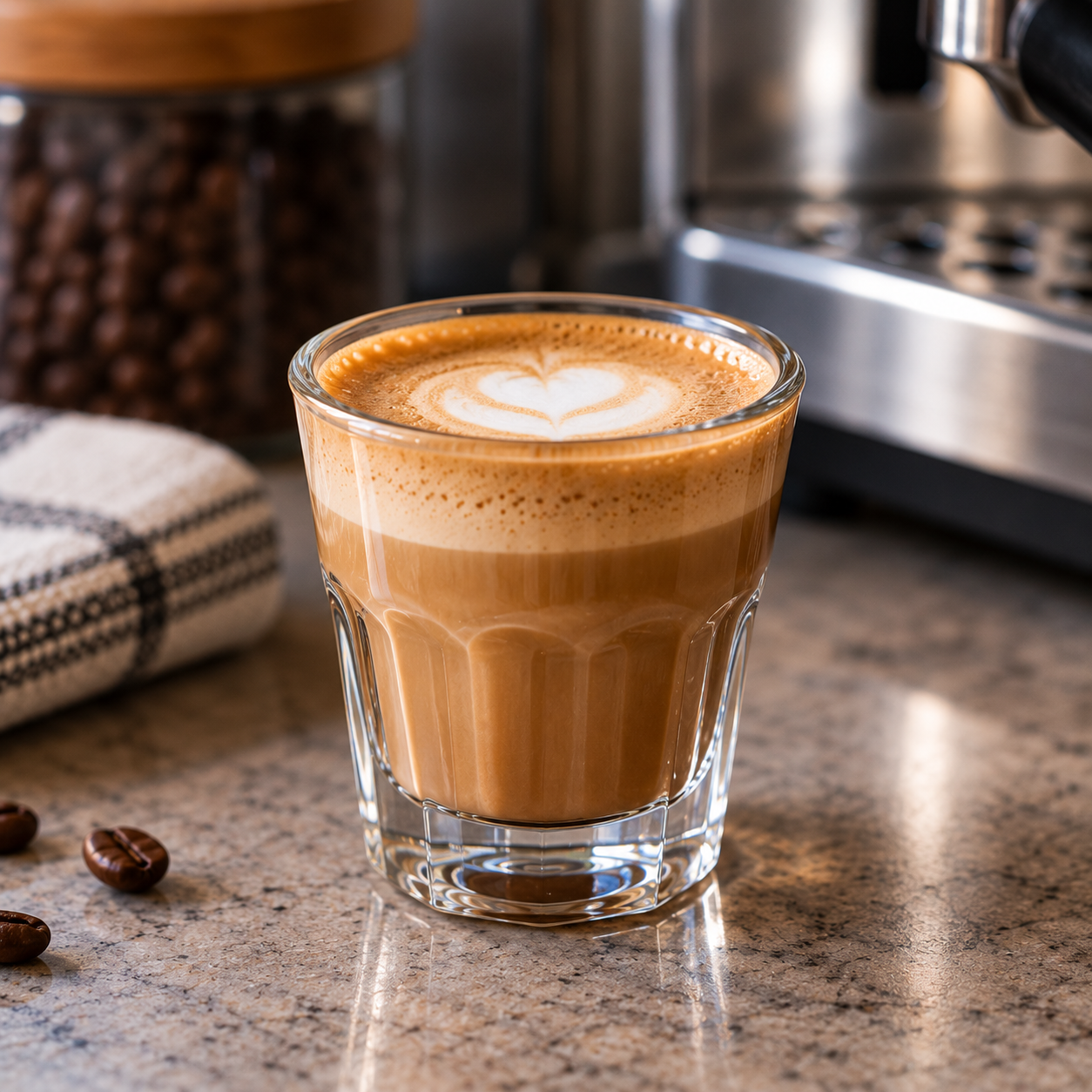
A cortado starts with a single shot of espresso, then adds an equal amount of steamed milk, roughly 1:1. There’s little to no foam on top, since the point of a cortado is to soften the espresso’s edge without burying it. The whole drink comes to about 4 ounces, served in a small glass.
A latte starts with the same one or two shots of espresso, then adds around 6 to 10 ounces of steamed milk, closer to a 1:3 or 1:4 ratio, along with a thin layer of foam. That much more milk changes the drink completely. Instead of tasting like espresso with a little milk mixed in, a latte tastes like a milk drink with espresso flavor running through it.
Caffeine: closer than people expect
When both drinks use the same number of espresso shots, they carry the same caffeine, about 68 milligrams per single shot. A cortado can feel stronger because there’s so much less milk to dilute the espresso flavor, so the coffee tastes more concentrated per sip. That’s a flavor effect, not an actual caffeine difference. Some cafes do build cortados on a double shot by default because the drink is so small that a single shot can taste weak once it’s cut with milk, so it’s worth asking if you want to match caffeine exactly between the two.
Calories: this is where they really split
A cortado made with whole milk runs around 35 to 50 calories, since there’s only about 2 ounces of milk in the whole drink. A latte made with whole milk runs closer to 110 to 150 calories for a standard serving, simply because it holds three to four times as much milk. If you’re watching calories, the cortado wins by a wide margin, even though both drinks start from the same espresso.
Where the cortado actually comes from
The name comes from the Spanish word “cortado,” meaning “cut.” The idea is that the milk cuts the espresso’s acidity and intensity without drowning it, which is exactly the opposite approach from a latte, where milk is meant to dominate. The drink originated in Spain and spread through Spanish and Portuguese coffee culture before showing up on specialty coffee menus in the United States in the 2010s, usually as an alternative for people who wanted something smaller and less milk-forward than a latte or cappuccino.
Which one should you actually order?
If you want to taste the espresso clearly but don’t want a straight shot, order a cortado. It’s small, direct, and quick to drink.
If you want something bigger and creamier to sip over time, order a latte. It’s the better choice for anyone who finds straight espresso too intense or wants a drink that lasts through a longer break.
Neither drink is “stronger” in terms of caffeine when the shot count matches. The difference is entirely about how much milk stands between you and the espresso.
Cortado vs latte, side by side
| Cortado | Latte | |
|---|---|---|
| Base | Espresso + steamed milk | Espresso + steamed milk |
| Typical ratio | 1 part espresso to 1 part milk | 1 part espresso to 3 to 4 parts milk |
| Total size | About 4 oz | 8 oz or more |
| Foam | Little to none | Thin layer on top |
| Caffeine (single shot) | About 68 mg | About 68 mg |
| Calories (standard serving) | About 35 to 50 | About 110 to 150 |
| Taste | Concentrated, espresso-forward | Mild, milk-forward |
| Best for | Drinking espresso flavor without a straight shot | A longer, creamier coffee break |
Common mistakes people make with each
Assuming a cortado is just a small latte. It isn’t a scaled-down version of the same drink. The espresso-to-milk ratio is completely different, which gives a cortado its more concentrated flavor.
Confusing a cortado with a flat white. A flat white uses more milk than a cortado and includes a thin layer of microfoam, putting it closer in size and texture to a small latte than to a cortado.
Expecting a cortado to have noticeably more caffeine because it tastes stronger. Unless the shop uses a double shot by default, the caffeine matches a single-shot latte. What changes is how concentrated that caffeine tastes, not how much of it there is.
Frequently asked questions
Is a cortado stronger than a latte?
It tastes more concentrated because there’s far less milk to dilute the espresso, but the actual caffeine content is the same when both drinks use the same number of shots.
What’s the difference between a cortado and a flat white?
A flat white uses more milk and includes a thin layer of microfoam, making it a bit larger and creamier than a cortado, which uses less milk and has little to no foam.
How many calories are in a cortado compared to a latte?
A cortado made with whole milk runs about 35 to 50 calories, while a latte with whole milk runs about 110 to 150 calories, mainly because a latte holds several times as much milk.
Can you get a cortado with oat milk or another alternative?
Yes. The 1:1 ratio stays the same regardless of milk type, though oat and other plant milks steam and foam a little differently than dairy, which can slightly change the texture.
What does “cortado” actually mean?
It’s Spanish for “cut.” The name refers to the milk cutting the espresso’s acidity and intensity, rather than dominating it as it does in a latte.
The bottom line
A cortado and a latte both start with espresso, but the amount of milk added completely changes the outcome. A cortado stays small and lets the espresso lead. A latte adds enough milk to shift the balance toward something creamier and milder. Once you know the ratio each one is built on, deciding which to order comes down to whether you want the coffee flavor front and center or softened into something you can sip slowly.
Related comparisons: see how a macchiato compares to a latte, how a cappuccino differs from a latte, or how an Americano stacks up against a latte, or how a flat white compares to a cappuccino, or how a mocha compares to a latte.