
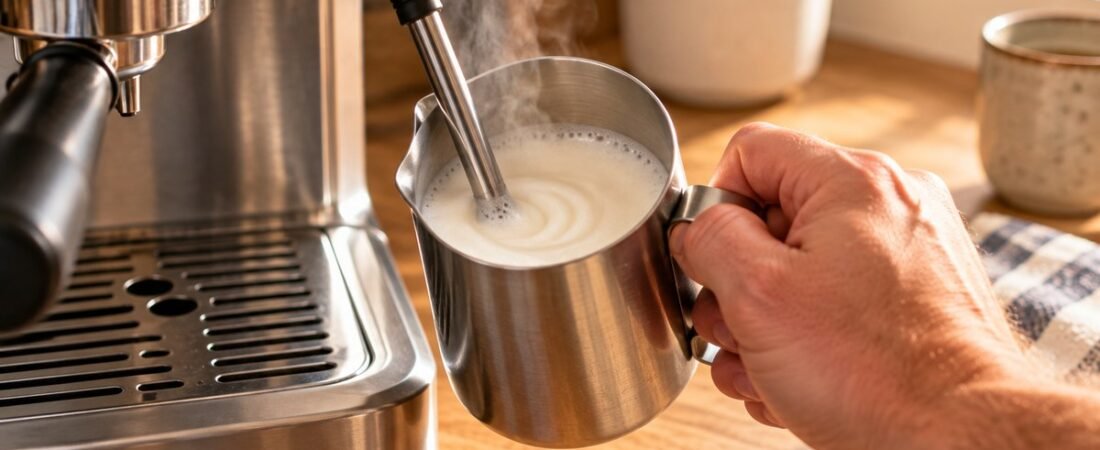
The Bambino and the Bambino Plus look almost identical in product photos, and Breville's naming doesn't help much either. The price gap between them is real, and so is the difference the extra money makes. When people weigh the Bambino vs Bambino Plus, the comparison usually gets reduced to a single line, "the Plus froths milk automatically," and left there. That is true, but it leaves out how much else depends on that one difference, including the water tank, the accessories and how you get hot water.
Here is what separates the Bambino from the Bambino Plus, drawn from Breville's official product page, a side-by-side check against independent retailer spec sheets, and what owners report after using each machine for a while.
What Separates the Bambino and Bambino Plus
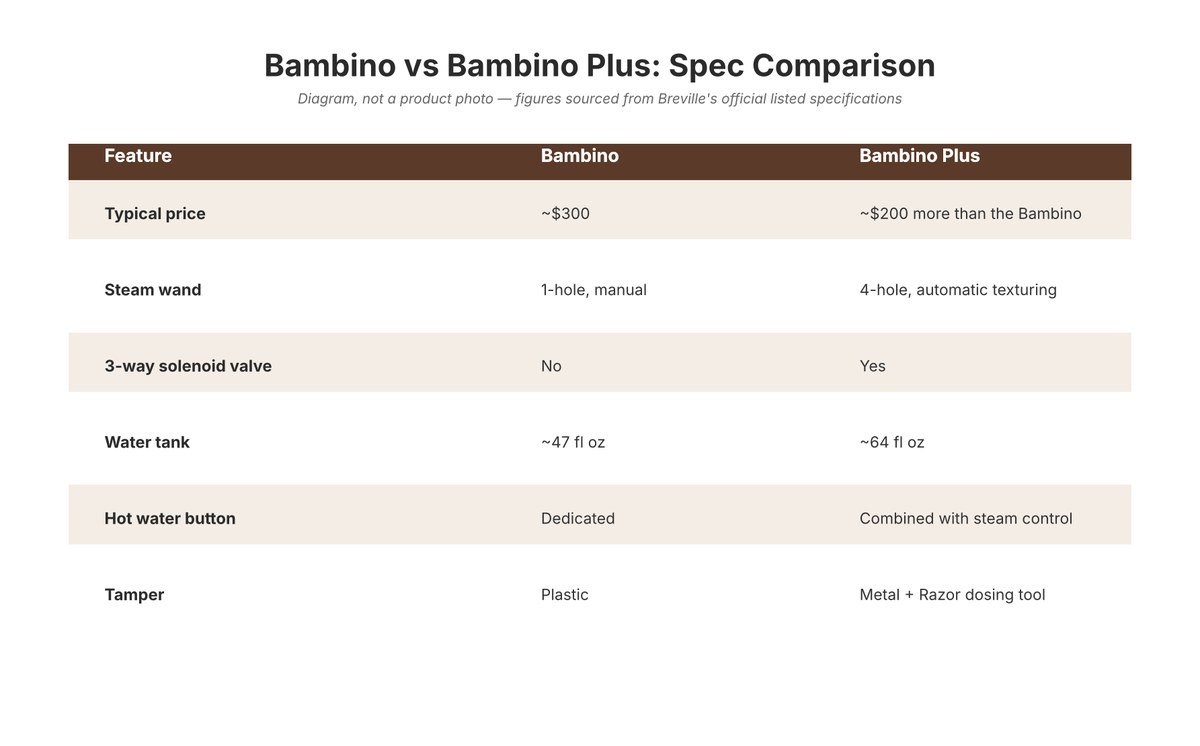
In the Bambino vs Bambino Plus matchup, both machines share the same core. They have a 15-bar Italian pump that settles to roughly 9 bar during extraction, a ThermoJet heating system with digital (PID) temperature control that reaches temperature in about three seconds. They also share the same compact footprint, which fits under most standard kitchen cabinets. The differences sit almost entirely in the steam side and in a handful of included accessories, not in the part of the machine that pulls the shot.
| Feature | Bambino | Bambino Plus |
|---|---|---|
| Typical price | Roughly $300 | Roughly $200 more than the Bambino |
| Steam wand | 1-hole tip, manual control | 4-hole tip with automatic milk texturing and auto-purge |
| 3-way solenoid valve | No | Yes |
| Water tank | About 47 fl oz | About 64 fl oz |
| Hot water button | Dedicated button | Combined with the steam control |
| Tamper | Plastic | Metal, with a Razor dosing tool included |
The 3-way solenoid valve is worth explaining, since it is easy to skip past as jargon. It releases pressure from the portafilter (the handle that holds the basket of coffee) the instant a shot finishes, so the puck of used grounds comes out slightly moist and loose instead of bone-dry and compacted. The Bambino does not have one. The Bambino Plus does, and it is also what drives the auto-purge cycle on the steam wand between drinks.
The Short Version: What the Extra Money Buys
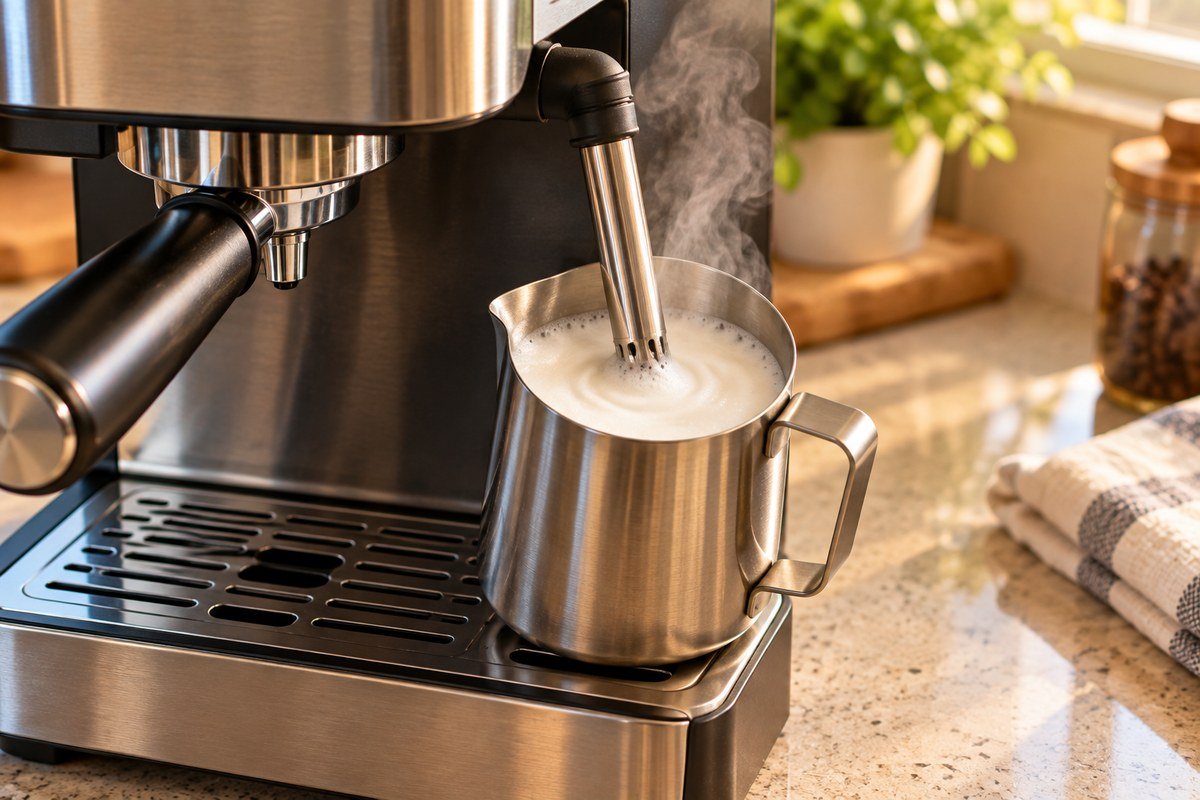
Almost everything that separates the Bambino vs Bambino Plus comes down to the steam wand. The base Bambino's single-hole tip has to be aimed and timed by hand, which is a skill that takes a week or two of practice to learn. The Plus's auto-texturing wand reads the milk temperature and stops on its own once it hits the target, which removes that learning curve entirely for anyone whose main drink is a latte or cappuccino.
The bigger water tank matters more than it sounds. A 47-ounce tank on the base Bambino means refilling every few days for a two-drink-a-day household, where the Plus's 64 ounces stretches closer to a week. The metal tamper and the Razor dosing tool are smaller things, but they are an upgrade over a plastic tamper. Owners of budget machines often replace the stock tamper, and some owner reviews of both models describe the included tamper as light and imprecise.
Deciding the Bambino vs Bambino Plus Question by What You Drink
The simplest way to settle the Bambino vs Bambino Plus question is to count the drinks you make in a week. Straight espresso and americanos don't touch the steam wand at all, so the Plus's main upgrade sits unused. Milk drinks use it every time, so that is where the price difference matters.
There is a middle case: someone who drinks milk-based coffee but does not mind the hand-steaming process, or even enjoys it as part of the routine. For that person, the Bambino's manual wand is not a downgrade. It is the same control a much more expensive machine would offer, just without the automation layered on top.
Owner Ratings: What Buyers Say
Star ratings on a single retailer can drift or be manipulated, so here are two independent sources for each machine, both checked in October 2026.
Breville Bambino
Best Buy owners rate it 4.6 out of 5 across 416 reviews, with 90% saying they would recommend it to a friend (checked Oct 2026). Espresso quality and ease of use are the two most-mentioned positives. ProductReview.com.au shows a lower 3.4 out of 5, though on a much smaller sample of 10 reviews, so treat that number as a handful of strong opinions rather than a reliable average (checked Oct 2026).
The recurring complaint across both sources is the gap between the portafilter spout and the cup, which some owners say causes splashing before the shot settles into a steady stream. A smaller number of reviewers reported a plastic water tank that cracked after light use, and slower-than-expected replacement-parts support when that happened. Neither issue shows up in most reviews, but both appear often enough to know about before buying, not after.
Breville Bambino Plus
Best Buy owners rate it 4.5 out of 5 across 276 reviews, also with 90% recommending it (checked Oct 2026). ProductReview.com.au shows 3.5 out of 5 across 65 reviews, a large enough sample to weigh seriously (checked Oct 2026). Espresso quality and ease of use again lead the praise, with the automatic milk texturing specifically called out as the reason several owners chose the Plus over the cheaper Bambino.
The most specific recurring complaint is the drip tray: the auto-purge cycle that keeps the steam wand clean discharges water into the tray more often than the base Bambino does. So it needs emptying more often than some owners expect, often daily if you make milk drinks regularly. A second common complaint is the combined hot-water control, which some owners who mainly drink Americanos find clunkier than the Bambino's dedicated hot-water button, describing a press-and-hold sequence rather than a single button press.
Setting Up Either Machine: The Grinder You Still Need
Whichever Bambino you choose, neither machine includes a burr grinder, and that matters. Pre-ground coffee goes stale within minutes of grinding, and a blade grinder produces an inconsistent mix of coffee dust and chunks that neither machine can extract evenly. Budgeting for a burr grinder, even an inexpensive one, is part of the true cost of either Bambino, not an optional add-on.
This matters more for the Plus than it might seem. Automatic milk texturing removes one variable from the final drink, but the shot underneath the milk still depends entirely on grind size and freshness. A beautifully textured microfoam (smooth steamed milk with very tiny bubbles) poured over a poorly extracted shot is still a mediocre drink, just a mediocre drink with nice latte art.
Where Each One Falls Short
The Bambino's plastic tamper and the tight space between the portafilter and the cup are small annoyances. A $15 metal tamper and a shorter cup fix both.
The Plus's weak point is maintenance frequency, not performance. The auto-purge cycle that makes the steam wand easier to use also means more water in the drip tray and slightly more cleaning overall. Neither flaw is disqualifying on either machine, but both are worth knowing before you buy.
Which One Should You Buy
For a straight-espresso drinker, the Bambino vs Bambino Plus decision is easy: if your daily drink is a straight espresso or an Americano, the extra money in the Plus buys you almost nothing. The dedicated hot-water button on the base Bambino is the more convenient layout for that use, and the smaller water tank is less of an issue when you are not steaming milk every day.
If your daily drink uses steamed milk, such as a latte, cappuccino or flat white, the Plus is worth the price difference. Learning to hand-steam milk on a single-hole wand is a real skill, and some people never fully learn it. The Plus's auto-texturing wand delivers consistent results from day one, which is worth something even before you count the bigger tank and the better tamper.
Either machine still needs a separate burr grinder to perform well. Neither Bambino includes one, and pre-ground coffee will hold either machine back.
Frequently Asked Questions
Bambino vs Bambino Plus: is the Plus worth $200 more than the regular Bambino?
Only if you regularly make milk-based drinks. For straight espresso or Americanos, the base Bambino does the same job for less, and its dedicated hot-water button is more convenient for that use.
Do both machines need a separate grinder?
Yes. Neither the Bambino nor the Bambino Plus includes a burr grinder, and pre-ground coffee will limit shot quality on either machine.
Can the base Bambino froth milk at all?
Yes, through its single-hole manual steam wand, but it takes practice to aim and time correctly. The difference from the Plus is the skill it takes, not a missing feature.
Does the Bambino Plus's bigger water tank matter?
For a household making more than two or three drinks a day, yes. The jump from about 47 to about 64 fluid ounces is the difference between refilling every few days and refilling closer to once a week.
Does the 3-way solenoid valve on the Plus matter for taste?
Indirectly. It mostly affects cleanup, since it releases pressure and loosens the puck right after a shot. It is not something you taste in the cup, but it is part of why the Plus feels like a slightly more finished machine day to day.
Summary
The Bambino vs Bambino Plus decision comes down to one feature, not a long list: the steam wand. Both machines share the same pump, the same fast heat-up, and the same compact size. The choice is hand-steamed milk and a lower price with the Bambino, or automatic milk texturing, a bigger tank and better accessories with the Plus. Neither one replaces a separate grinder, and owner reports on both describe a small machine with real limits, not a scaled-down commercial machine.
Noise, Footprint and Everyday Fit
Both machines share the same compact body, under a foot wide and about 13 to 14 inches deep, so neither one forces a kitchen redesign to fit under a cabinet. Neither is especially quiet. Both use the same vibration pump found across Breville's smaller machines, and neither is unusually loud for this price range.
The one everyday difference worth knowing: the Plus's larger tank and extra internal plumbing for the auto-purge system add a small amount of weight and depth, which matters only if counter space is very tight. For most kitchens, the difference is not large enough to decide anything on its own.
Long-Term Maintenance
Descaling schedules are the same for both, roughly every two to three months with average tap water, more often in hard-water areas. Breville's own descaling cycle works through the same menu system on each machine. The real maintenance difference traces straight back to the 3-way solenoid and the auto-purge cycle already covered above. The Plus needs its drip tray emptied more often. Its auto-purge cycle also uses slightly more water over the life of the machine. That is a small ongoing cost that does not show up on the price tag.
Replacement parts for both models come from the same Breville parts catalog. Portafilters, baskets, steam tips and water tanks are interchangeable between many of Breville's smaller machines, which keeps long-term ownership costs reasonable on either Bambino.
What to Read Next
If you are still deciding on a full setup, see our guide to the best espresso machines under $500. It covers both Bambinos alongside other options. Also see our guide to the best entry-level espresso grinder to pair with whichever one you choose.