
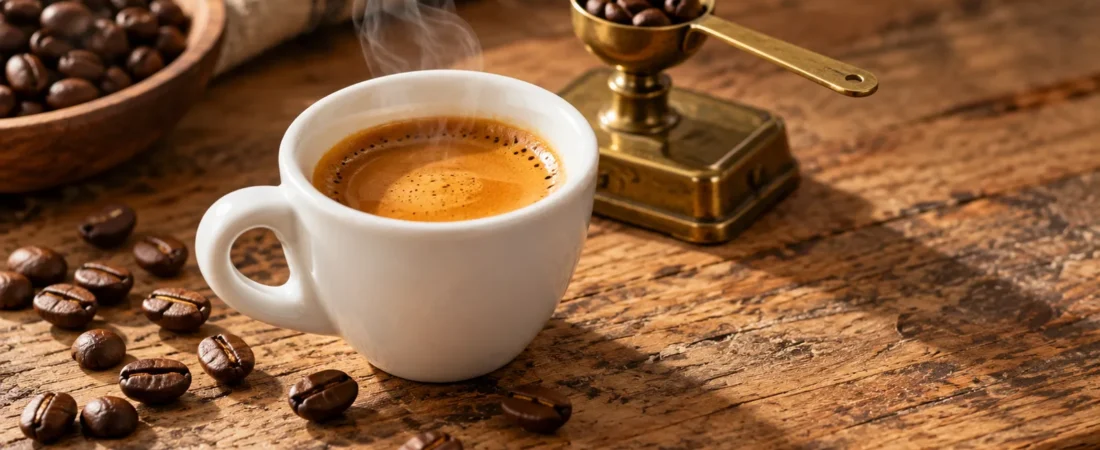
How much caffeine is in a shot of espresso? A single shot contains roughly 63 milligrams, based on Mayo Clinic's caffeine chart, which measures a standard 1-ounce shot. That number moves around more than people expect. Depending on the shop, the beans, and how the shot was pulled, a "single shot" can land anywhere from about 60 mg to well over 100 mg. A double shot has been measured as high as 185 mg in some lab testing.
If you came here wanting one clean number to compare against a cup of coffee, that's a fair place to start. But the accurate answer is a range, not a single number, and knowing why it varies matters more than memorizing one number.
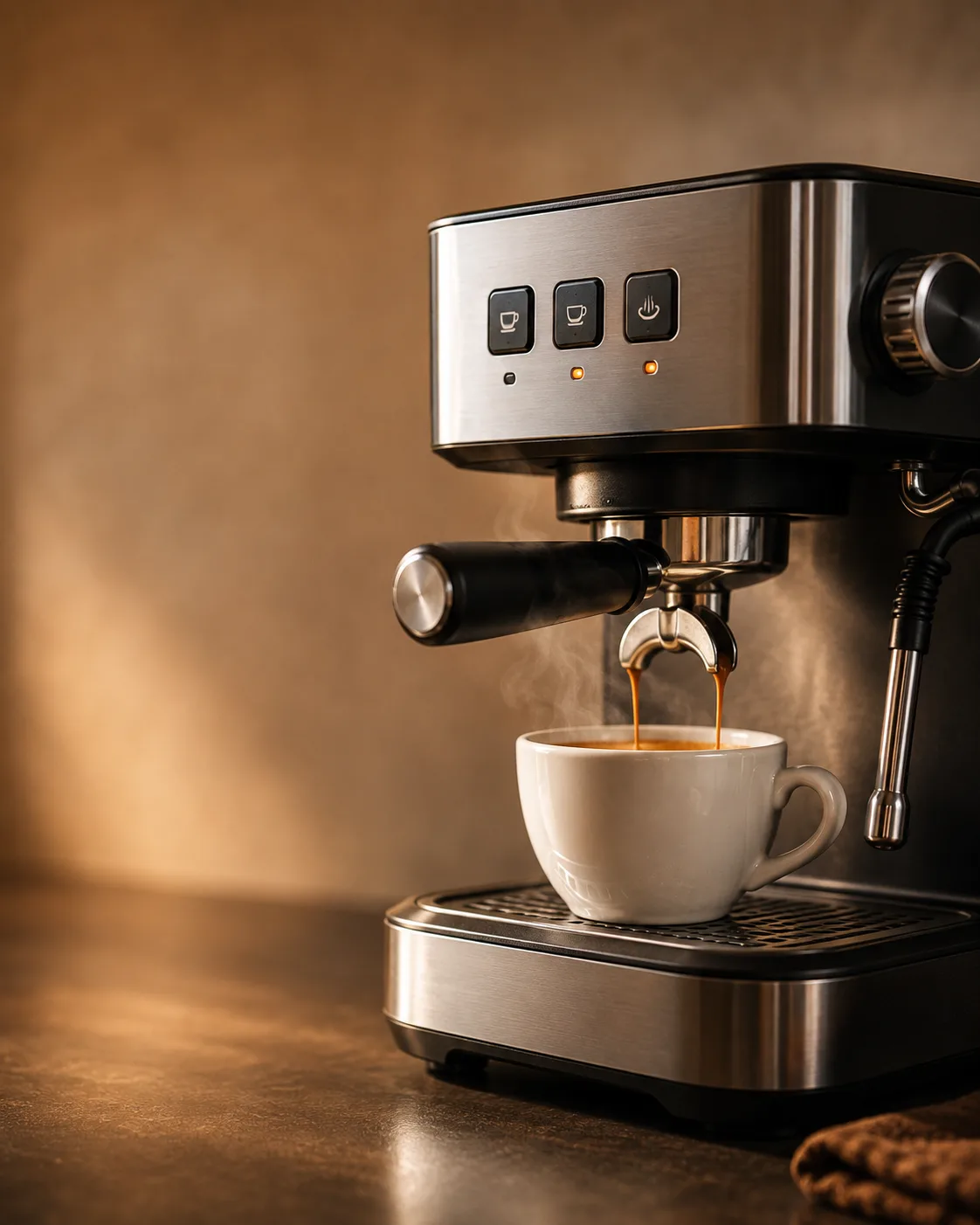
The Short Answer: How Much Caffeine Is in a Shot of Espresso?
For a typical espresso shot pulled at a coffee shop or at home on a standard machine:
- Single shot (about 1 oz): 63 mg (Mayo Clinic), though other measurements have found single shots ranging from 58 mg to 77 mg depending on volume and beans
- Double shot (about 2 oz): roughly 125 to 150 mg, doubling the single-shot estimate, though real-world testing has found double shots as low as 58 mg and as high as 185 mg
- Decaf espresso (1 oz): about 1 mg
Those numbers assume arabica beans and a standard extraction. Change the beans, the dose, or how long the shot runs, and the number moves with it.
Why the Range Is So Wide
Espresso isn't a fixed recipe like a can of soda. It's a brewing method, and every variable in that method changes how much caffeine is in a shot of espresso.
Bean type matters more than most people assume. Robusta beans contain roughly 2.7% caffeine by weight, compared to about 1.5% for arabica, according to Lavazza's comparison of the two species. Most specialty coffee, including the beans used in most home and cafe espresso, is arabica. But some blends (particularly Italian-style blends aimed at crema (the golden foam on top of a shot) and body) include a percentage of Robusta, which raises caffeine without changing the flavor as much as you'd expect.
Shot volume changes the total, even from the same dose of grounds. A ristretto, pulled short and concentrated, uses the same amount of ground coffee as a normal shot but less water passes through it, so it contains somewhat less total caffeine, not more, despite tasting stronger. A lungo, pulled long with more water, extracts more caffeine from the same puck (the pressed cake of coffee grounds in the basket) because more compounds get pulled out as the shot runs longer. This is a common misconception: taste intensity and caffeine content are not the same thing. For more on how ristretto, normale, and lungo differ mechanically, see our guide to espresso brew ratios.
Dose and grind also affect extraction. A machine pulling 18 grams of coffee will generally extract more total caffeine than one pulling 14 grams, assuming similar technique. Grind size changes how much surface area contacts the water, which changes how efficiently caffeine gets pulled out during the shot.
Where you're getting the shot matters as much as the recipe. Caffeine Informer tested six espresso servings from different sources and found shots ranging from 58 mg to 185 mg for what were labeled as "double" shots, a difference attributed to different roasters, different machines, and different basket sizes across venues. A shot from one cafe is not directly comparable to a shot from another, even if both call it a "double."
Espresso vs. Drip Coffee: The Concentration Myth
Many new espresso drinkers are surprised by this: ounce for ounce, espresso has far more caffeine than drip coffee, but a full cup of drip coffee usually contains more caffeine in total than a single shot of espresso.
Mayo Clinic lists 8 ounces of brewed coffee at about 96 mg, compared to 63 mg for a 1-ounce espresso shot. Espresso is roughly five times more concentrated per ounce (around 63 mg per ounce versus roughly 12 mg per ounce for drip), but you're drinking a fraction of the volume. That's why espresso hits all at once while a mug of coffee works more gradually. You're getting a concentrated dose all at once instead of sipping a larger volume over ten or fifteen minutes.
This is also why espresso-based drinks don't scale the way people assume. A latte or cappuccino made with a double shot has roughly the same caffeine as that double shot alone, somewhere around 125 to 150 mg, regardless of how much steamed milk gets added on top. The milk changes the volume and the taste. It doesn't add caffeine.
Caffeine by Drink: A Quick Reference
| Drink | Typical Caffeine |
|---|---|
| Single espresso shot (1 oz) | ~63 mg |
| Double espresso shot (2 oz) | ~125-150 mg |
| Americano (double shot + water) | ~125-150 mg |
| Latte or cappuccino (double shot base) | ~125-150 mg |
| Drip coffee (8 oz) | ~96 mg |
| Cold brew (8-12 oz) | ~150-200 mg, often more |
| Decaf espresso (1 oz) | ~1 mg |
Cold brew tends to surprise people. Because it steeps for 12 to 24 hours at a high coffee-to-water ratio, it often has more caffeine per serving than a shot of espresso, even though it doesn't taste as intense. Concentration and perceived strength aren't the same thing, a pattern that shows up throughout this whole topic.
How Long Caffeine Stays in Your System
For most healthy adults, the body clears about half the caffeine from a dose in 4 to 6 hours, according to the Sleep Foundation. That range can stretch from 2 to 12 hours depending on genetics, age, body weight, and medications. That's the half-life, not when caffeine is fully gone. Traces can still be active well past that window.
Sleep researchers generally recommend cutting off caffeine at least eight hours before bedtime. An afternoon espresso at 2 p.m. can still be roughly half-active in your system by 8 p.m., which is part of why a shot that felt fine in the moment can still make it harder to fall asleep that night.
How Many Shots Is Too Many?
The FDA's general guidance, echoed by the Mayo Clinic, sets a safe daily ceiling of around 400 mg of caffeine for most healthy adults. At roughly 63 mg per single shot, that works out to somewhere around 6 single shots, or 3 double shots, spread across the day, before you're approaching that limit. That's a ceiling for most people, not a target, and individual tolerance varies quite a bit. Some people feel jittery well under 400 mg. Others regularly exceed it without noticeable effects.
People who are pregnant, breastfeeding, or otherwise advised to limit caffeine should talk to a healthcare provider about their own threshold rather than using the general adult guidance. The FDA's 400 mg figure is about total caffeine intake across the whole day, not espresso alone. Tea, soda, chocolate, and other coffee drinks all count toward the same total.
The Practical Takeaway
If you're trying to track your intake instead of guessing, the closest reliable number is this: a single shot from a well-calibrated home machine, using arabica beans and a standard dose, lands close to Mayo Clinic's 63 mg figure. A double shot roughly doubles that. Beyond that baseline, the biggest swing factors are the beans (robusta pushes it higher), the shot length (longer pulls extract more), and where the shot came from (cafe-to-cafe variation is real and well documented).
None of this changes how espresso is made or how it should taste. But if caffeine sensitivity is something you manage, knowing that a "double shot" isn't a fixed number, and that a latte doesn't dilute the caffeine the way it dilutes the flavor, makes it a lot easier to track what you're drinking.
For more on what separates espresso from other coffee entirely, see our guide to what espresso is. And if you're still working out grind, dose, and timing on your own machine, our guide to dialing in espresso covers the variables that affect extraction, caffeine included.
Our coffee statistics roundup collects the wider numbers on how much coffee people drink, how they brew it and what it costs.
Caffeine is only one way the two compare. Our espresso vs coffee guide covers brewing pressure, grind and how each one tastes.
This guide is part of the Beginner's Essentials hub, which brings together our guides on getting started with espresso at home.
Bean choice matters too. Robusta beans carry more caffeine than arabica, and our guide to espresso beans vs coffee beans explains how roast and blend fit in.