
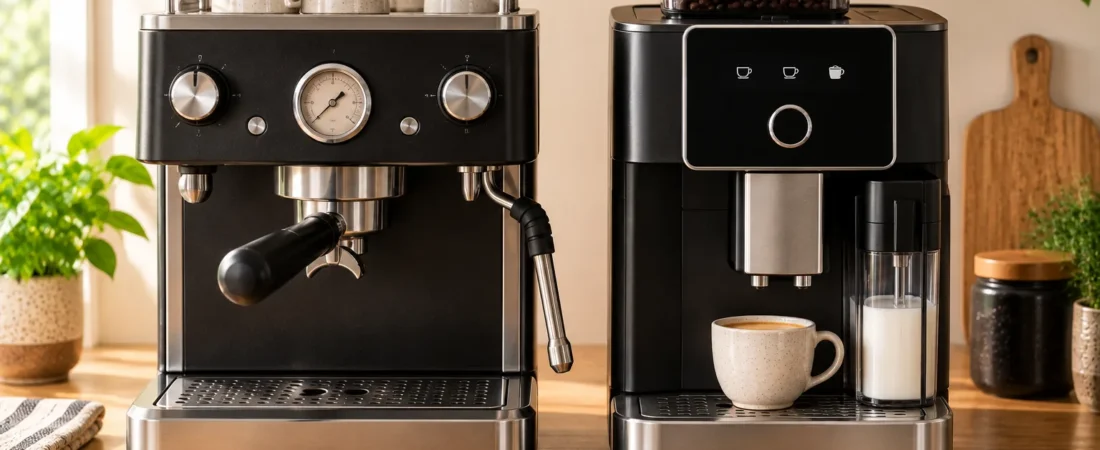
"How to choose an espresso machine" sounds like a spec-sheet question. Pressure, boiler type, portafilter size, and whether it has a PID (a digital temperature control). Most guides answer it that way, dropping you into a feature checklist before you've even decided what you're trying to get out of the machine. For a beginner, that's backward. The question that matters isn't which features matter in the abstract. It's which questions you need to answer about yourself first, in order, before any of those features start to matter at all.
This guide walks through three questions in the order they need answering: how hands-on you want to be, what you can realistically spend, and how much daily volume and speed you need. Answer those three, and most of the feature checklist sorts itself out.
This matters because the most common way beginners end up unhappy with a machine isn't a bad machine in the abstract. It's a mismatched one: a manual machine bought by someone who just wanted convenient coffee, or a super-automatic bought by someone who wanted to learn technique. The machine itself might be perfectly good. It's just answering the wrong question for the person who bought it.
Start With How Hands-On You Want to Be
Before budget, before boiler type, before anything else: do you want to learn espresso as a skill, or do you want good espresso with as little thinking as possible? This single answer eliminates entire categories of machines before you've spent a dollar.
If you want to learn, you're looking at manual or semi-automatic machines, where you control grind, dose, tamp, and (on manual machines) pressure yourself. Every shot teaches you something, and every mistake is visible and traceable back to a choice you made. If you want espresso without the learning curve, super-automatic machines handle grinding, dosing, and extraction internally at the press of a button, trading control for consistency and convenience.
Neither answer is wrong, but choosing the wrong one for your goals is the most common regret beginners report. Someone who wanted to develop a hands-on hobby ends up bored by a machine that does everything for them. Someone who just wanted reliable coffee ends up frustrated by a manual machine's learning curve. Answer this honestly before reading a single spec sheet.
Then Figure Out Your Realistic Budget
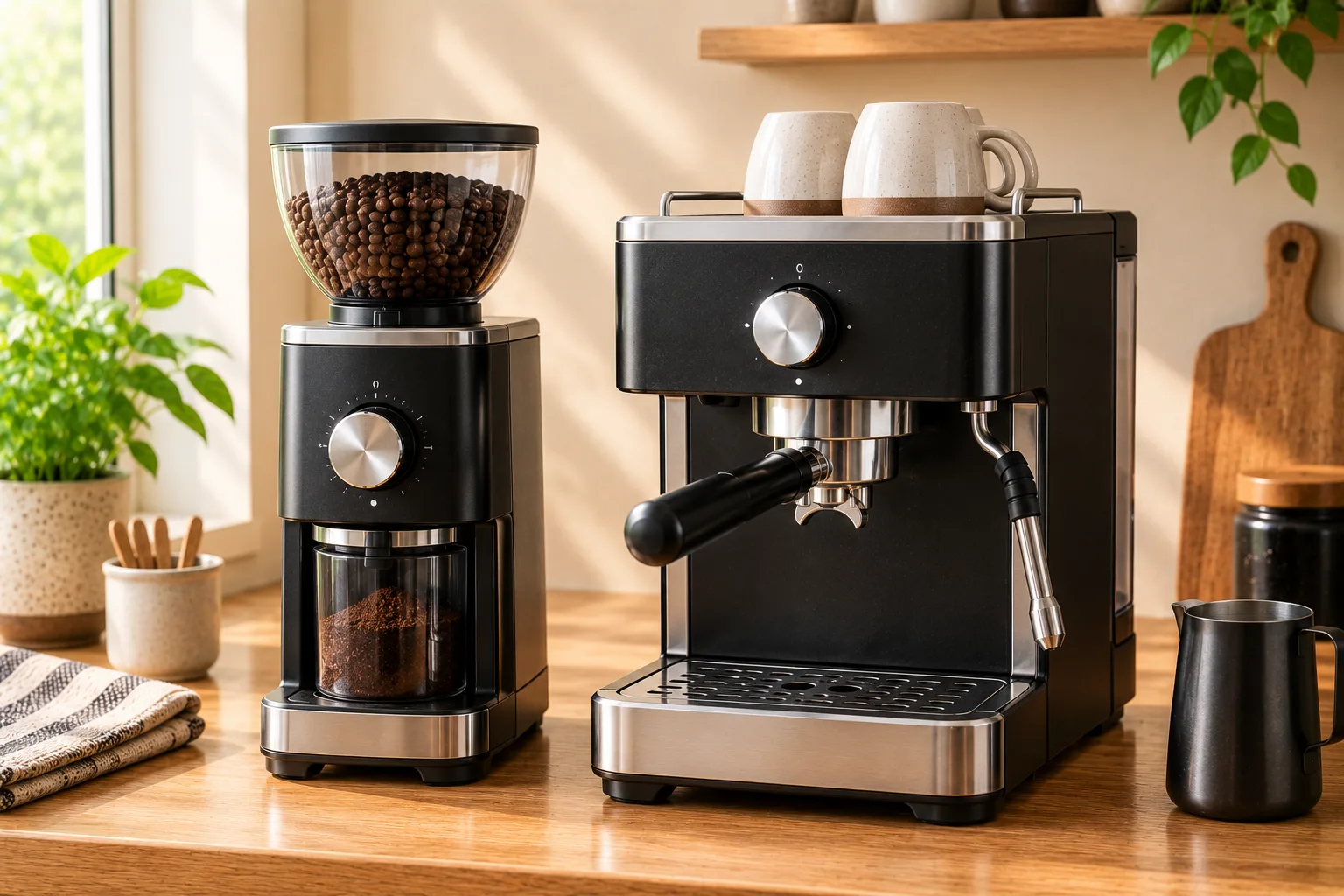
Once you know whether you're learning or automating, budget determines how much machine you can get within that category. This isn't just the machine price. A realistic beginner setup includes a grinder (often the single most important piece for shot quality), a scale, and basic accessories, so your number needs to cover more than just the espresso machine.
As a rough guide: under $300 gets you into entry-level semi-automatic territory, usually with a pressurized portafilter (the handle that holds the basket of coffee) that forgives grind inconsistency at the cost of some flavor nuance. $300 to $600 is where capable semi-automatic machines with real (non-pressurized) portafilters start showing up, alongside a wider range of manual lever machines. Above $600, you start seeing PID temperature control, better steam performance, and eventually dual boiler (separate boilers for brewing and steaming) machines that separate brew and steam duty entirely.
A common beginner mistake is spending the whole budget on the machine and grinding with whatever's cheapest or already in the kitchen. As Clive Coffee explains, a mediocre grinder holds back a great machine far more than a mediocre machine holds back a great grinder. If you're tight on funds, it's usually smarter to buy a more modest machine and a capable grinder than the reverse.
A rough split that works for most beginner budgets: aim for something close to 50/50 between machine and grinder rather than putting 80 percent into the machine and treating the grinder as an afterthought. A $250 machine and a $250 grinder will usually out-produce a $450 machine and a $50 grinder, because grind consistency has that much influence on how a shot tastes.
Then Think About Daily Volume and Speed
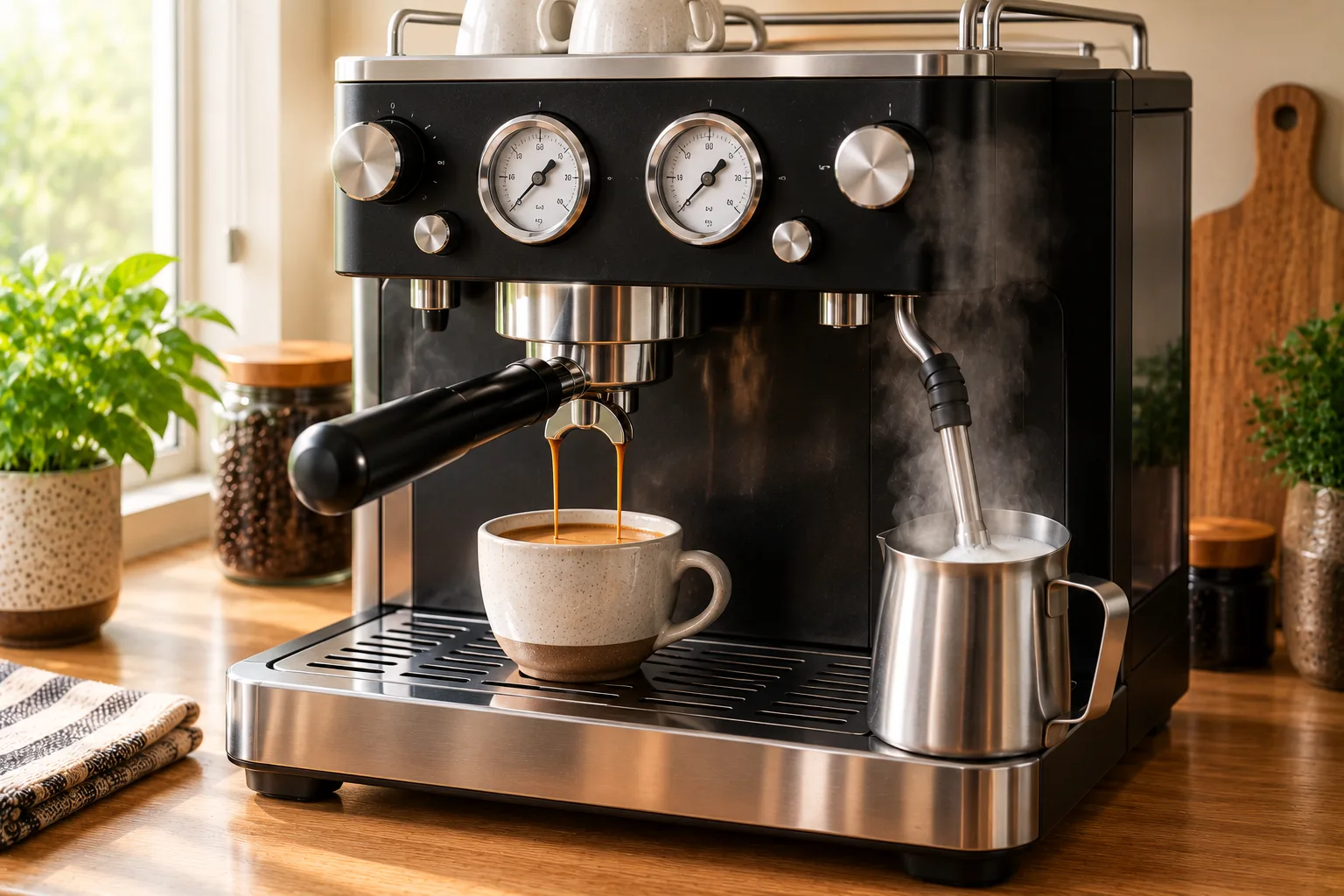
The last question, and the one beginners most often skip entirely, is how the machine fits into an actual morning. If you're the only person drinking espresso and you're fine waiting a few minutes between a shot and steamed milk, this barely matters. If you're making drinks for two people before work, or milk drinks are a daily habit rather than an occasional treat, it matters more than almost anything else on this list.
Boiler configuration matters here, and it's worth understanding even on a beginner budget. A single-boiler machine does both jobs in one heating chamber, which means waiting for it to switch between brew and steam temperatures. A heat exchanger machine sits in the middle, giving near-simultaneous brewing and steaming at a moderate price. A dual boiler machine has two independent boilers and can brew and steam at the same time with no waiting, but usually costs $1,000 or more.
For most beginners, this isn't a reason to overspend on day one. It's a reason to know what you're trading away at the budget tier you land in, so a slow morning routine doesn't surprise you six weeks after the machine arrives.
How to Choose an Espresso Machine: Putting It Together
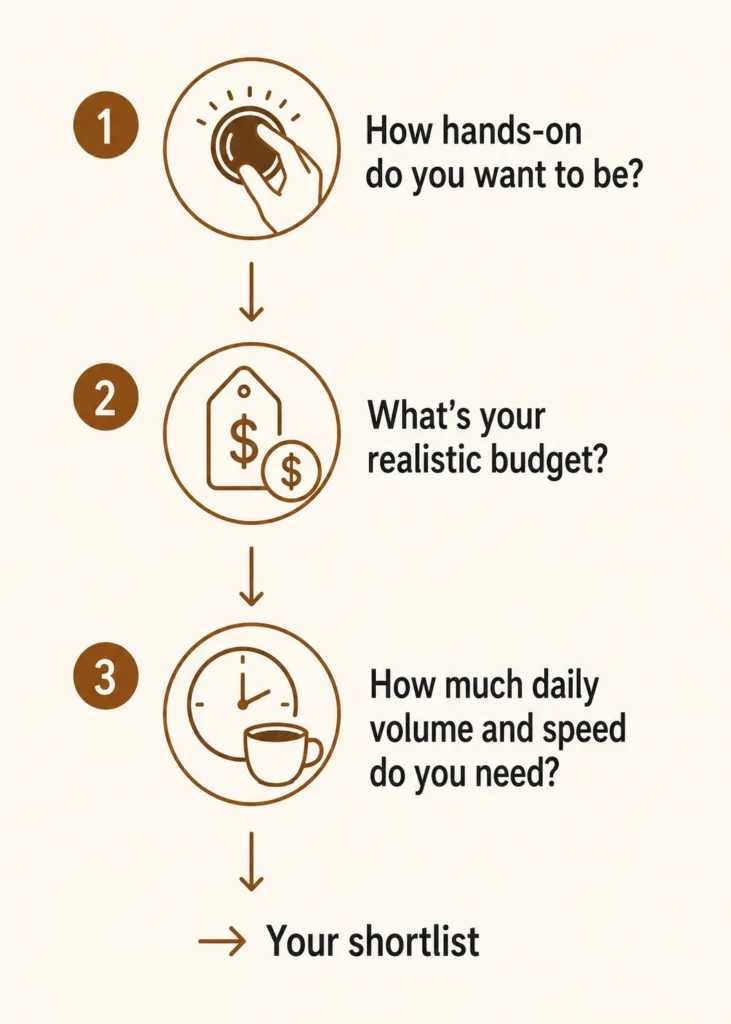
Stack the three answers and a shortlist forms almost automatically. Want to learn, tight budget, low daily volume: an entry-level semi-automatic machine paired with a real grinder is the best starting point. Want to learn, moderate budget, need speed for milk drinks: a heat exchanger (one boiler that also heats the brew water as it passes through) or higher-end semi-automatic machine makes more sense than stretching for a dual boiler. Want convenience over control, any budget: a super-automatic machine, sized to your actual daily volume, is worth considering even though it isn't covered in depth on this site's beginner track.
Notice that "which specific machine model" doesn't show up until the very end of this process. That's intentional. Model comparisons matter, but only after these three questions have already narrowed the category.
Common Mistakes Beginners Make When Choosing
Buying features you won't use yet. PID temperature control, dual boilers, and programmable shot volumes are useful, but only once you already know what "good" tastes like and can tell the difference. Paying for precision you can't yet evaluate is money better spent on a grinder.
Ignoring the grinder line item entirely. A beginner who spends $500 on a machine and $0 on the grinder, using a blade grinder or pre-ground coffee, will get worse results than someone with a $250 machine and a good grinder. Grind consistency affects extraction more than almost any other single variable.
Choosing based on how a machine looks in photos rather than how it fits daily use. A beautiful machine that takes eight minutes to heat up and switch between brew and steam will quickly become frustrating if mornings are already tight.
Assuming more expensive automatically means more beginner-friendly. Some higher-end machines add features like flow control or advanced pressure profiling (changing the pressure during the shot) that target experienced users refining technique, not beginners still learning what a good shot tastes like. Paying more doesn't always buy an easier learning curve. Sometimes it buys the opposite.
Once you have a machine in mind, our espresso starter kit guide covers the rest of the setup.
For more on getting started with espresso at home, see the Beginner's Essentials hub.
What to Read Next
If you're still sorting out the hands-on-versus-convenience question, Espresso Machine Types Explained breaks down manual, semi-automatic, automatic, and super-automatic machines in more depth. If you've already decided you want to learn and are choosing between manual and semi-automatic specifically, Manual vs Semi-Automatic Espresso Machine covers that decision directly. Once boiler configuration and daily volume are on your mind, Single Boiler vs Dual Boiler Espresso Machine walks through what each setup does differently. And for a full realistic budget breakdown covering the machine, grinder, and accessories together, The Real Espresso Starter Kit is the next stop.
The Final Take
Choosing an espresso machine as a beginner isn't about comparing spec sheets. It's about answering three questions, in order: how hands-on you want to be, what you can realistically spend across the whole setup, and how much daily volume and speed you need. Get those three answers first, and the "which machine" question mostly answers itself.
For the full walkthrough, from boiler type through long-term maintenance, see the espresso machine buying guide.