
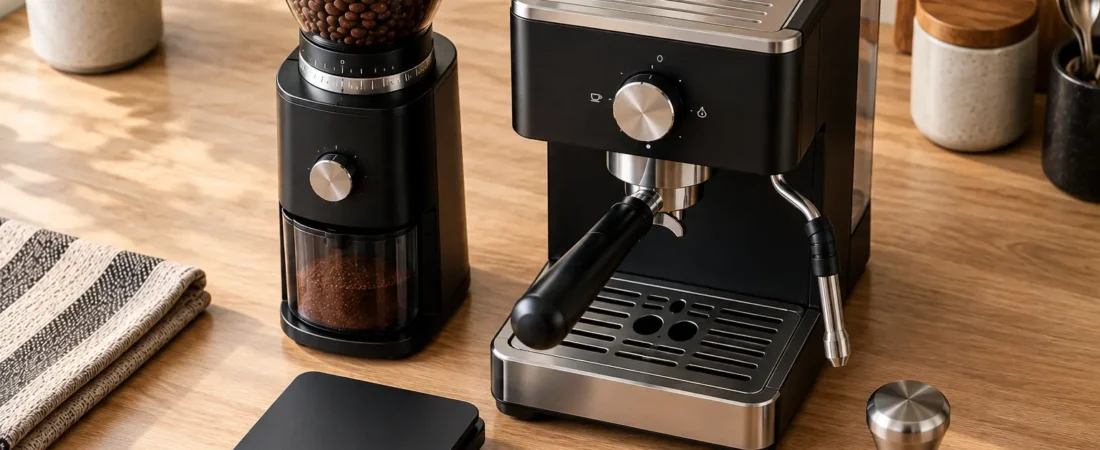
Search for an espresso starter kit, and you will mostly find bundles. A machine, a plastic tamper, a set of shot glasses, and sometimes a tiny bag of pre-ground coffee, all sold as one package. Most of these bundles skip the one part that decides how your espresso tastes: the grinder. This guide is the starter kit we would put together: three combinations between $150 and $500, chosen because they pair well together, not because they photograph well in a box.
We already covered the categories that matter in what you need: a burr grinder, a scale, and a tamper that fits. This article names specific models. Real machines, real grinders, real prices, cross-checked across multiple reviews rather than a single star rating.
How to Think About Your Espresso Starter Kit Budget
Every tier below solves the same two problems: building enough pressure to brew real espresso, and grinding fine enough and consistently enough for that pressure to do anything useful. What changes as the budget grows is not whether the shot is technically espresso. It is how much the equipment forgives you while you are still learning.
A cheaper machine with a pressurized basket masks some of your mistakes early on, which sounds like a downside until you remember you are a beginner. A better grinder gives you finer control over grind size, which matters more and more as your technique improves. Neither end of this range is wrong. They are just different places to start.
If the grinder is the part you are least sure about, our entry level espresso grinder picks cover the grinders worth starting with and what each one gives up.
Tier One: Around $350
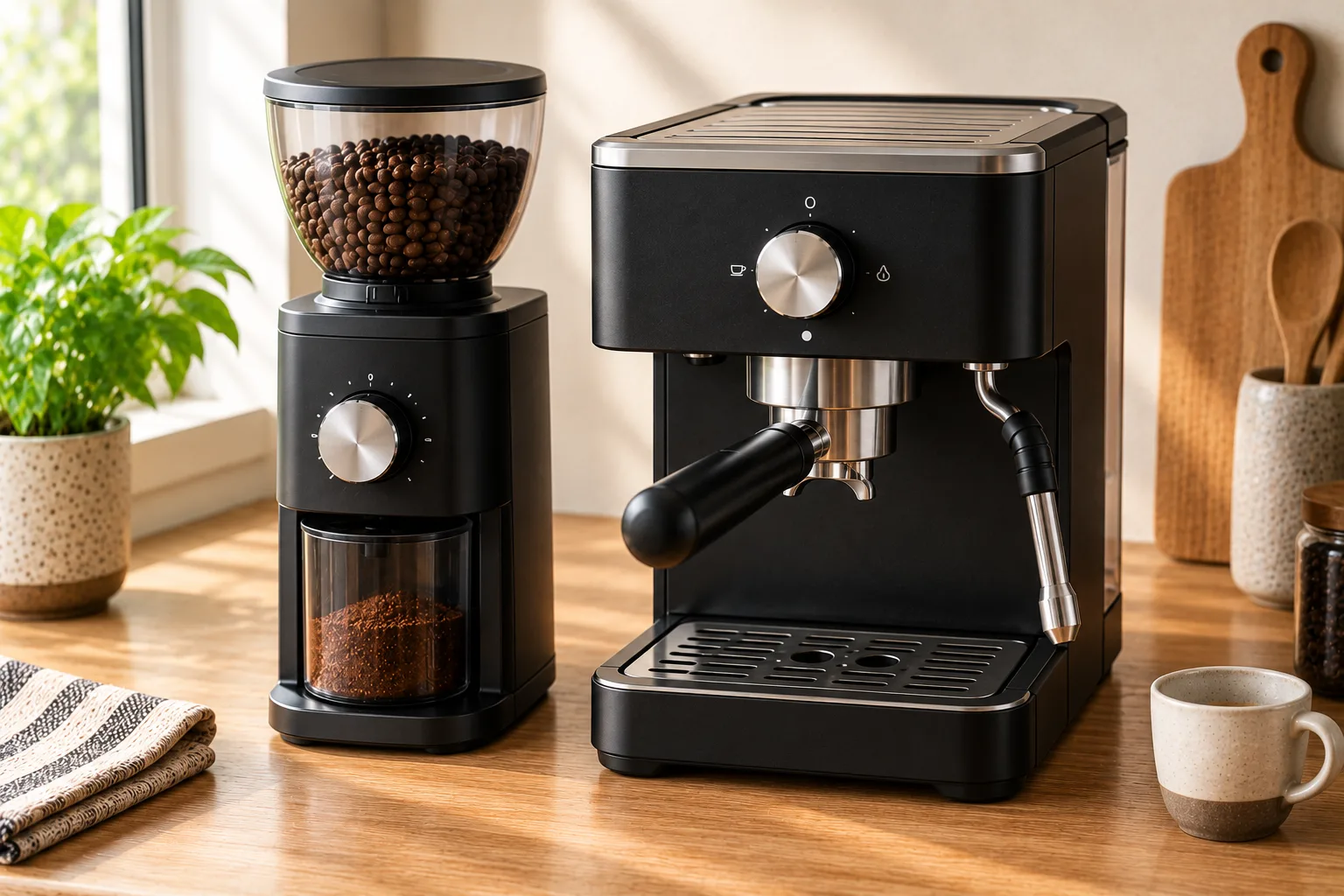
De'Longhi Stilosa ($149.95 direct from De'Longhi) paired with a Fellow Opus 2 grinder ($199.95 direct from Fellow).
The Stilosa is a cheap machine, and it is honest about what that means. The North American version ships with a pressurized basket, which is more forgiving for beginners, and no solenoid valve, so you need a little patience before pulling the portafilter (the handle that holds the basket of coffee) after a shot. It still belongs among the more affordable machines worth buying, largely because it heats up fast and the steam wand works.
Pair it with the Fellow Opus 2, a strong pick in this range. It is not a single-purpose espresso grinder like some pricier options, but its adjustment range covers espresso well enough for a beginner, and it will still be useful later if you ever brew drip or pour-over coffee alongside your espresso.
This tier is not the most consistent. What it does is let you learn the actual mechanics (dosing, tamping, timing a shot) without spending as much to find out whether you like doing this at all.
Tier Two: Around $480
De'Longhi Dedica ($279.95 direct from De'Longhi) paired with a Baratza Encore ESP ($199.95 direct from Baratza).
The Dedica is a step up in build quality from the Stilosa. It is compact, which matters if your kitchen counter is small, and it uses a single boiler with a thermoblock heater that recovers reasonably fast between shots. It performs best when paired with a real grinder from the start, rather than the pre-ground coffee its slim design might tempt you toward.
That is exactly what the Baratza Encore ESP is for. It is widely regarded as one of the best espresso grinders under $200, thanks to a stepped range built specifically to suit espresso grind sizes. Compared to the Fellow Opus 2 in tier one, the Encore ESP is built with espresso as the primary job, not a secondary use case.
Tier Three: Around $500
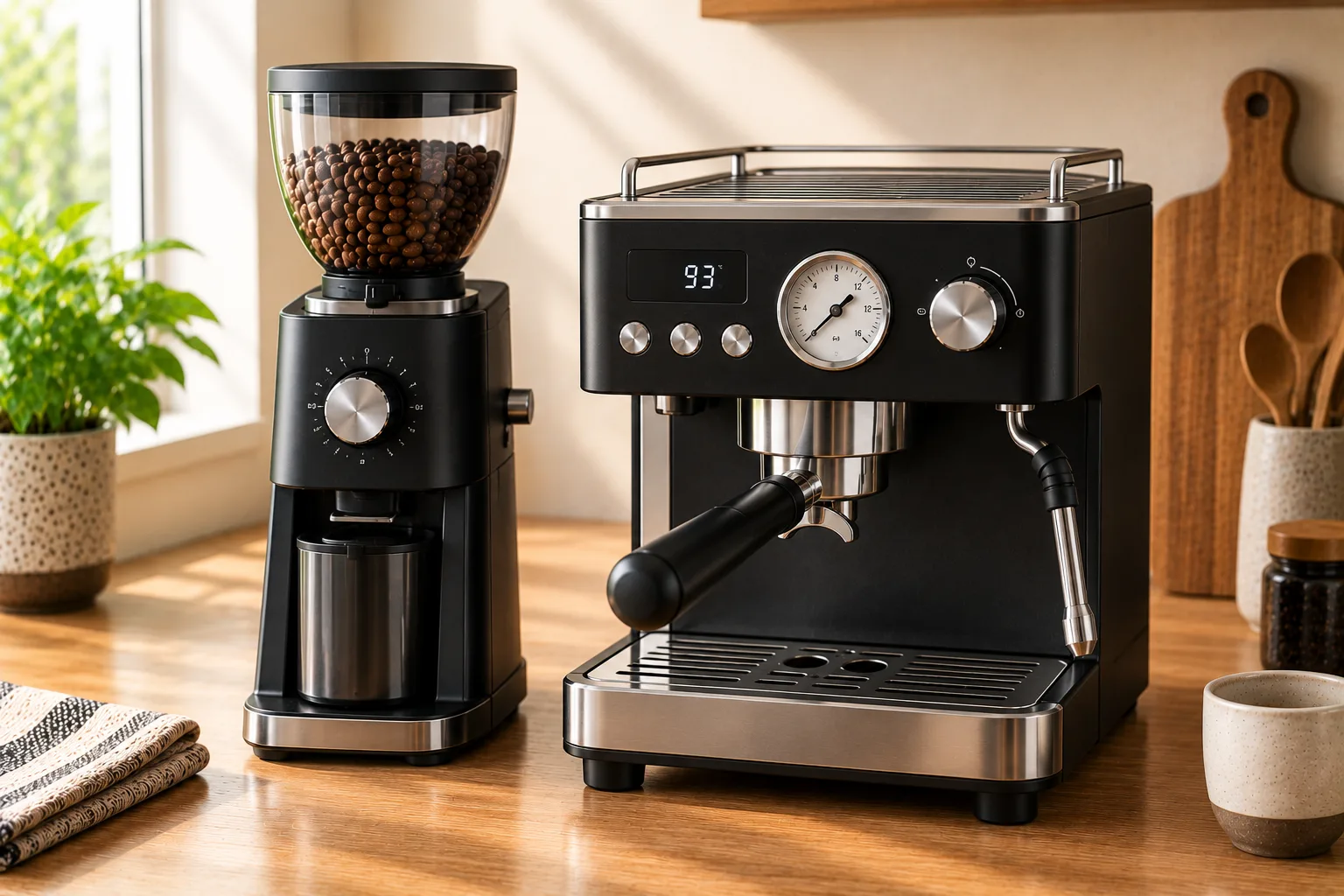
Breville Bambino ($299.95 direct from Breville) paired again with the Baratza Encore ESP ($199.95 direct from Baratza).
This combination keeps coming up as one of the best setups under $500, and it is worth taking seriously. The Bambino brings a thermojet heating system that reaches temperature in under a minute, plus a PID controller (a digital temperature control) keeping that temperature stable through the shot, features you would expect to pay more for. Breville and Baratza even sell an official bundle pairing the step-up Bambino Plus with this exact grinder, which suggests the compatibility isn't a coincidence. The portafilter and the grinder's catch cup are sized to work together.
Between tier two and tier three, the grinder stays the same. What you are paying for is a machine with better temperature stability and faster recovery between shots, which matters more once your technique is consistent enough to notice the difference.
What We Deliberately Left Out
Bundled "starter kit" listings that pair a machine with a plastic tamper, a set of glasses, and no real grinder. They exist because they are easy to sell as a single package, not because they are a good way to start. If a kit's total price sounds low for a machine and a grinder together, check what grinder it includes. Often it is missing entirely, or it is a blade grinder sold with espresso branding, which cannot produce the consistent grind size a decent shot needs.
We also left out the built-in grinder machines in this price range, like combo units under $300. The grinders inside them are almost always the weakest part of the unit, and a separate dedicated grinder at a similar total price will outperform them.
What to Add Later
None of these three tiers include a scale or a tamper that specifically fits your machine's basket, both of which we cover in what you need. Budget another $20 to $40 for those once you've dialed in your machine and grinder. They are cheap enough that buying them later costs you nothing except a few weeks of guessing at your dose.
The Final Take
If $350 total feels like the right entry point, start with the Stilosa and the Fellow Opus 2 and treat it as tuition, not a permanent setup. If you can stretch closer to $500, the Dedica or the Bambino paired with the Baratza Encore ESP will teach you the same fundamentals with less equipment holding you back. Either way, spend your money on the grinder before you spend it on anything with a brand name that sounds premium. The machine gets you pressure. The grinder gets you consistency. Consistency is what makes a shot repeatable. Prices above are what each manufacturer lists directly on its own site at the time of writing and can change.
Whichever combination you land on, a well-chosen espresso starter kit pays for itself in the first month you'd otherwise spend on bad shots and returned equipment. Build the espresso starter kit around the grinder first, and the rest falls into place.
Small kitchen, home cafe setup, or backup machine? See our compact espresso machine picks by use case for options that fit your specific space.
If the grinder budget is tight, our budget espresso grinder guide shows where the money matters most.
The Beginner's Essentials hub has the rest of our guides on getting started with espresso at home.