
Espresso Grinders
Ask any experienced home barista what to upgrade first and almost all of them say the grinder, not the machine. Grind consistency determines how evenly water moves through the puck, and an uneven grind causes channeling no amount of tamping technique can fix. This hub explains why that's true and how to choose one without overspending.
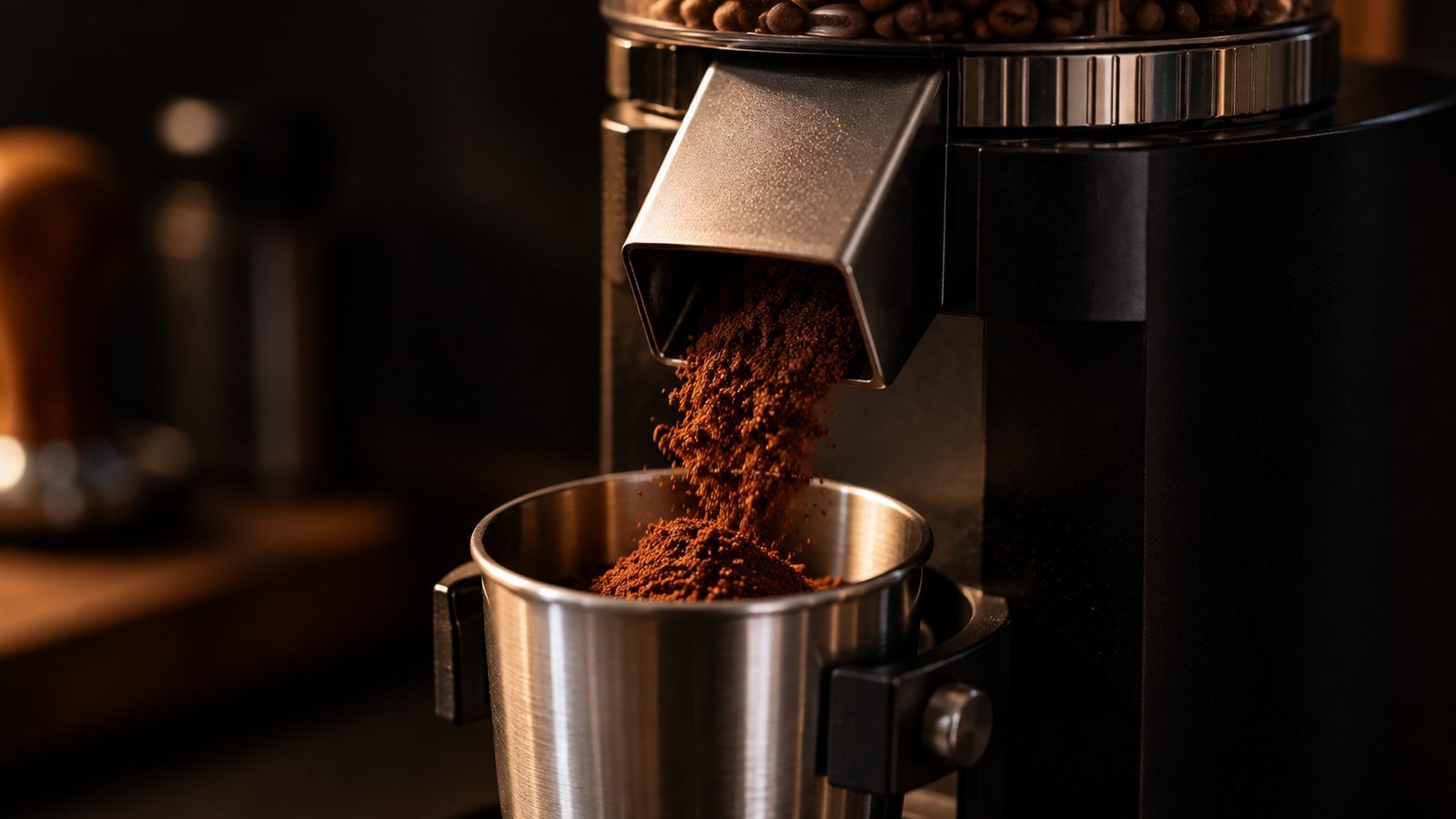
Why the grinder matters more than the machine
Espresso pushes water through a tight puck of fine coffee at about 9 bars for 25 to 30 seconds. At that pressure, every particle in the basket matters. If the grind mixes dust with larger pieces, water takes the easiest path. It overextracts the fines and rushes past the coarse bits, so the same shot can taste sour and bitter at once.
No machine can fix that. A steady boiler and good pressure only deliver water evenly to a puck that's already uneven. That's why Clive's advice is to budget at least as much for the grinder as the machine. A mid-range machine with a strong grinder will beat a top machine with a weak one. After bean freshness, consistent grind size is the biggest factor in cup quality.
The grinder also sets how finely you can adjust. Dialing in espresso happens in very small steps. A grinder that can't move in small enough steps leaves you stuck between a shot that runs too fast and one that chokes.
The four choices that define a grinder
Four design choices decide whether a grinder suits espresso and how it fits your routine. The first one rules grinders in or out. The other three are trade-offs.
| Choice | Option A | Option B | What it means for espresso |
|---|---|---|---|
| Burr or blade | Burr: two machined cutting surfaces set at a fixed gap | Blade: a spinning blade that smashes the beans | Only burr grinders work. Clive Coffee says a blade grinder "cannot make espresso" because it gives a mix of dust and boulders with no size control. |
| Conical or flat burrs | Conical: quieter, less heat, a mix of round and longer particles | Flat: more uniform particles, often more clarity in the cup | Both make good espresso. Burr size matters more than shape, and burrs of 50mm or more grind faster and more evenly. |
| Stepped or stepless | Stepped: fixed clicks you can return to exactly | Stepless: turns freely with no clicks | Stepless lets you make very small changes. Stepped is easier to repeat, but the gap between clicks can fall right where your shot needs to be. |
| Single dose or hopper | Single dose: weigh each dose, grind it all, little left inside | Hopper: beans sit on top, grind on demand | Single dose suits people who switch beans or want fresh grounds. A hopper is faster for several drinks a day. Clive says neither is wrong. |
On stepped versus stepless, Gevi's guide explains the trade-off. A stepped grinder clicks into fixed settings, so you can go back to the exact same one every time. The catch is that one click can be a little too coarse and the next a little too fine. A stepless grinder lets you stop anywhere in between, but there are no clicks to count, so you need a mark or a note to find your setting again.
Retention is the coffee left inside the grinder after a dose. It goes stale and ends up in your next shot. Complete Home Barista treats under 0.5g of retention as excellent for home use. Single dose grinders are built around keeping that number low.
Manual or electric
A good hand grinder is the cheapest way to get espresso-quality burrs. CoffeeGeek calls the 1Zpresso J-Ultra the "gold standard of manual espresso grinding", and it costs about the same as an entry electric grinder. The J-Ultra moves 8 microns per click and holds 35 to 40g of beans, per 1Zpresso, so one load covers a double shot with room to spare.
The cost is time and effort. Hand grinding takes 2 to 3 minutes per shot, against about 30 seconds for an electric grinder. Home Coffee Expert points out that you need a firm grip and both arms, which rules hand grinders out for some people.
A hand grinder makes sense if you make one or two drinks a day, want to travel with it, or want the best burrs for the money. An electric grinder makes sense if you make drinks for a household or don't want grinding to be a chore every morning. Our manual vs electric guide compares seven named models using owner reviews.
What to spend at each level
A capable electric espresso grinder starts around $120, and a good hand grinder costs less than $200. CoffeeGeek puts the budget range for quality electric grinders at $120 to $300, and Complete Home Barista calls $300 to $600 the enthusiast tier. The models named below sit in each band at the retailer and brand prices listed on 7 October 2026. Prices move often, so check before you buy.
| Budget | Type | Examples | What you get |
|---|---|---|---|
| Under $200 | Manual | Kingrinder K2, Timemore C5 ESP Pro, 1Zpresso J-Ultra (CoffeeGeek) | Espresso-capable burrs for the least money. You supply the effort. |
| $120 to $300 | Entry electric | Baratza Encore ESP, Breville Smart Grinder Pro, Fellow Opus, MiiCoffee DF54 | Encore ESP: 40mm conical burrs, 20 of its 40 steps set aside for espresso. DF54: 54mm flat burrs. |
| $300 to $600 | Mid-range electric | Baratza Sette 270, Eureka Mignon Silenzio 55, Eureka Mignon Zero 65 | Finer or stepless adjustment and low retention. The Mignon Zero 65 lists under 0.2g of waste per dose. |
| $600 and up | Premium electric | Niche Zero (Complete Home Barista), Eureka Oro Mignon Single Dose Pro, Mazzer Philos (Clive Coffee) | Larger burrs and grinders designed for single dosing. Worth it once the rest of your setup is settled. |
If your machine budget is fixed, Clive's rule of matching the grinder spend to the machine is a sensible starting point. Our budget grinder guide goes through each tier in more detail.
Grinder care
Coffee oil builds up on burrs and goes rancid, and that taste ends up in fresh beans. Espresso grinders need cleaning more often than filter grinders because fine settings and darker roasts leave more oil behind. This schedule follows Seattle Coffee Gear.
| How often | What to do |
|---|---|
| Weekly | Empty the hopper. Brush loose grounds out of the hopper, around the burr opening and through the chute. |
| Monthly | Grind the recommended amount of grinder cleaning tablets as if they were coffee. Then grind 20 to 30g of beans to clear the residue. |
| Every 3 to 6 months | Remove the top burr if your grinder allows it and brush both burrs clean. |
Don't wash burrs with water. Most are steel and will rust. Check your manual before taking a grinder apart, since the steps differ by model. Our grinder maintenance guide covers burr cleaning and retention in more depth.
The figures on this page come from published guidance by Clive Coffee (blade vs burr, espresso grinders), CoffeeGeek, Complete Home Barista (buying guide, manual grinders), Gevi, 1Zpresso, Breville, Home Coffee Expert and Seattle Coffee Gear, all opened on 7 October 2026. Your grinder's manual comes first for its own settings.
Best Entry-Level Espresso Grinder: Why This Matters More Than the Machine
You're buying your first espresso setup and deciding where the money goes.
Flat vs. Conical Burrs: What Changes in Your Shot
You've narrowed it to a few grinders and the burr shape differs.
Manual vs. Electric Coffee Grinders: Which Should You Buy?
You're weighing a hand grinder against an electric one and want named models.
Single-Dose vs. Dosing Grinders: What's the Difference and Which Do You Need?
You switch beans often or want to know how much retention matters.
Best Budget Espresso Grinder: Choosing by Price Tier
You have a set budget and want the options inside it.
Start with the grinder basics
All five grinder guides are live: why the grinder matters more than the machine, flat vs conical burrs, manual vs electric, single-dose vs dosing, and picks by budget.
Read: Best Entry-Level Espresso Grinder →Guides are researched from manufacturer manuals, roaster guidance and published coffee science. No sponsorships, no paid placements.