
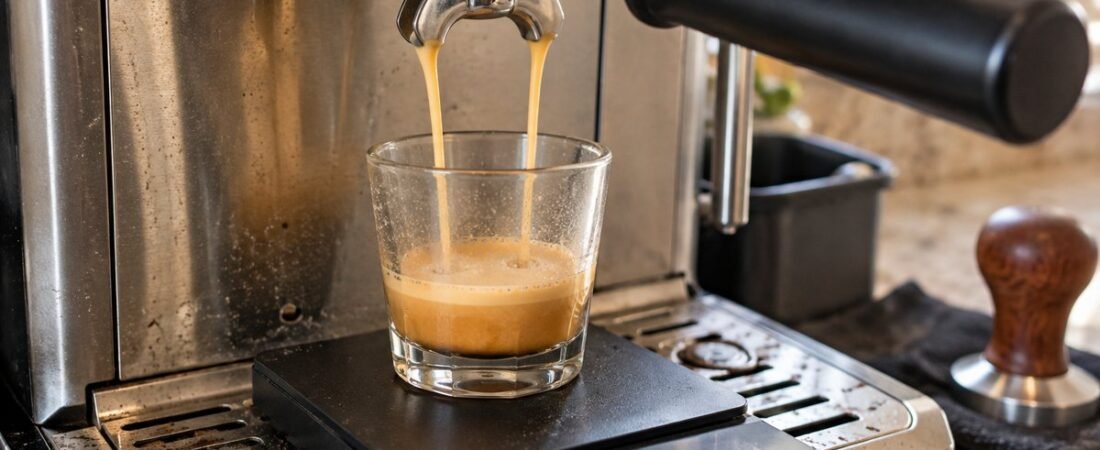
Sour espresso is almost always under-extracted. The water ran through the coffee before it pulled out enough of the flavors that balance the acids, so the shot tastes sharp, thin, and sometimes a little salty. The fix is usually at the grinder, not a new bag of beans.
Short on time? Try the espresso shot diagnosis tool. Pick sour, enter your shot time, and it gives you one fix for the next shot.
This guide covers what sour means, how it differs from bright acidity, why sour and fast shots usually go together, the most common causes, and six fixes to try in order.
What Sour Means
A sour shot has sharp acidity that makes you pucker, then fades fast. It often comes with a thin, watery body and sometimes a salty edge. Klatch Coffee, a California roaster, puts it simply: if your beans taste "extremely sour, they're likely underextracted."
Extraction is how much of the ground coffee the water dissolves. Coffee guides usually explain it this way: sharp, acidic flavors come out early in a shot, and sweetness and body build later. When a shot runs too fast or stops too soon, you get the early part without the rest. Research from the UC Davis Coffee Center, published by the Specialty Coffee Association, found the same pattern in brewed coffee: sourness decreases as extraction increases.
Sour or Bright? How to Tell the Difference
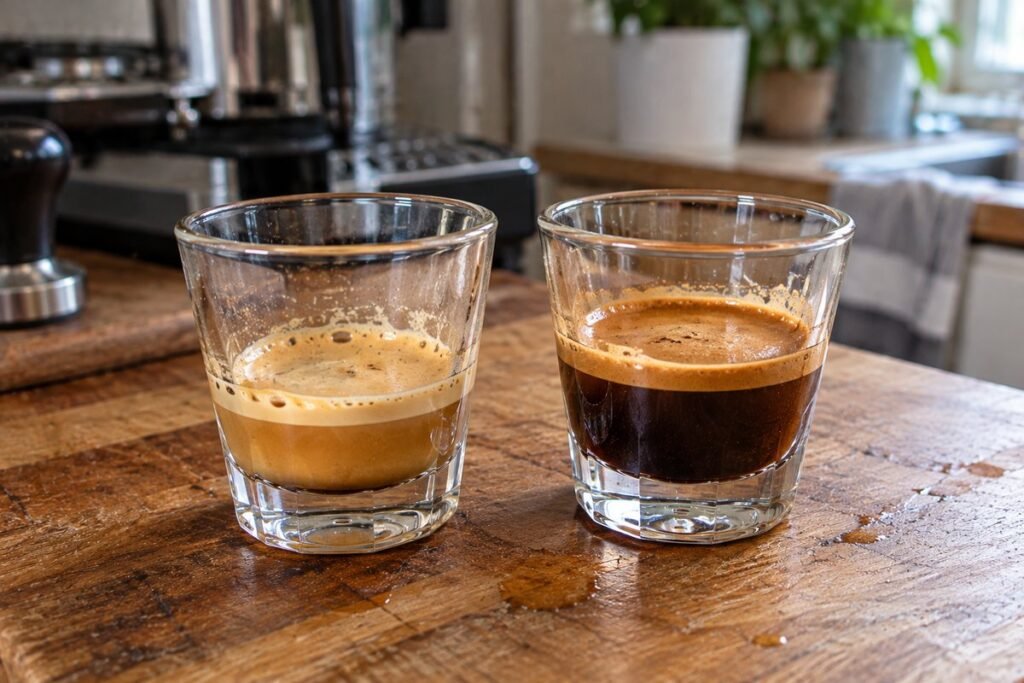
Not every acidic shot is bad. Light roasts and many single-origin coffees, such as those from Ethiopia or Kenya, are meant to taste bright and fruity. Bright acidity tastes juicy and comes with sweetness. Sour acidity tastes sharp and harsh, with little sweetness and a thin body.
A quick test: if the shot tastes sharp and also runs fast or looks pale and thin, it is probably under-extracted. If it tastes fruity but still sweet and full, the coffee may be tasting the way it should. Our espresso taste map lays out the full range from sour to bitter.
Why Sour and Fast Usually Go Together
Breville's guide to dialing in espresso links the two. A shot that delivers its yield (the weight of espresso in the cup) too quickly leaves "a sour, thin-bodied cup." Breville says a good shot usually takes 25 to 30 seconds, though a great-tasting one can take anywhere from 20 to 40 seconds.
So if your shot is sour and finishes well under 25 seconds, start by checking the grind. If it is sour but the time looks normal, look at the ratio, the puck (the packed bed of coffee in the basket), or the beans. Our guide to espresso extraction time covers timing in more detail. If the puck also comes out wet and muddy, see our guide to wet puck espresso.
The Most Common Causes of Sour Espresso
- Grind too coarse. Water flows through too fast, leaving flavor behind. Breville calls grind size "the first place to make a change."
- A shot stopped too early. A ratio close to 1:1, known as a ristretto (a short, stronger shot), keeps mostly the shot's early, sharp part.
- Too little coffee in the basket. A smaller dose gives the water less resistance, so it runs through faster.
- Channeling. Water finds a crack or weak spot in the puck and rushes through it, which leaves the rest of the coffee under-extracted. See our guide to espresso channeling.
- Very fresh beans. Coffee gives off carbon dioxide after roasting. The Barn, a Berlin roaster, starts brewing its own espresso roasts 12 to 14 days after roasting, because extra gas can disrupt extraction.
- A light roast brewed too cool. Klatch Coffee suggests starting light, fruity coffees such as Ethiopian single origins at about 201°F (94°C), hotter than the 195°F (90°C) it suggests for some other coffees.
How to Fix Sour Espresso, in the Order to Try Them
Change one thing at a time and taste each shot. Klatch suggests adjusting the grinder "one line or one number at a time" so you can tell what each change did.
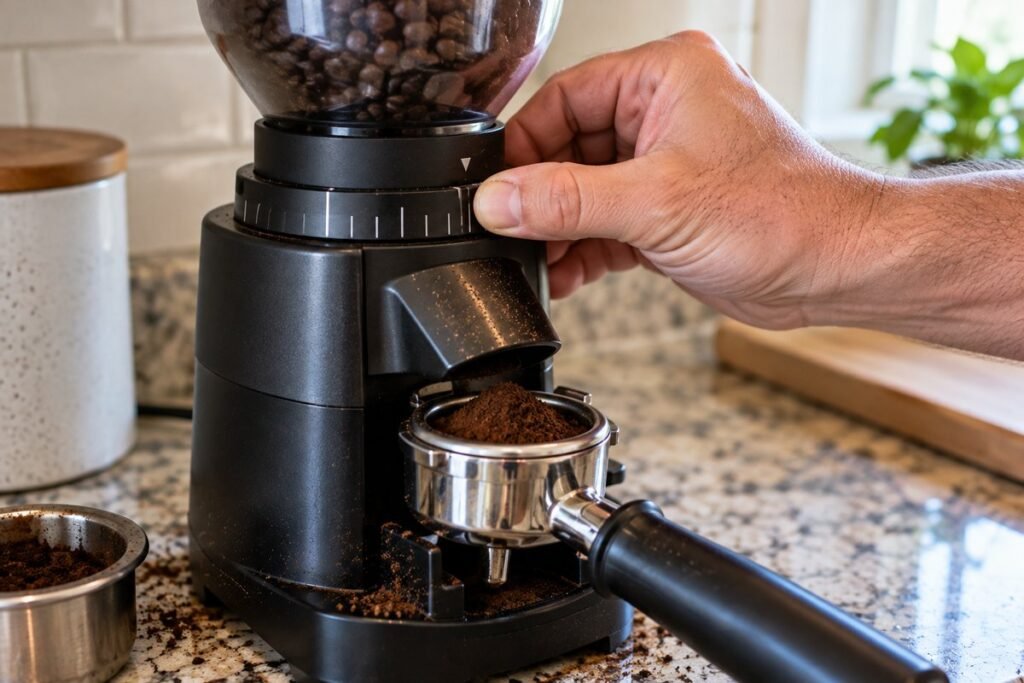
- Grind finer. A finer grind slows the flow and raises extraction. The grounds should feel roughly like fine table salt. Keep the dose and yield the same so you know the grind made the difference.
- Pull a longer shot. Aim for a 1:2 ratio, for example, 20 grams of coffee in and 40 grams of espresso out, the starting point both Breville and Klatch Coffee give. A 2023 study in the journal Foods found that brew ratio (the weight of coffee in compared with espresso out) had a bigger effect on extraction than flow rate, grind size or temperature.
- Add a little coffee. For fast, sour shots, Breville suggests "upping the dose by a gram or two." Klatch suggests smaller steps of 0.5 grams.
- Fix the puck. Break up clumps, level the grounds, and tamp evenly so the water cannot find an easy path. Our guide to tamping and distribution walks through it.
- Let fresh beans rest. Check the roast date on the bag. If the coffee was roasted only a few days ago, let it rest longer. The Barn waits 12 to 14 days for its own espresso roasts.
- Raise the temperature last. If your machine lets you set the temperature, increase it by 1 or 2 degrees at a time. Klatch says to adjust temperature only after grind and yield, and not to move it "more than one or two degrees at a time." The traditional Italian espresso specification sets brewing water at 90 to 96°C (194 to 205°F). On a machine without a temperature setting, let it heat up fully, then run water through the group head (the part the portafilter locks into) with the portafilter attached before pulling the shot.
Common Mistakes
- Changing several things at once. You lose track of what fixed it.
- Grinding much finer in one step. You can go straight from sour to bitter. Small steps are easier to control.
- Blaming the beans first. A bright coffee can taste sour when it is under-extracted and sweet once the grind is right.
- Judging by time alone. A shot can land in the 25 to 30 second window and still taste sour if the ratio is short or water is channeled through the puck.
Why Is My Espresso Sour? Questions and Answers
Is sour espresso under-extracted?
Almost always. Sour, thin, and fast usually means the water did not dissolve enough of the coffee. Grind finer first.
Can espresso be sour and bitter at the same time?
Yes. Uneven extraction, such as channeling, can over-extract part of the puck and under-extract the rest. Fix the puck before you change the grind. Our guide to inconsistent espresso shots covers this.
Does a lighter roast make espresso sour?
Light roasts taste brighter and are generally considered harder to extract, so they often need a finer grind, a longer ratio or a hotter brew than a darker roast.
Will grinding finer always fix sour espresso?
No. If the shot is already slow and still sour, look at the ratio, the roast date, or the temperature instead.
How do I know when I have fixed it?
The sharp edge softens, the shot feels fuller, and some sweetness comes through. If it turns harsh and dry, you have gone too far, so go back a step. Our guide to bitter espresso covers that side.
Sour Espresso: Putting It Together
Sour espresso means the water did not dissolve enough of the coffee. Start at the grinder and go finer in small steps. Then check your ratio, dose and puck. Give very fresh beans time to rest, and change the temperature only at the end.
What to Read Next
For the full process from a new bag of beans to a good shot, see how to dial in espresso. To understand how much espresso to pull from your dose, read espresso brew ratio explained. For problems beyond taste, the espresso troubleshooting guide covers the rest.