
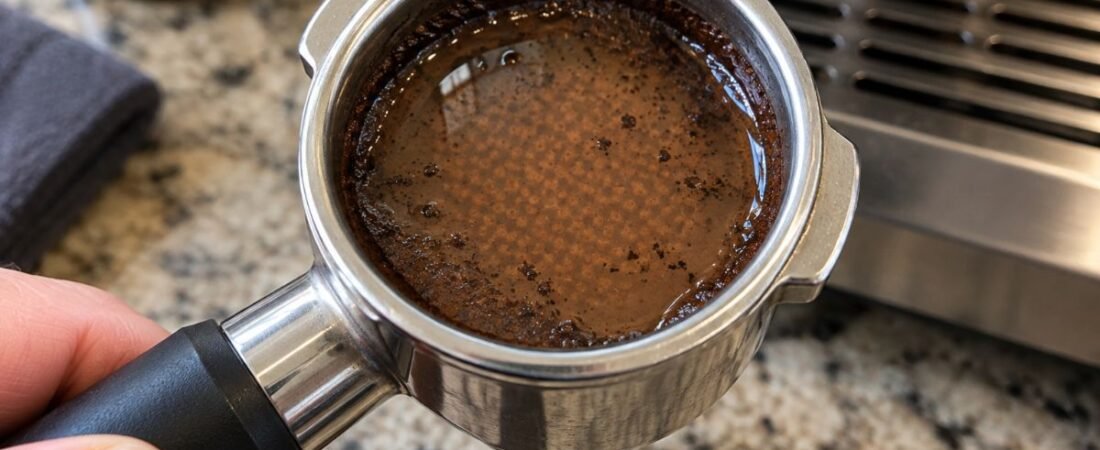
A wet puck worries a lot of home baristas, but most of the time it is harmless. If you knock out the portafilter (the handle that holds the basket of coffee) and find a soupy, muddy puck or a puddle of water on top, your espresso may still be perfectly good. The puck's wetness depends mostly on two things: how much space sits above the coffee, and whether your machine drains the water off after the shot.
So taste the shot before you change anything. If it tastes good, the wet puck is a cleanup problem, not a coffee problem. If the shot ran fast and tastes sour or thin, the wet puck is a clue worth following. Short on time? The espresso shot diagnosis tool gives you one fix for your next shot.
This guide to wet puck espresso problems explains what a wet puck means, how to read the three common kinds of wet puck, why pucks come out wet, and which fixes to try in order.
Is a Wet Puck a Problem?
Usually not. Barista Hustle, a barista training company, ran tests on spent pucks and found no evidence that poor technique made pucks wetter or drier. Instead, they point to headspace: the difference between a sloppy puck and a dry one mostly comes down to how much room sits above the coffee. Headspace is the gap between the top of the coffee and the shower screen, the metal screen in the machine that spreads water over the coffee. A bigger gap holds more water, and that water ends up on the puck.
Barista Hustle goes further, saying there is nothing wrong with a soggy puck. They call a wet puck a far smaller problem than uneven extraction, which is when water pulls flavor from some parts of the coffee more than others.
Breville takes a stricter view. Its Bambino instruction manual, like the Bambino Plus and Barista Pro manuals, tells owners that if the puck is wet, they should check the under-extraction section. That section lists a grind that is too coarse, too little coffee, and a too-light tamp as causes.
Both views can be true. If the shot tastes good, a wet puck caused by headspace is only a cleanup issue. A wet puck that comes with a fast, sour, thin shot points to under-extraction, so you fix the shot, not the puck.
Three Kinds of Wet Puck and What Each One Points To
Not every wet puck looks the same. What you see when you remove the portafilter tells you where to look first.
- Water pooled on top, firm puck underneath. This usually means extra headspace, or that you removed the portafilter right after the shot on a machine that does not drain the group. The shot itself is often fine.
- A soft, muddy puck that falls apart, and a fast, sour shot. This points to under-extraction. The usual causes are a coarse grind, too little coffee and a light tamp.
- A puck that suddenly turned wet with the same beans and recipe. When nothing in your routine changed, look at the machine. On machines that have one, a clogged 3-way valve is one possible cause.
Two more clues from the same Barista Hustle study are worth knowing. Holes in the top of the puck don't tell you much about what happened during the shot. They mostly form when the pressure is released. Dark patches on the bottom of the puck are more useful. They tend to show where flow through the coffee was blocked.
Why Espresso Pucks Come Out Wet
Your Machine Has No 3-Way Valve
A 3-way solenoid valve is an electric valve that opens a drain when the shot ends. Pressurized water sitting above the coffee then rushes into the drip tray instead of soaking into the puck. Riccardo Gatti is the research and development manager at the espresso machine maker La Marzocco. He says three-way valves "remove all the water from the top of the coffee." La Marzocco adds that this lets you remove the portafilter safely and right away.
Whole Latte Love, an espresso equipment retailer, says this water is under roughly 10 bar of pressure, about 10 times normal air pressure. It credits the valve with drier pucks. It also says these valves are largely standard on higher-end home machines but almost never found on entry-level models. Those usually use a simple spring-loaded valve in the group head (the part of the machine the portafilter locks into) instead.
Your manual is the best place to check. Breville's Barista Express manual and Barista Pro manual both list a dry puck feature that clears pressure or excess water from the coffee after the shot so the puck is easy to knock out.
The Bambino and Bambino Plus manuals do not list one, and Breville does not say whether either model has a 3-way valve. The Espresso Aficionados community guide, a reference written by home espresso owners, reports that the Bambino has no 3-way valve and tends to leave wetter pucks. The Bambino Plus has a solenoid valve that sends water away from the puck at the end of the shot.
A simple check: when the shot ends, watch for a short burst of water into the drip tray. That usually means the machine is venting pressure.
Two caveats. First, a missing valve is not always a sign of a cheap machine. Decent Espresso leaves it out on purpose and instead releases pressure through a separate drain tube. Second, a valve does not guarantee a dry puck. Barista Hustle points out that water barely compresses, so little escapes when the pressure is released.
Too Much Headspace Above the Coffee
A small dose in a large basket leaves a big gap above the coffee, and water fills that gap during the shot. Clive Coffee, an espresso equipment retailer, calls dose-to-basket size the biggest factor most people overlook. Breville's Bambino, Barista Express and Barista Pro manuals give a dose of about 16 to 19 grams for the two-cup basket and about 8 to 11 grams for the one-cup basket. The Barista Express manual also says that after tamping, the cap on the supplied tamper should sit level with the top of the basket rim.
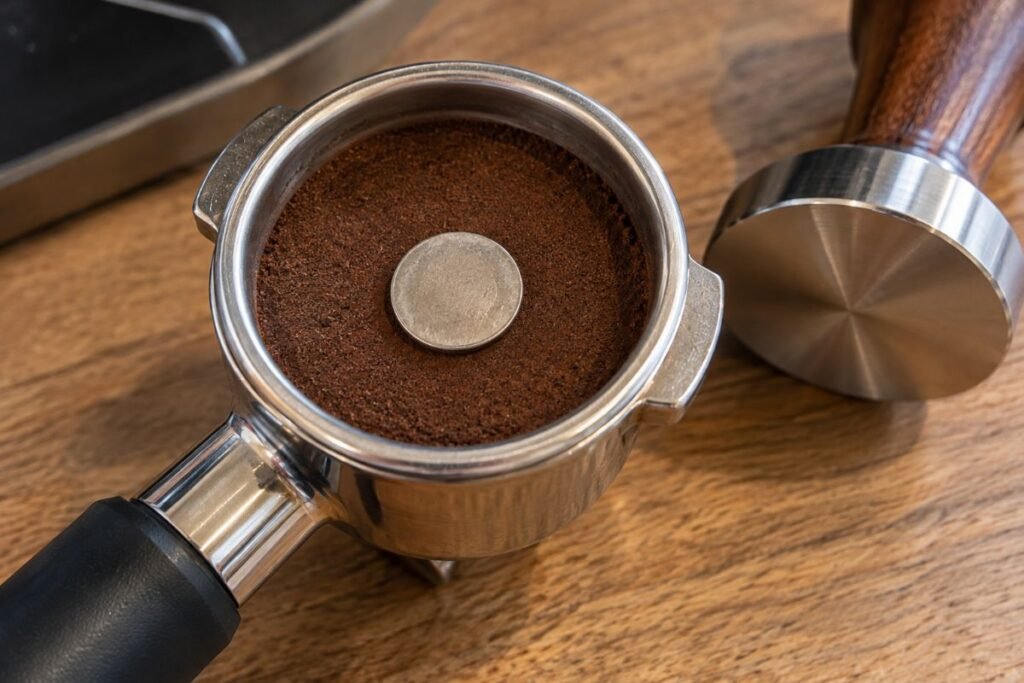
A common way to check headspace is the coin test. Tamp your coffee, set a clean coin on top, lock in the portafilter without running water, then remove it. A faint coin imprint means there is just enough room. Barista Hustle says the coin test aims for about 2 millimeters, but it found no evidence that 1 to 2 millimeters is best. One reader points out that the raised screw head that holds the shower screen in place adds about 2 millimeters, so on those machines the coin test could leave about 4 millimeters of headspace.
Tests disagree on whether less headspace raises or lowers extraction. Barista Hustle reports that Decent's headspace spacers made pucks drier but lowered extraction by 0.5 to 1.5 percent. Decent published its own tests with a different recipe that showed higher extraction with less headspace. Neither result shows that a wet puck alone ruins a shot.
Removing the Portafilter Right After the Shot
If you unlock the portafilter the moment the pump stops, you will often see water still sitting on top of the coffee, slowly sinking in. On machines without a 3-way valve, baristas had to wait a few moments before removing the portafilter. Waiting a few seconds lets the group pressure drop.
Never remove the portafilter while the shot is running. Breville's manuals say never to remove the portafilter during brewing, and the Barista Express manual explains that the machine is under pressure. The Gaggia Classic manual says to remove the filter holder slowly and carefully after brewing, and to avoid burning yourself on the water left on the grounds.
Under-Extraction From a Coarse Grind or Low Dose
When the puck is muddy and the shot ran fast and tasted sour, the coffee was likely under-extracted. That matches Breville's advice to look at grind size, dose and tamp. Check your dose first, then grind a little finer. Our guide to sour espresso walks through these fixes in order.
A grind that is too fine can also leave a soggy puck. Water struggles to pass evenly through very fine grounds, so try going slightly coarser in small steps. So let the shot guide you: fast and sour means grind finer, while slow and bitter with a soggy puck points the other way.
A Clogged 3-Way Valve
If your pucks suddenly turn wetter with the same beans and the same recipe, the machine may need cleaning. Coffee oils and mineral buildup can also clog a 3-way valve and suddenly make pucks wetter, so backflush at least once a week. Backflushing means running water and an espresso machine cleaner through the group with a blind basket, which is a basket with no holes. Only do it if your manual includes it. Our guide to weekly backflushing explains the steps.
Check This First: Does the Shot Taste Right?
Before you change your dose or grind to fix a wet puck, ask three questions about the shot itself.
- How does it taste? Sweet and balanced means the puck is fine. Sour, sharp or thin points to under-extraction.
- Did the time and weight match your recipe? Compare the shot time and the weight of espresso in the cup with what you normally pull. Our guides to extraction time and brew ratio explain the numbers.
- Did anything change? A puck that has always been wet points to your basket, dose or machine design. A puck that turned wet overnight points to cleaning or a fault.
If the shot tastes good and runs in your normal range, you can leave the wet puck alone.
How to Fix a Wet Puck, in Order
Make one change at a time so you can tell what helped.
- Taste and time the shot. Decide whether the problem is flavor or a messy puck.
- Weigh your dose. Use a scale and match the dose to your basket. Check the range in your manual.
- Check the headspace. Try the coin test. If there is a large gap, increase the dose in small steps, like half a gram.
- Wait a few seconds before unlocking the portafilter. This helps most on machines without a 3-way valve.
- Grind finer if the shot is fast and sour. Small steps work best.
- Clean the machine if the change was sudden. Backflush if your manual allows it.
- Consider a puck screen. This thin metal disc sits on top of the coffee. It takes up some headspace. IMS, a maker of these screens, says its screen is about 1.7 millimeters thick and suggests lowering the dose by about half a gram to keep enough room.
What Not to Do
- Do not overfill the basket just to get a dry puck. Overdosing or tamping too hard to chase a dry puck usually causes channeling and worse espresso. Channeling is when water punches through one weak spot in the coffee instead of flowing evenly. See our guide to espresso channeling.
- Do not remove the portafilter during the shot. The group is under pressure, and hot water and grounds can spray out.
- Do not judge the shot by holes in the top of the puck. They are not a reliable sign of a bad shot.
Wet Puck Espresso: Questions and Answers
Is a wet espresso puck bad?
Not by itself. Barista Hustle found that puck wetness mostly reflects headspace, not technique. Judge the shot by taste, time, and weight instead.
Why is there water on top of my espresso puck?
Usually because there is extra room above the coffee, or because the machine has no valve to drain the group after the shot. Removing the portafilter right away makes it more noticeable.
Does a 3-way valve make the puck completely dry?
No. It removes the water sitting above the coffee, but the puck itself still holds water. Pucks from machines with a valve can still be soft or damp.
How do I know if my machine has a 3-way valve?
Check the manual or spec sheet for a 3-way valve, pressure release or dry puck feature. You can also watch for water entering the drip tray when the shot ends.
Will a puck screen fix a wet puck?
It is optional and may help, but it takes up space. Lower your dose slightly when you add one, so the coffee does not press against the shower screen. IMS suggests about half a gram.
Should I grind finer to fix a wet puck?
Only if the shot also runs fast and tastes sour. If the shot tastes good, changing the grind just to fix the puck may make the coffee worse.
Wet Puck Espresso: Putting It Together
A wet puck usually signals extra headspace or a machine without a 3-way valve, not a bad shot. Taste and time the shot first. If it is good, the fix is optional: weigh your dose, check the headspace, and wait a few seconds before unlocking the portafilter. If the shot is fast and sour, treat it as under-extraction and grind finer. If the puck suddenly turns wet, clean the machine.
What to Read Next
For the full process from a new bag of beans to a good shot, see how to dial in espresso. For puck prep, read tamping and distribution. For other problems, the espresso troubleshooting guide covers the rest.