
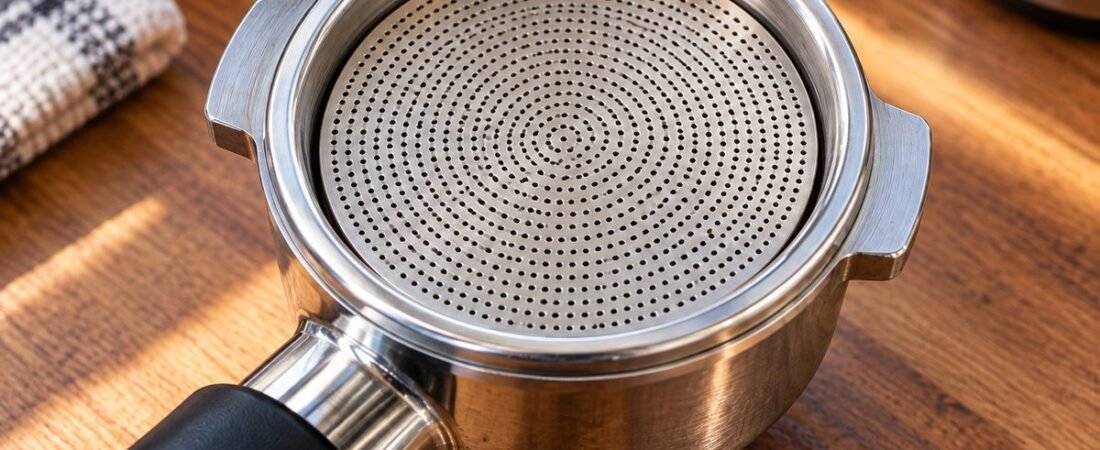
Puck screen espresso prep adds one small step. A puck screen is a thin metal disc you set on top of the coffee in your espresso basket after you tamp. Its main benefit is a cleaner machine: it keeps wet grounds off the shower screen, the perforated plate where water comes out of the group head. Claims that it makes better espresso are less settled. One retailer's test showed a small bump in extraction, and others find no difference you would taste. If you are tired of scrubbing coffee off your group head, a puck screen is a cheap and useful accessory. If your shots taste sour or bitter, it won't fix that.
Dial In Espresso is a participant in the Amazon Services LLC Associates Program, an affiliate advertising program designed to provide a means for sites to earn advertising fees by advertising and linking to Amazon.com. As an Amazon Associate, we earn from qualifying purchases.
What a Puck Screen Is and How It Works
When you lock the portafilter into the machine, the coffee in the basket sits just below the shower screen. Hot water flows through that screen, soaks the coffee, and passes through it into your cup. Without a puck screen, the top of the coffee bed meets that water directly. As the coffee swells, some of it gets pressed up against the shower screen.
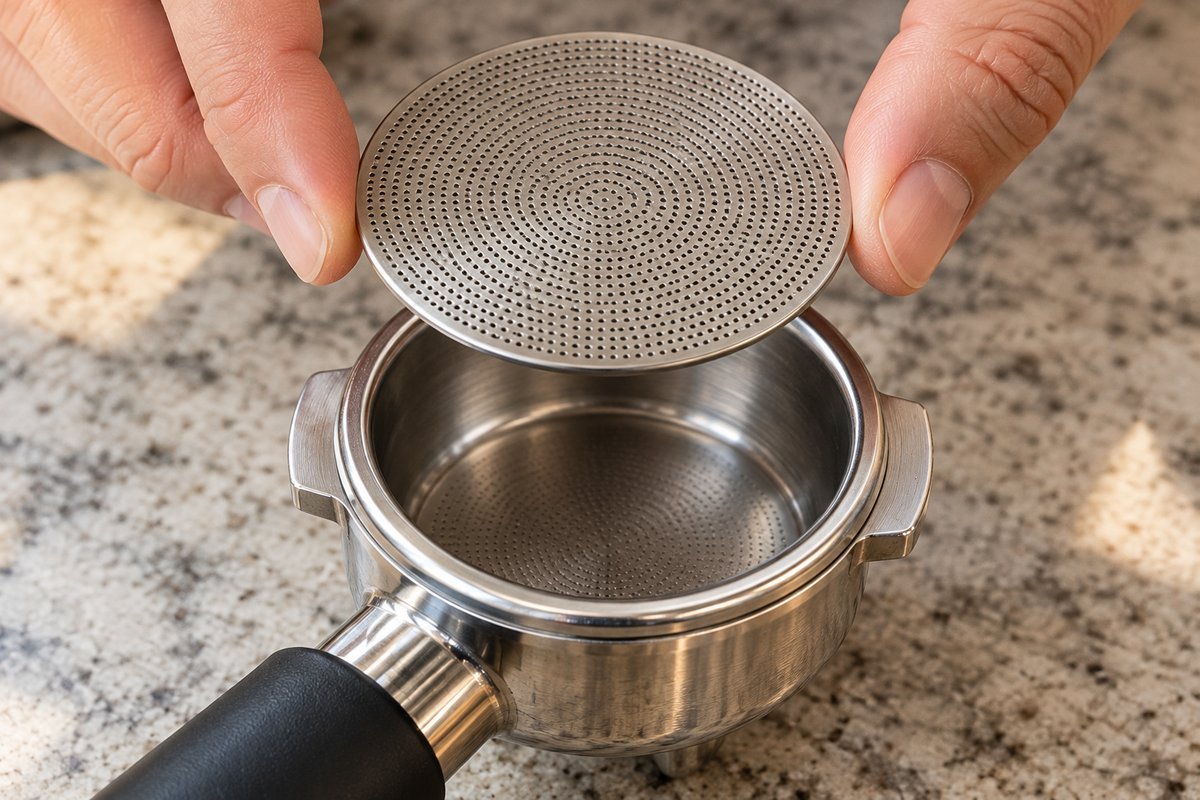
A puck screen sits between the two. It is a stainless steel disc, about the same diameter as the inside of your basket, with lots of tiny holes. Water passes through it to the coffee, and the coffee stays on the other side. Because it rests directly on the coffee, some makers call it a contact screen.
Most screens come in one of a few styles. The thickest ones are made from several layers of fine mesh pressed together, usually around 1.7 millimeters thick. Thinner ones are a single sheet of steel with laser-cut holes, often around 0.8 millimeters, and some brands now sell screens as thin as 0.2 millimeters. Round paper filters do a similar job and get thrown away after each shot.
What a Puck Screen Does for Sure
The benefit almost everyone agrees on is cleanliness. With a screen on top, far fewer grounds stick to the shower screen and the gasket around it. You still need to clean the group head, but there is less to scrub, and the shower screen stays clear between deep cleans. Our guide to the monthly deep clean covers what you still need to do either way.
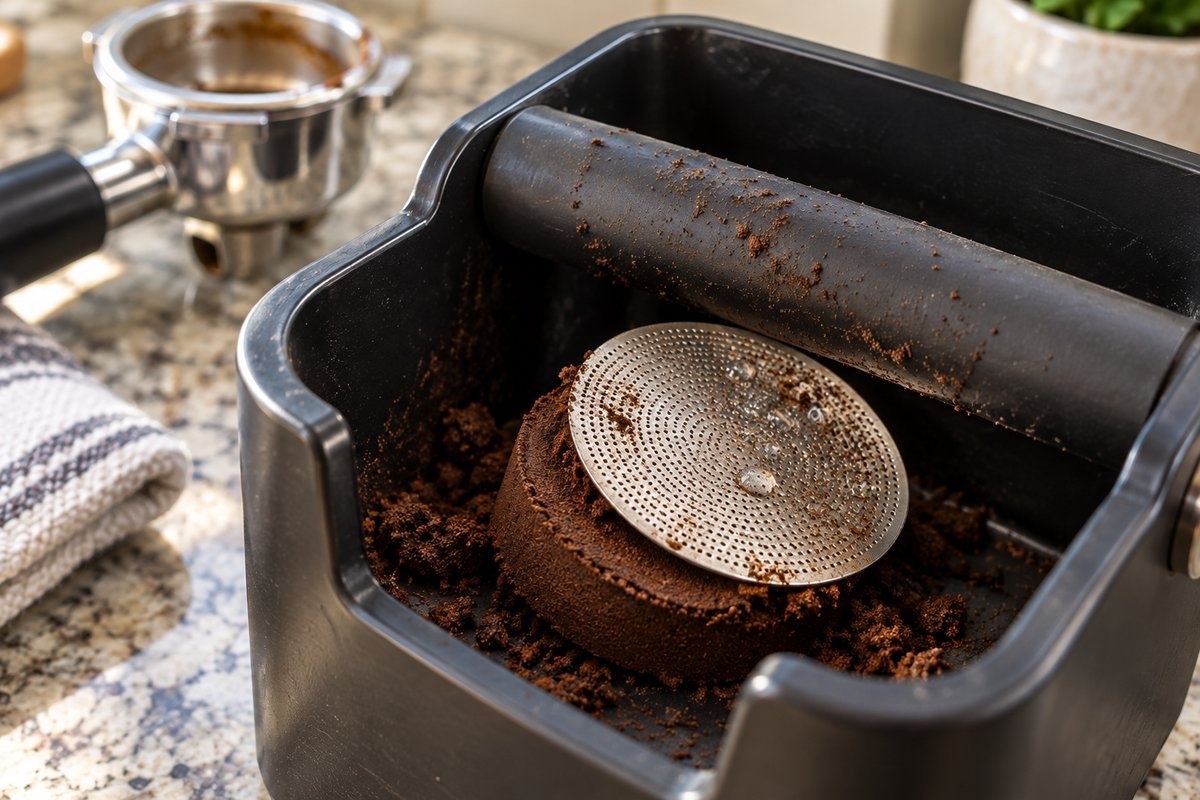
Some owners also find that the spent puck comes out of the basket drier and in one piece. That is nice when you knock it out, but it doesn't tell you much about the shot itself. As our guide to wet puck espresso explains, a soupy puck is usually just a cleanup problem if the shot tastes good.
Does a Puck Screen Make Better Espresso?
This is where the marketing gets ahead of the evidence. Screen makers often say their product spreads water more evenly and helps prevent channeling, which is when water finds a weak path through the coffee and rushes through it. That idea makes sense on paper, since water passes through one more layer of small holes before it reaches the coffee.
The measured results are mixed and small. One coffee retailer's in-house test, using a single machine and grinder, found shots with a screen averaged about 3 percent higher extraction yield. Another seller that offers puck screens says you may notice a very subtle difference in flavor but nothing significant. Neither source is independent, and the one test was limited, so treat any claim of better flavor as possible but unproven.
What is well established is that the basics matter far more. A good grind, consistent dosing, even distribution, and a level tamp do more for your shot than any screen. If you are fighting espresso channeling, start with tamping and distribution before you buy another accessory.
Headspace: Why You Might Need to Use Less Coffee
Headspace is the gap between the top of the tamped coffee and the shower screen. A puck screen takes up part of that gap. A thin screen barely matters, but a thick one can push the coffee close enough to touch or press against the shower screen.
That can cause a few problems. The portafilter can feel tight going in, and you may see an imprint of the shower screen on the puck. The screen can also stick to the group head when you pull the portafilter out. If that happens, use a little less coffee or switch to a thinner screen. The coin test in our wet puck guide is an easy way to check how much room you have.
Also check the middle of your shower screen. Some machines have a screw in the center of the shower screen. At least one screen maker says not to use their screen in that case because the screw can press against it.
What Size Puck Screen Do You Need?
Puck screens are sized to the inside of the basket, not the outside of the portafilter. That means the number on the screen is often a little different from the number on your machine. Screens sold for 58 millimeter baskets are commonly 58.5 millimeters. Screens sold for 54 millimeter baskets, like the ones on many Breville machines, are often around 53.3 to 53.5 millimeters. Screens for 51-millimeter baskets are also available, a size used on many smaller home machines.
The easiest way to get it right is to check your machine's manual or measure the inside top of your basket. A screen that is too big won't fit or sit flat, and one that is too small leaves a gap around the edge where coffee can escape.
How to Use a Puck Screen
Using one only adds a few seconds to your routine. Grind, dose, distribute, and tamp as usual. Then set the screen on top of the coffee, following the maker's directions if it says which side goes down, and press it lightly so it sits level. Lock in the portafilter and brew.
When the shot is done, the screen will either come out on top of the puck or stay stuck to the group head. Either is normal. Knock out the puck, pick out the screen, and rinse it under hot water. Some people keep two screens so one can dry while the other is in use.
Cleaning a Puck Screen
Rinse the screen after every shot so coffee oils don't dry in the holes. Every so often, soak it in the same espresso machine cleaner you use for backflushing, then rinse it well. Multi-layer mesh screens hold onto oils and fine grounds more than thin single-layer ones, so you need to soak them more often.
A clogged screen is worse than no screen at all, because it slows the water and can throw off your shots. If your shots suddenly start running slow and nothing else has changed, check the screen before you change your grind.
Is a Puck Screen Worth It?
For most home baristas, a puck screen is a nice extra, not a must-have. It earns its place if you want a cleaner group head with less scrubbing, or if grounds keep sticking to your shower screen.
If you are still learning to dial in, hold off. A screen adds one more thing to your routine and won't fix a shot that is off because of grind or dose. Get your basics steady first with our guide on how to dial in espresso, then add a screen if you want the cleaner machine. Our list of essential espresso accessories covers what to buy first.
Which Puck Screen to Buy
Start with the right basket size, then choose a thickness. A thin, single-layer screen (around 0.8 millimeters) is the safer choice for most machines because it barely changes your headspace. A thick multi-layer screen (around 1.7 millimeters) may need a smaller dose.
Normcore is one of the most common brands on Amazon. It sells both a 1.7-millimeter multi-layer screen and a 0.8-millimeter single-layer screen in 58.5- and 53.3-millimeter sizes. MHW-3BOMBER makes a 0.8 millimeter screen sold for 54 millimeter Breville baskets. If you'd rather not clean a metal screen, round paper filters cut to the same sizes do a similar job, and you can throw them away after each shot.
On Amazon: the Normcore 58.5mm puck screen, 0.8mm, the Normcore 58.5mm multi-layer puck screen, 1.7mm, and the MHW-3BOMBER 54mm puck screen, 0.8mm for Breville baskets.
Puck Screen Espresso: Common Questions
Do you put a puck screen on top or under the coffee?
On top. Grind, dose, and tamp as usual, then set the screen on top of the tamped coffee before you lock in the portafilter.
Does a puck screen improve espresso taste?
Maybe a little, but the evidence is thin. The clear benefit is a cleaner shower screen. Grind, dose, and puck prep matter much more for taste.
Do I need to use less coffee with a puck screen?
Sometimes. A thick screen takes up headspace. If the puck touches the shower screen or the portafilter is hard to lock in, use a little less coffee or switch to a thinner screen.
What size puck screen do I need?
Match it to the inside of your basket. Screens for 58-millimeter baskets are usually 58.5 millimeters, and screens for 54-millimeter Breville baskets are usually around 53.3 to 53.5 millimeters. Check your manual or measure if you aren't sure.
Is a puck screen worth it for beginners?
Usually not right away. First, learn to dial in your grind and dose. Add a screen later if you want a cleaner group head.
The Bottom Line
A puck screen is a simple tool that does one job well. It keeps your shower screen cleaner and speeds up cleanup. Any taste improvement is small and not well proven. Buy one for the cleaner machine, start with the right size and a thin screen, and keep focusing on grind, dose, and puck prep for better shots.